Research Proposal

HOW TO WRITE A RESEARCH PROPOSAL

When your instructor assigns a research proposal, they seek a brief summary of the research you have conducted or will conduct for their class. The proposal allows them to approve your idea or propose any necessary changes before you begin writing. It is important to understand what this assignment’s purpose is.

Writing a proposal will allow you to demonstrate the depth of your knowledge in a certain field, as it will show your ability to express complex ideas in a brief manner. The process of writing involves several steps such as brainstorming, picking a topic, drafting, and revising. At the end of the writing process, you will have a proposal that explains your research question and the purpose of your conducted study.

TABLE OF CONTENTS

  • Picking The Best Topic
  • How To Start
  • Looking For A Template
  • Outline
  • Breaking Down the Format
  • Research Paper Proposal Example
  • The Don’ts

Picking the Best Topic

While picking a topic, it is important to you spend enough time brainstorming and thinking creatively about the pressing issues you’d like to address. Your topic needs to relate closely to what you studied in class, but it should also exhibit your findings and important nuances that you would personally find interesting to research. A good first would be to look at some examples and see how narrow the topic that they chose is. Often it will be very narrow and have relevance in the current society.

Here are some questions from our academic writer to help you narrow down your topic:

  • What are you particularly interested in researching?
  • Why is it important to you?
  • Why is it significant to the world and to the subject that you studied?
  • What problem can it solve? What question can it answer
  • How does it build upon research already conducted on the topic?
  • How do you plan to conduct this research?

After you’ve answered these questions, you should be more set to continue with narrowing your topic and assembling your template.

How to start?

To start, you must find something that interests you. You must choose a topic related to your field of study. Read on articles about recent discoveries, breakthroughs, and innovation. Make sure that the topic you’ll be writing on will interest you so that you’ll find it easier to write about. Take a look on the things on you believe in. Review on things that you are passionate about and ask yourself these questions.

  • What do I want to study?
  • Why is the topic important?
  • How is it significant within the subject areas covered in my class?
  • What problems will it help solve?
  • How does it build upon [and hopefully go beyond] conducted on the topic?
  • What exactly should I plan to do, and can I get it done in the time available?

Is There a Template?

There is no ‘one-size-fits-all’ template that would suit every type of paper. However, regardless of the scope and depth of your research, you will find that most sample templates all include the following information:

  • Title of your research: You will be able to revise your title throughout your research, but it is important that the title encompasses what your paper is about.
    Example: The direct influence of Hitchcock’s Psycho on the genre of horror.
  • Abstract: This portion should be around 100 words long, consisting of the central question that you wish to address.
  • Context: Your proposal should include a brief background to which you conducted your research. This includes the area of study, any debates on the topic and the relevance of the question.
  • Research Question: The aim should be to attempt to answer a question. The question needs to be narrow and focused and reflect the objective of your essay. During your writing process, narrow your research question to two different aspects. You should elaborate on how you intend to answer the question and brief the reader on the conclusion that you made.
    Example: How did Hitchcock’s Psycho influence the way horror films were made? How has the horror genre changed in respect to the film?
  • Research Method: The research proposal should show how you conducted your research. Explain your key resources (ways you found your information) and how you collected your data. If you did interviews, brief the reader on who the people you interviewed were. Then explain how you analyzed the findings.
  • Research Significance: Explain why your work is important. In any sample, you will find a short justification for why your research is original ad how it adds something new to the field of study. You might want to list a reason why your research is pressing in the current time.
    Example: The conducted research links Hitchcock’s Psycho too many modern films that exhibit the same shock-factor qualities. Today, shock-factor is harder to achieve; this is visible on the increase of badly produced, lower-quality horror flicks that resort to shock rather than suspense to hold the audience’s attention.
  • Bibliography: Lastly, you would want to create a list of the most relevant works that contributed to your study. You can need to so in the format required by your instructor (APA, MLA, etc.). You can create an annotated bibliography, giving some insights into how each of the sources helped you with your research.

Outline

Your outline should be structured according to the template above. Prior to embarking on the proposal writing process, make sure that you have your research question narrowed down properly and a solid outline as to how you will structure your proposal.

Breaking Down the Format

A format can vary from being only a couple of paragraphs long to about 2,500 words long for things like dissertations. Specifics such as length and contents should be discussed with your instructor before the beginning of the writing process.

APA Research Proposal

The APA format itself can help you understand how to write a proposal for a research paper, since the APA guidelines require writing an abstract, an introduction, and a bibliography as part of the paper, not only in the proposal. Here is a short breakdown of the APA proposal format:

  • 12-point font Times New Roman
  • Double-spaced
  • 1-inch margins
  • An APA running head (limited to 50 characters)
  • A title page with the paper’s title (no more than 12 words in length), your name, and the name of your institution
  • An abstract (150-200 words)
  • In-text citations (formatted accordingly to APA guidelines)
  • References page (formatted accordingly to APA guidelines)

Research Paper Proposal Example

Here is an example research proposal of a short research paper (around 15 pages). Notice the structure of the proposal and the APA formatting.

Research Paper Proposal Example

The Don’ts

There are a couple of things that successful proposals have in common. If you look at an example, you will see that there are a couple of things in common that all of the proposals avoid:

  • Not being concise enough. Your proposal must be written with a clear purpose in mind.
  • Alleviating works cited page.
  • Forgetting to disclose research boundaries and conflicting variables (age of participants, for example)
  • An underdeveloped argument.
  • A lack of focus and unrelated tangents.
  • Poor grammar.
  • Too much detail or not enough detail.

Term Paper

HOW TO WRITE A TERM PAPER

Before we delve into the structure of a term paper, let’s first define it and look into the objectives of this writing assignment. A term paper is a research paper required at the end of a school semester. It tracks and evaluates the students’ knowledge about the course. Usually a scientific report or a discussion of an assigned topic, the term paper requires a lot of research and technical writing expertise. This academic writing assignment must be well-written, analytical, organized, and well-researched as this reflects your knowledge of a certain course.

TABLE OF CONTENTS

  • How To Outline a Term Paper
  • Sample Topics
  • How To Start
  • Structure Example
  • How To Write A Proposal
  • Format

How To Outline a Term Paper

The outline of the paper should be produced before researching and writing because it will serve as the basis around which you will build your work. There are a lot of paper templates to choose from, but most of the time your instructor will require you to follow a certain essay format. The main parts should include an introduction, a body, and a conclusion.

Sample Topics

Instructors usually provide topics related to your course. However, sometimes you are free to choose your own paper topic. Try surfing the web, reading articles, news, magazines, and blogs to get ideas for a term paper topic. Make sure that the topic you choose will fulfill the objectives of your course and will interest you. If a certain topic interest you, researching and writing about it will be easier and more fun.

The following should be considered when choosing a topic:

  • Length: Consider the length of the required paper. Will it be a 10-page long or 5-page short? How many words are required? Considering the length will help you choose a certain topic because you will be able to decide how broad your subject will be.
  • Resources: Check out your school or community library for available resources. Go through available online research resources and make sure you will have hands-on books and other materials needed for reference.
  • Complexity: Make sure that you will be able to explain your topic no matter how complex it may be. If you have questions, don’t be afraid to ask experts. Let your professor explain a certain area on your topic.

How To Start

Before starting, make sure to follow instructions given to you. Clarifications should be made with your instructor before doing any research or writing work. Don’t wait until the last minute before you start writing. If you want quality work and a high grade, plan ahead and make time every day for writing your paper. Allot time for proofreading your work before handing it to your professor.

A good way to start is by creating a compelling and creative title. Your title page is the first impression of your work, so make sure that it will capture your reader’s attention. Take note of the parts as you research and write away.

Structure Example

The structure should be organized and well-researched. Our academic writer reminds you that technical writing skills should be crucial in organizing your ideas. The following is the term paper rubric, abstract, or layout that you should follow in presenting your argument or topic:

  • Cover page: Align the text containing your name, course number, your teacher’s name and the date of the deadline.
  • Abstract: Usually less than a page long, the abstract describes your paper. It lets the readers know where the paper is headed, the issue at hand and why the subject was interesting or important enough that you decided to write about it.
  • Introduction: The introduction should begin with a statement on the topic to be discussed. Give current social events that are linked or explain the significance of the problem at hand. Write about how you plan to resolve the issue.
  • Body: The body of your text should contain the synthesis of your research. Provide information about the topic so that the reader can further understand what is being discussed. Don’t forget certain positions pertaining to the issue and the analysis of the research you have done.
  • Results: Explain why your research has led you to believe certain things about your subject. How has your view changed from when you began the project? Has it stayed the same, and why? Tie everything you’ve been explaining into what you started saying in your introduction.
  • Discussion: End with a summary and a conclusion about the topic in question. Finish by stating an opening question or by prompting the reader to continue his or her own research on the subject through a discussion.

Download: Term Paper Example

How to Write a Proposal

Before researching and writing, you should know what a term paper proposal is. Basically, you should be able to defend your topic to your instructor through this proposal. This proposal must be handed in and approved before writing the actual term paper.

Include recent studies or research on your topic. Don’t forget to insert proper referencing. Show relevance of your topic to your course effectively by submitting a short article with a clear explanation. Provide your objectives and observe organization in the flow of your ideas.

If your professor didn’t provide a proposal template or sample, you could follow this format:

  • Title: This is a draft title of what you want to research on. Make it clear and comprehensible.
  • Objectives: This part should define your outcomes after your research. You should be able to answer questions above all, in a term paper.
  • Relevance and Importance: Include recent news, social events, articles, and blogs leading to the importance of the topic. Your topic should be up to date and capture the attention of the reader.

There are many examples available online including formats and templates. You can follow these formats but make sure that you maintain your proposal’s organization and don’t forget to highlight the main points and objectives.

Format

In arranging the format, consider first the length and the citation style to be used. When you have researched on a certain topic, you are required to use a specific citation style. If you forget to reference properly, you might be accused of plagiarism. Also, a term paper is an academic writing assignment therefore, APA or MLA citation styles are commonly used.

  • Use APA (American Psychological Association) term paper format for social sciences. To reference a book in an APA style term paper, the author’s name, the book’s title, the year of publication, the publisher and its location are needed. So make sure to take note of this during your research.
  • The MLA (Modern Language Association) format is most commonly used in liberal arts and humanities. The publication name, date, and location are needed in this format as well.

Good Term Paper Example

DOWNLOAD

Thesis Statement

HOW TO WRITE A THESIS STATEMENT: COMPLETE WRITING GUIDE

unquestionable as it is taught in every academic age group, starting from Kindergarten and finishing at the Ph.D. level. With that being said, many students write spontaneously and do not set a game plan for their content goals. Without a strong central idea, a paper will lack focus and direction.

To avoid this problem and work with coherent structure, one must know how to write a good thesis statement. This post will break down the statements purpose as well as fundamental elements necessary to create an effective thesis.

TABLE OF CONTENTS

  • Thesis Statement Definition
  • Length Requirements
  • Can It Be a Question?
  • How To Make A Powerful Thesis
  • How To Write It
  • Small Piece Of Advice
  • Template
  • Example

What Is A Thesis Statement?

One of the main reasons students struggle with their thesis statements is a lack of technical understanding. It is hard to grasp their head around the fact the thesis is single-handedly the MOST important sentence in entire text. The rest of the paper is made of the supporting points. “What is a thesis statement?” is the initial question to answer. A thesis statement is the main argument or point that is set out to be proven using tools such as logical/emotional reasoning. It is the root from where everything grows.

Another question is, “What is a good thesis statement?” The goal of a thesis-based paper is to make a claim about the relevant topic of discussion and defend it with logic, analysis and third-party validation (external sources).

The author must be well-informed about the topic at hand. He/she should have factual confirmation from other parties (experts, primary & secondary sources) before developing a main statement. That is why it is important to do research and have accurate comprehension of the topic before brainstorming ideas.

Length Requirements: How Long Should a Thesis Statement Be?

By looking at the title, we can see that a thesis statement is a concise summary of the main claim. It should be a single, complete sentence. There are circumstances that may require 2-3 sentences, depending on the length of the entire paper.
Example: a five paragraph essay should only have a single-sentence thesis. The writer should summarize the idea concisely. If one is writing a twenty-page research paper, the statement will require several sentences because there is more information to cover.

Can a Thesis Statement Be a Question?

One more question to pop up is, “Can a thesis statement be a question?” The short answer would be, “No.”
The goal of the thesis is to explain what the paper will cover. It is impossible to fulfill this mission with a question. According to the definition, this part of the academic paper presents the argument a writer has to support using credible sources in the rest of the text. A claim can NEVER be a question. The conclusion should pose no new questions, and the thesis can be considered the overarching conclusion.

How to make a thesis statement? Pick the primary question to answer and come up with a clear, concise response to it in a statement.

Topic sentences can be questions: those are the main sentence of each body paragraph, and they can start with the question which is to be explained in the corresponding paragraph. Make the a topic sentence catchy and attention grabbing. The thesis and topic sentences are interrelated, and they serve to map out the essay or research paper.

Why Is It So Important?

Writing a thesis statement is the best way to organize your thoughts and narrow down focus. If you know exactly what you aim to prove, you will have an easy time making valid points, defending your logic, etc. This statement should be the 1st thing an author creates working on the paper.

How To Create A Powerful Thesis Statement

Students commonly spend a lot of time formulating rough ideas without knowing what a thesis statement should include. When writing any type of academic paper, it is important to have an organized system to complete the task in a timely manner. Explore the six things that a good thesis statement should include:

  1. Brainstorming is a Must! Come along with your peers, family members, or tutors to come up with a list of brilliant ideas and choose a topic based on them. It will help to create a claim. After selecting the topic, try narrowing down the idea to develop a catchy, concise, and clear title.
  2. Narrow + Focused: We can’t stress this enough: a well-written paper should not be filled with general information. A writer’s goal is to prove a unique point about their topic. Make sure it is reflected in the thesis.

3. Use Bold Language: Avoid passive voice to sound more confident. Apps like Hemingwayapp will help to avoid wordiness and other things that make reading difficult.==.

4. Trump the Counterargument: Not everyone is going to agree with the points that you make or your argument as a whole. To combat this effectively, formulate the thesis in such a way that allows for opposing points; then, challenge the counterargument head-on in a body paragraph and present why your point is indeed BETTER.

5. Check if It Fits! Writers will commonly decide to create their body paragraphs before phrasing their thesis statement. A writer may set out to prove one thing to end up proving an alteration of the initial idea. That’s why it is important to go back and ensure that the thesis fits with the points you’ve made. If you have proved something different from the initial claim, fix the main argument when revising it.

6. Significance Matters: The criterion is important to understand the value of overall significance. Will the idea you’re presenting be interesting and captivating to read and will the audience want to know what you have to say? The best thesis statements are ones that captivate the reader and leave them thinking about the idea even after reading the final words.

Thesis Statement Examples & Templates

For many students, the best way to learn is to see some realistic examples. EssayPro understands this, so here are five examples of thesis statements that went from “meh” to “oh wow!”

Start with the templates. The layout depends on the type of academic paper.

Argumentative thesis statement template
Make a claim about a chosen topic/question and try to justify this main argument using reasons and credible evidence. Decide which type of thesis you plan to use. The main argument could be:

  • Opinion
  • Policy proposal
  • Analysis
  • Cause-&-effect statement
  • Explanation
    The writer should offer something some people can disagree with. Persuade the audience of your truth later.

Evaluation thesis statement template
The thesis for this type of academic work should provide a rating to a specific:

  • Person
  • Object
  • Event/Episode
  • Concept from a historical perspective
    In both cases, the idea is to take a stand. A thesis statement outline makes no sense: it is a single sentence in 90% cases. Move directly to the example section.
    For many students, the best way to learn is to see some realistic examples. EssayPro understands this, so here are five thesis statement examples of statements that went from “meh” to “oh wow!”

The initial part contains examples based on 5 different types of academic writing.

Compare and contrast thesis statement
“While Judaism and Christianity are Abrahamic religions sprung from the same cultural hearth, they are different by the implementation of traditions, the realization of religious cannons, and perception of Jesus Christ.”

Persuasive thesis statement example
“Because of the needs of teenagers and their families, the high school day should begin later by a single hour in our society.”

Analytical thesis statement example
“An assessment of barn owl flight technique detects a couple of flight patterns: the ones connected with hunting prey and those related to courtship.”

Expository thesis statement
“Gerbils are believed to be a perfect pet for kids as they are low-maintenance and cheap.”

Cause and effect thesis statement
“The primary reason why high school bullying takes place is the fact modern teens watch many violent videos and play aggressive video games.”

Bonus Examples to Consider

Example 1

A: The death penalty should not be abolished because people who commit violent crimes should be punished.

B: Although many argue that human life is sacred, the death penalty should remain for people that commit brutal crimes and offer no positive value to their society.

For example 1, thesis B is the better one because the author gave a more descriptive and narrowed version for their beliefs. This makes it easier for them to prove their point overall.

Example 2

A: Owning a college degree should not be a requirement for professional positions in the workforce.

B: If a candidate has work experience, reasonable competency in the field and shows a strong work ethic, they should not be eliminated from contention for a position simply due to the lack of a college degree.

In example 2, option B provides three different subpoints it will use to prove its main statement, while the first sentence just makes a general claim.

Example 3

A: Gun laws should be more strict and demand higher requirements because of increased nationwide shootings.

B: A strict gun regulations policy will not reduce nationwide violence since guns are still obtainable illegally and humans, not weapons, are the catalysts of brutality

In example 3, option B goes in more depth about why this claim is correct and presents reasoning that can be justified from MANY external sources.

In-Text Examples

Download PDF examples of essays with a thesis statement. The statements are underlined and highlighted.

DOWNLOAD

DOWNLOAD

Nursing Essay

HOW TO WRITE A NURSING ESSAY

Discover the best ways to learn how to write a nursing essay successfully, from our expert writers. In this guide, we will go through the correct structure; introduction, body, conclusion. As well as some leading tips from our Essay professional writers. So you can write the top admission essay and the grades you deserve. Then, it will be possible to move onto the next stage of becoming a nurse. And eventually, take care of patients for a living!

TABLE OF CONTENTS

  • What Is A Nursing Essay
  • Exploring Nursing Essay Topics
  • Performing Research
  • How to Structure a Nursing Essay
    • Introduction
    • Body
    • Conclusion
  • Refining Your Drafts
    • Avoid Plagiarism
    • Bibliography

What Is A Nursing Essay?

A nursing essay is both an academic and professional study of a patient who is encountered during a student’s placement in a practicum. It is crucial when composing a nursing school admission essay. Follow the next steps to find out more information about what is a nursing essay in detail, and achieve a maximum quality essay.

They are essential vital points in a student’s learning experience as they serve as a significant pathway to knowing how to react to real-life situations.

Exploring Nursing Essay Topics

Before you begin your nursing application essay, it is a good idea to choose a topic based on your knowledge of the provided subject. This will allow you to create a coherent structure that will support the information you are offering. As a writer, you need to understand precisely what is it you are being asked to build your answer correctly. Research various questions that you could potentially answer.

Many topics can be challenging and will often involve some scientific research in the practicum lab. You can find all kinds of nursing essay topics lists that include issues such as:

  • Should euthanasia be legalized?
  • How to treat dementia at its birth stage?
  • What are the potential dangers of home nursing?
  • Should the nurses be able to refuse to work with offensive patients?
  • Should depression and anxiety patients are medically treated?
  • What are the primary treatments for diabetic patients?
  • The long-term effects of chemotherapy
  • The impact of HIV on birth and breastfeeding
  • The dangers of E-cigarettes as a form of quitting cigarettes
  • The mental health of terminally ill patients
  • Midwifery and newborn baby care
  • Introduction to human nutrition
  • Microbiology in humans: The safe and dangerous
  • Health Assessment and Nursing Therapeutics
  • Prevention of Illness and Promotion of Health
  • Applied Statistical Analysis
  • The treatment of dementia at an early stage
  • The potential dangers of home nursing

Choose the topic which you can easily relate to, and have the closest insight on. It is a good idea to think carefully about which of the nursing essay topics to choose from.

Keep in mind:

  1. You are targeting a highly educated audience who is aware of the data you are presenting;
  2. Take an individual approach to showcase how your knowledge can be put into practice;
  3. The methodology and the way of translating information should be considered to make your paper different from the rest.

Performing a Research

“Nurses dispense comfort, compassion, and caring without even a prescription.” – Leo Buscaglia

Collecting and presenting data is the main philosophy of the nursing essay approach. The more information you can acquire before writing your paper, the more you are going to demonstrate your level of expertise on the issue as you have shown a much clearer understanding of the subject in the eyes of your professor, which means more credit and a better grade.

The best ways to gather more research when writing your nursing essay successfully is to:

  • Online Articles: Provides useful insights and in-depth examples of isolated cases.
  • Textbooks: Gives you a more general understanding of your theme.
  • Examples: Provides a clearer understanding of how to write a nursing essay efficiently.
    • Make sure you record all of your nursing essay examples are in an MLA format to save yourself time in the future.

Process of Research

To start processing your research, make notes on your research. Gather all of your notes and put them into a table with 6 columns. It’s possible to do this on Google Docs or Sheets, or by hand. This provides a detailed plan for the nursing essay.

Include these 6 titles on the top of every column in your table.

  • Research Method: This indicates if the research comes from a textbook, article or example.
  • Content: The details of the investigation.
  • Type of Data: Specify the form of research. If it’s a quotation, data or general information.
  • Advantages: Mention the Pros of the study. Is the information or data valuable or reliable?
  • Disadvantages: The Cons of what has been mentioned in the other sections. Is it a theory or knowledge that is debatable?
  • Mention in Nursing Essay: Yes/No. (You can decide this later.)

How to Structure a Nursing Essay

When all the data is collected, and you are confident that you have a clear grasp of the topic you are going to write about, it’s time to structure the paper with the next guide.

  • Distribution: When all data and information is collected on your table, it’s a good idea to distribute it evenly to generate a smooth flow.
  • Outline: Create a rough essay outline. Briefly describe the points mentioned the points you are going to uncover. So that is sources, websites, articles, and textbooks.
  • Selecting Content: Choose the most reliable and accurate information and data to go in your essay outline for top results.
  • Structure: Your paper should be comprised of an introduction, body, and conclusion.
  • Advice: Keeping these points in mind will also keep you inspired during your writing sessions and will help you avoid “writer’s block.” And will guide you to writing a successful paper.

To properly cater your material to the audience, your nursing school application essay has to be composed of the following elements:

Introduction

nursing essay introduction contains a general statement about the main point of the overall paper.

Nursing Essay Introduction Example: “The hospital-based switch training university-based change has made a major impact on the way nurse operate in the workforce. Substantial changes have helped shape and improve the role of a nurse, working conditions, and a nurse’s income. While patient assessment methods have been improved, the empathy of nurses has lacked in some instances.”

In your introduction, you must define your question and give a strategic plan of how you are going to answer it.

  1. This part of your paper will be a guideline for both you and your reader for the rest of your work.
  2. The flow of this paragraph should be impeccable, as it must give your audience a complete understanding of what they are going to explore.
  3. Use resources like a thesaurus and a glossary to find words that will best relate to your subject and bring its meaning to its maximum potential.

Body

As Isaac Newton once said, “Truth is ever to be found in simplicity, and not in the multiplicity and confusion of things.”

Your body should use the introduction as an outline, explaining the issue step by step and transitioning smoothly from one point to another. Each body paragraph in your nursing essay body should contain a topic sentence, supporting sentencesand a concluding sentence. There should be a balanced development between paragraphs, with every single answer leading to a new question. When writing an essay about nursing, don’t wander away from the subject and be strictly on point. This is the philosophy of a nursing essay and should always be kept in mind when writing.

Nursing Essay Body Example: “As a consequence, nurses needed to have higher levels of critical thinking and problem-solving skills. Major global organizations, The World Health Organization, recognized this matter in the year, 1985. The processes of both teaching and learning must be adapted to the newly graduated nurses can obtain the knowledgeable skills most recently relevant to the modern health care needs in their communities as a whole.”

Examples are what is going to turn your pile of data, into an individual treatment.

Finally, make sure that in your body you accommodate the reader with sufficient information on the issue as well answer every single question you have asked. Finalize your statements at the very end of the paragraphs and prepare to summarize them in your conclusion.

Conclusion

Your nursing essay conclusion is a retelling or a summary of the main issues raised in the nursing essay:

  • Data;
  • Answers;
  • Evidence;
  • Indicate how your approach was essential to the resolution of a problem;
  • Final comment to conclude the paper.

Nursing Essay Conclusion Example: “The start of the university educated for nurses has allowed nurses to keep updated with continuous medical advances. Their roles have changed throughout recent years. Their working conditions have improved, as well as their wages. The ability to assess patients has improved. However, the ability to provide understanding care has slowly abolished as a result of strong their bases that university education is based on.”

Refining Your Drafts

The process of developing your nursing profession essay follows a pyramid scheme. Start with a rough draft by building your paper with every single piece of data you have access too. Then, as you progress forward, narrow it down to the most crucial to your topic information.

  • Use Correct Formatting: The accepted format for submission of the nursing essay is Times New Roman. Size 12 and 1.5 or double spacing. The margins should be 2cm or under.
    • Make sure to correctly format your paper so that it meets the application submission requirements.
  • Proofread: Make sure to check your writing for any grammar or punctuation mistakes. You can do this with proofreading websites such as Grammarly.
  • Check for Density: Avoid using the same word multiple times. A Thesaurus can be used to amend this problem.
  • Don’t Allow Writing Errors Knock You Down a Grade: Double-check the application submission requirements to make sure they are all met.

Always share your drafts with people who have more experience in writing as well as nursing than you do to receive quality feedback. Often, the writer can be biased towards his work and oversee some honest mistakes, or you can do by yourself, using such methods:

  • Digital edits: allow your computer to fix your mistakes and offer you grammatical solutions.
  • Printed red pen edits: highlight troubled areas of your work to see what needs the most attention.
  • Audible edits: read the text out loud to identify sentence structure flaws.

Your paper should become more evident as you progress through your drafts.

Avoid Plagiarism

Plagiarism Can Result In…

  • Your paper’s failure.

This can easily be avoided…

  • If you state all of the sources you have sued when composing the work.

Do

  • Cite Your Source.
  • All outside sources should be cited.

Don’t

  • Attempt to take credit for someone else’s work.
  • Get into trouble.

How to Cite?

  • Include the date of the work and the author’s name in brackets.
  • Add quotation marks around the cited information.

Citation Example:

  • “Just do it” (1988, Nike)

Bibliography

Every citation you make within your text should be followed by a more elaborate replica of it in the reference section. There are resources all over the internet whereby merely plugging in main variables; the platform is going to generate an MLA formatted citation for you and save you loads of time. Here is how to reference information from different types of sources:

  • A book: Carpenito-Moyet, L.J. (2002). Nursing Diagnosis: Applications to Clinical Practice. Some bit of a book adjusted by somebody other than the Author of the section: Wald, L. (1995). What’s it about Florence? In S.H. Fondiller, & B.J. Nerone (eds). Nursing: The Career of a Lifetime. Michigan: National League for Nursing Press, pp. 7-28.
  • Diary Article: Dicenso, A., Cullum, N., & Ciliska, D. (1998). Executing confirmation based Nursing: Some confounded judgments. Assertion-Based Nursing, 1, 38-39.
  • Online Journal Article: Donley, R., & Flaherty, M.J. (2008). Impelling Professional Development: Three Phases of Articulation in Nursing Education and Practice.

We hope that our blog post about nursing essays was useful.

Psychology Essay

HOW TO WRITE A PSYCHOLOGY ESSAY

You may write psychology essay to understand individuals and groups by establishing general principles and researching specific cases. Another reason to write psychology essay is to understand specific terms or concepts. What are its goals? Experiments and papers in this field have four main objectives:

  • To describe what has occurred, to explain why it has occurred
  • To predict if it’s going to occur again
  • To prevent or change possible outcomes or behaviors.

TABLE OF CONTENTS

  • Writing Steps
  • Purpose
  • Psychology Essay Topics
  • Common Questions & Prompts
  • Where To Gather Information
  • APA Format In The AP Psychology Essay
  • AP Psychology Essay Requirements
  • Questions
  • Outline
  • Polishing Up & Submitting

Whether you’re writing an essay on psychology for school or university, the steps are essentially the same. The process is made of severwla important stages.

  • Understand The Purpose
  • Decide On A Psychology Paper Topic
  • Gather Information
  • Craft An Outline
    • Introduction
    • Body
    • Conclusion
  • Understand The Format
  • Create A Rough Draft + Edit
  • Write Your Final Copy

Purpose

A Psychology essay might be written to explain or describe a certain concept
Here are some examples:

  • What causes anxiety and phobias?
  • Hallucinations
  • Autonomic Nervous System
  • Behavior Analysis

Another reason students may write a psychology essay is to give a diagnosis. It might be necessary to give a detailed explanation. Tell why they think that person has especially this disease or disorder.

Psychology Essay Topics

If the psychology paper topic was not assigned by your teacher or professor, you can write about one of these themes.

Write about a Topic within a Particular Branch of Psychology!

The secret to selecting a good topic for your psychology paper is simple. Choose a psychology paper topic that is narrow enough so you can focus all your attention on the subject, but not so narrow that you can barely find any sources or reliable information to write about. Need an example? You might start thinking that you want to write a paper about a cognitive disorder, but as this psychology topic is broad, you may narrow it down to something like the Cognitive impairment in Parkinson’s disease. This particular psycholoy topic fits the happy medium.

Write about a Disorder

Mental disorders are patterns of behavioral or psychological symptoms that have a strong impact on multiple areas of life. You can write about one of the ideas from experts below.

  • Bipolar disorders ( a brain disorder that causes rapid mood and energy swings)
    • Mania (characterized by feeling over excited)
    • Depressive episodes (characterized by feeling of deep sadness, guilt, fatigue, and irritability)
  • Anxiety disorders (these type of disorders involve continuous and excessive worry that interferes with daily activities)
    • Agoraphobia (fear of public places)
    • Social Anxiety Disorder (people with such disorder have powerful anxiety and discomfort about being embarrassed, rejected or humiliated)
  • Trauma and Stressor-Related Disorders (commonly caused by a stressful or traumatic event)
    • Adjustment disorders (causes as a response to a sudden change such as divorce, job loss, end of a relationship with someone close, or other disappointment or loss)
    • Post-Traumatic stress disorder (can develop after a person has experienced a stressful life event)
  • Dissociative Disorders
    • Dissociative amnesia (temporary loss of memory. Memory loss may last for just a period or even for many years)
    • Dissociative identity disorder (just imagine somebody except you in your body)
    • Derealization disorder (may be characterized by experiencing a feeling of being outside of your own body (depersonalization) and being disconnected from reality (derealization)
  • Eating Disorders
    • Anorexia (characterized by restricted food consumption that leads to serious weight loss and very low body weight)
    • Pica (craving and consuming non-food substances: soap, glass, dirt, etc.)
  • Sleep-Wake Disorders
    • Narcolepsy (irrepressible need to sleep)
    • Parasomnias (abnormal behaviors that take place during sleep)
    • Insomnia (unable to get enough sleep)
  • Disruptive, Impulse-Control
    • Kleptomania (inability to control the will to steal)
    • Pyromania (when a human being feel fascination with fire and with things that burning)

Choose a Psychology Paper Topic Related to Human Cognition

It is a study of mental function, including learning, memory, attention, perception, reasoning, language, conceptual development, and decision-making. What are the specific psychology paper topics?

  • Dreams
  • Perception
  • Moral judgement

Think about Psychology Topics for Papers Related to Human Development

In this field of study, you might decide on a psychology topic connected to early childhood: language learning, social learning, etc.
Some other psychology paper topics you might find interesting:

  • Child abuse
  • Bullying
  • Gender roles

Write about a Book or Academic Journal

You can write a psychology critique paper on a book or an academic journal. How about an example? You might write a critical analysis of a Karen Horney, The Neurotic Personality of Our Time book.

Analyze One of Famous Experiment or Study

Famous studies. Some revolutionary experiments have given a lot of insight into the field. When you write a paper on one of these experiments, you can pick an aspect of the experiment or describe it and explain how it works and how it contributed to the field. See several possible topics for psychology papers.

  • Milgram Obedience Experiment
  • Robbers Cave Experiment
  • Stanford Prison Study
  • Pavlov’s Conditioning Experiment
  • The Asch Conformity Experiment

Common Questions & Prompts And How To Answer Them

Nature-nurture

The nature vs. nurture question is one of the most fundamental questions of the social science. Are we the way we are because of our biology and heredity (nature) or because of our environment (nurture)? Many psychologists agree that it is a mixture of both that makes us who we are, and a studnet should try to defend this poistion in such psychology paper.

Is psychology a science?

There is no simple answer to this question either, as many debates that psychology should not be seen as a science because of the often-disproved theories and abstract concepts. The counter-argument is that the field is based on hard sciences. Those are chemistry and biology. All it comes down to is that the subject can explain Depression and Anxiety with brain scans and blood tests, but it can not explain why teenagers slam doors when they’re angry.

Why I chose psychology?

This question can be asked when you pick Psychology as your major for university study or when you choose to take that class in high school. In your response, show your enthusiasm toward the subject by listing what you genuinely hope to learn and take away from the class.

Child psychology

This topic has to do with developmental psychology. It is a specialized branch used to understand the development of the mind from infancy to adolescence. For this kind of essays, you might want to research Erik Erikson, Vygotsky, and Piaget. You can explore an extremely wide range of psychology topics such as language acquisition, attachment theories, or critical periods of development.

Personality

This essay prompt deals with what makes people different as individuals.Common exploration topics are type theories, psychoanalytic theories, and humanistic theories.

Psychology in everyday life

Psychology in everyday life uses practices from a field of study called applied psychology. This field is an umbrella term for these types of psychology: counseling, education, clinical, and medical. There is a lot to choose from here, so if this topic was assigned to you, pick an area that you are most interested in.

Forensic psychology

Forensic psychology is an intersection between psychology and the justice system. it means people who work in this field deal with law and trials; possible broad subjects could include testimony validity, antisocial behavior, and sexual harassment.

Where to Gather Information for Psychology Essay

Read Reliable Literature

Read literature that focuses on the criteria or assignment from your professor to fulfill the reader’s expectations about the quality and the trustworthiness of your paper. There are a lot of literature available online, or in public or university libraries.

Primary Sources

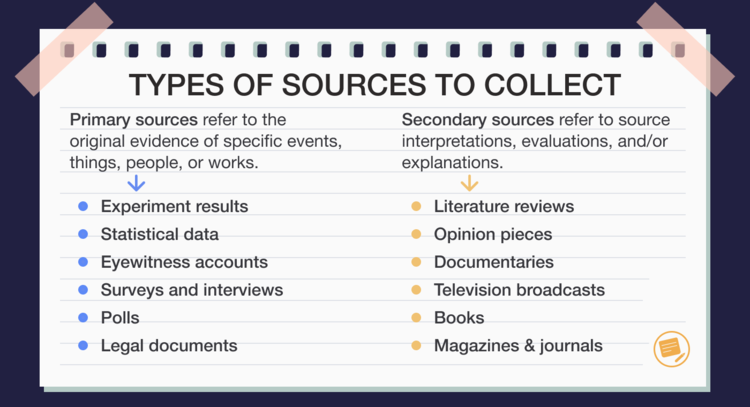
Articles published in academic journals deserve special attention they are the primary sources to collect information from for your psychology essay. These articles report on original research which may be at the cutting edge of knowledge production in their field of study. Such materials are usually the best to collect information from.

Other sources

Depending on a topic you are writing about, there might be a wide range of sources which might be relevant: interviews with experts, films, documentaries, museum exhibitions, newspapers, etc. These are examples of sources which might be relevant.

APA Format in the AP Psychology Essay

When writing an essay about psychology, it is vital to use the correct style and also reference everything accordingly. Although there are many different styles to choose from, we recommend using American Psychological Association or APA format. For more detailed info check out this blog on American Psychological Association or APA citation style. It is the right referencing format to use for your essay.

Here are some basic guidelines when writing in APA format:

  • A clearly readable font. (Times New Roman 12 pt)
  • Double line spacing
  • 1-inch margins all the way round
  • Include an APA style header at the top of every page with shortened title (<50 characters)
  • Insert the page number on the right
  • The 1st word in every paragraph should be indented

In the papers over 5 pages, the APA format should be broken down into the following sections:

  1. Title page
  2. Abstract
  3. Main body
  4. References

APA in text citation should follow certain rules as incorrectly referenced material can lose marks and lead to plagiarism. Here are some key points to keep in mind with APA in text citation:

  • Use Capitals for the name of author and any itials.
  • Capitalize the title of the source.
  • Include the page number when quoting, unless paraphrasing then this is not necessary.
  • If the authors name is not given then use the initial words of the title.

There are APA citation generators online which offer basic help often prompting for payment and prone to making mistakes. Using an APA citation generator is not advised. It will never beat the hard work and dedication of the personal touch.

If still in any doubt why not get some help from the experts with proofreading services they can check your work is cited in APA format or order a custom-made Psychology essay.

AP Psychology Essay Requirements

AP psychology essay questions (the “free response” questions) constitute 33% of your AP Psych exam grade. These prompts are designed for people who took the AP Psych course. Do not expect them to be easy. Below are some examples prompts and some tips on how to write an essay during your exam.

Questions

AP Psychology exam questions usually include the same kind of structure, and you will be given a topic with several subcategories. In the exam, each subcategory must be addressed to score maximum points. Here is an example of a question:

Example: Annie babysat a 5-year-old child one day. She and the child had some pecan pie. Annie was unaware that the child was allergic to most types of nuts and the child’s parents didn’t warn her prior. Annie drove the child to the hospital, but on the way she panics and gets lost. Annie takes a couple of wrong turns. Gladly, the child survives, but months following the accident Annie can’t get behind the wheel, and she no longer likes pecan pie.

  • Part A. Explain how each of the following helped Annie drive to the hospital:
    • Motor neurons,
    • Retinal disparity,
    • Heuristic,
    • Procedural memory.
  • Part B. Explain how each of the following has lead Annie to have a negative experience:
    • Anxiety and panic,
    • Conditioned response,
    • Aversion Therapy.

When you begin to address this prompt, you will want to look at each aspect of the question. Define the vocabulary words (in this case, Heuristic, Motor neurons, Anxiety, etc.) and then explain how they relate to the example. Need an example? On the exam itself, you would want to write something like this: “Annie experiences anxiety around driving because she had a stressful experience while driving the child to the hospital” instead of something like “Anxiety is a worry, nervousness, or unease about something” without an explanation or a connection to the prompt. To get full credit, address every single bullet point. Again, don’t forget to write in an essay format. Do not answer in bullet points.

Create An Outline

  • Introduction
    • Topic
    • Thesis
  • Body
    • Theme 1
    • Theme 2
    • Theme 3
  • Conclusion

Polishing It Up & Submitting

Congratulations, you are almost there. The last step you need to take is to write a rough draft, edit it, and then turn it into a well-written psychology paper. To ease your life and save you time here are some tips you may use while checking.

Give Yourself a 2 Hours Rest.

It’s hard to be actively involved in writing for a long time, and even harder to spot mistakes after hours of unstoppable writing. That is why it is recommended to leave your paper for an hour or two.

Read It Aloud for 2 Times

This is a very good practice that will allow you to catch all your mistakes such as, mispronounced words, grammatical errors, punctuation mistakes, etc.

Find a Second Pair of Eyes

Ask your siblings or your friends to help you with this. You can ask them to read your essay and give you a feedback whether it’s positive or not. You can take someone who is not aware of the topic. Ask that person to read your paper and grade it.

Analytical Essays

“Analysis is the art of creation through destruction.” ― P.S. Baber, Cassie Draws the Universe

Great, you finished watching a movie or reading a book for college or university! Before you’re free to go on exploring the wonders of college life, the professor decides to give you some more work to do. Get ready to face the challenge! The pro gives out the instructions and tells you to analyze the book/movie and provide an informative argument for any related topic of your choice. Does it seem tedious?

TABLE OF CONTENTS

  • Definition
  • Ideas
  • Different Types of Analysis
    • Poetry Analysis Essay
    • Rhetorical Analysis Essay
    • Literary Analysis Essay
    • Process Analysis Essay
    • Character Analysis Essay
    • Causal Analysis Essay
  • Steps to Take Before Writing
  • Brainstorming
  • Creating A Thesis
  • Outline
  • Analytical Essay Examples

What is An Analytical Essay?

The primary question to answer is, “What is an analytical essay?” “What should an analytical essay do?” Those are all great questions.

If we take a look at the official analytical essay definition, the term “analysis”means a critical and well thought-out observation of a specific idea. An essay is a piece of academic writing to test your knowledge. By combining these two interpretations, we can define an analytical paper in the best possible way.

An analytical essay is a piece of writing that provides an informative observation about the specific topic or idea. It has to link back to the book/movie, but contain your judgments as well.

Analytical Essay Topics And Ideas

There is an infinite number of different essay topics that can be analyzed. Think about any sort of fact or idea.

A student should not necessarily pick the issue that has already been examined from all aspects – the main reason why tutors do not always assign the specific topics to cover is the ability of students to develop their creativity.

So, if you wonder how to choose the proper analytical essay topics, the infographic below will give you a clue.

That is how you select the topic if it is not specified. Here are some of the great analytical essay topics so that you have a general idea of how the final title of your paper should look like:

  1. Reasons why some teens are more susceptible to peer pressure than other kids
  2. In a what way does public debt affect private investment companies
  3. Pros and cons of using performance-enhancing drugs
  4. The primary signs of the job burnout
  5. The relevance of Karl Marx and his teachings to contemporary society
  6. The impact of the national high school curriculum on the teaching standards
  7. The practical ways to develop positive relations with company shareholders
  8. Qualities of the young adults that may push them to suicide
  9. Factors that increase the threat of cyberbullying for teenagers
  10. Should sex education be eliminated from the school program?

Different Types of Analysis

There are six basic types of analytical essays based on the different types of analysis itself. Every separate kind varies by its definition and purposes. You need to know how to write an analysis essay of every type as different life situations will require various approaches to analyzing things. Let’s get into the various types of analysis! Only after reading about each, you will get the best answer to the question, “What is an analytical essay?”

Poetry Analysis Essay

Poetry analysis requires the writer to research the poem’s content, structure, and historical significance. A writer should do it in an explanatory style.

The main purpose is to make the reader understand the poem’s overall significance and messages.

Examples of this can be:

  • Robert Frost’s The Road Not Taken
  • Edgar Allan Poe’s A Dream Within a Dream
  • Emily Dickinson’s There is Another Sky

Rhetorical Analysis Essay

Rhetorical analysis is an essay where you prove or reprove a fact that already holds weight. Imagine you are proving a fact to somebody who either can’t comprehend it or is skeptical of its authenticity. This type of analysis is based on facts & logic. Rhetorical papers tend to be written in the fields of science and mathematics!

Examples of the rhetorical analysis ideas could be:

  • Geometric Proofs
  • Fundamental of Physics (Newton’s Law, Theory of Relativity,…)
  • General Principle of Economics (Money makes Money)

Literary Analysis Essay

Be ready to face it at your literature class. After reading a specific short story or any piece of literature, provide an informative analysis of a certain situation, or critically analyze a quote and its impact on the plot.

A literary analysis usually goes deeper into things such as emotion and decision making of certain characters!

Examples could be:

  • Effects of “Utopia-rescue” societies on people! Book: 1984 By George Orwell
  • Loves an effect on human decision making. Romeo and Juliet by Shakespeare
  • Conforming to societies norms: To Kill a Mockingbird by Harper Lee!

Process Analysis Essay

If we think about the definition, a process is a change from one state to another through several stages/levels. A common way to explain this change is through a process analysis essay format. This would require you to explain its purpose, as well as explaining the transformation through a series of paragraphs.

Examples of this can be:

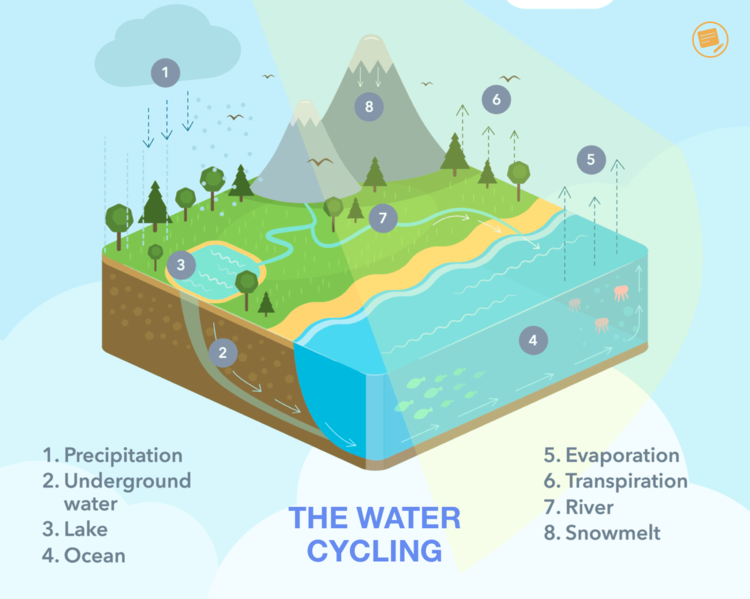
  • Describing the Water Cycle
  • Offering a general assessment of the piece, pointing out the strengths and differences
  • Defining each of the special terms used by the author to make the piece sound more professional
  • Analyzing the list of materials used and quoted by the author: their relevance, credibility, etc.

Character Analysis Essay

Character analysis requires you to explain and analyze the transformation of a character from the initial point until the end. Things that should be analyzed are: personality, character traits, mental reformation, role in society, etc. Explain the character’s development.

Examples of this paper can be:

  • Transformation of Huck and Jim in The Adventures of Huckleberry Finn
  • Will Hunting’s mental evolution in Good Will Hunting
  • Viktor Navorksi in The Terminal

Causal Analysis Essay

The causal essay requires you to answer a “why” question. Causal academic paper is also known as the speculating about causes essay, and it requires you to describe the process that occurs, following up with why you believe it occurred the way it did.

Examples can be:

  • Why do we respond physically to fear?
  • Why do teenagers rebel against their parents and authority?
  • Why are random shootings & similar crimes becoming more common in the US and some other neighboring American countries?

These are just some of the most common types of analytical essays. The variation is practically endless, but they all must follow the same type of outline.

Steps To Take Before Writing

Preparation is key in writing that well-rounded and high-quality paper. An analytical paper may require up to 2 hours of the pre-writing process. So before you start typing up your masterpiece, 6 steps should be taken:

  1. Reading how to write an analysis paper (this guide is a good example);
  2. Brainstorming and deciding on a topic (look for the details above);
  3. Crafting a captivating title (it should not repeat the topic);
  4. Creating a strong thesis statement;
  5. Finding supporting evidence from credible sources;
  6. Creating an outline.

Create A Strong Analytical Essay Thesis

The goal of the analytical essay is to prove a certain point that the writer is trying to make. From the information that has been gathered, the writer needs to link things together and create a certain decision.

The central argument is called a thesis statement. It’s a claim created to prove an assumption created by the writer, using facts, statistics, examples, and research findings. For certain topics, it’s important to introduce the outside forces that contributed to the creation of a thesis statement.

An example will help.

“If you are talking about historical events, it’s essential to introduce the external factors (books or manuscripts) that led to your analytical essay thesis. If we are talking about scientific research, considering the scientific method is a necessity.”

The thesis should be controversial, debatable, and it requires tons of thorough research to come up with a respectable statement. This part of your work should be a high impact statement that strongly affects the topic of choice.

Finally, decide on the preferred shape of a thesis statement. Here are some of the categories to choose from:

  • Simply stating an opinion
  • Defining categories, causes, or reasons
  • Offering a couple of aspects of a subject and emphasizing one of them

To prove the central argument, one has to arm to the teeth with credible evidence. Keep on reading to discover how to collect info.

Find Supporting Evidence

Why do you need evidence? You won’t be able to sway anybody with your thesis statement unless it’s backed by something. This is why all good thesis statements need in-depth research, analysis, & some forecasts. It’s important to gather information that supports your argument from the primary sources.

Depending on the type of essay, it won’t necessarily be straightforward information.

If we are talking about a historical topic or some sort of scientific fact, your supporting evidence will evidently be facts taken from previous findings; if you are writing a literary analysis essay, most likely your evidence will be quotes from the story.

Create an Analytical Essay Outline

To learn how to write an analytical essay, one should organize the structure of this paper as it makes the entire writing process easier; the experts recommend having up to 5 paragraphs on your paper outline.

Regardless, the Intro-Body(s)-Conclusion formula is a staple in any analytical essay outline.

Writing an Analytical Essay Introduction

An analytical essay introduction starts out with some sort of background information. Using a hook statement can be effective.

A hook sentence is made of 1-2 sentences aimed to grab the reader’s attentionfrom the opening lines of the analytical essay. The choice of hook depends on the mood of the work:

  • it could be a funny joke/anecdote;
  • proven fact;
  • shaking statistics;
  • rhetorical question to provoke a debate;
  • literary term like metaphor or similar;
  • quote of famous person.

There is no specific style for the introduction, but background information is the most common method of approach; provide information that is relevant to your thesis. This information should start out broad and narrow down in relevance towards the thesis.

We prepared a summary of the introduction below:

  • Hook Statement/ Brief Introductory Point
  • Background Info (Narrowed)
  • Transition sentence
  • Thesis Statement

Write Your Body Paragraphs

The main goal of the body paragraphs is to prove the thesis statement. Each individual paragraph should focus on a certain aspect of the thesis.

For example:

  • if the thesis of an analytical essay is centered around the evolution of Will Hunting;
  • the body paragraphs should each hold their own point;
  • one body paragraph focuses on his diminishing self-guilt;
  • second could talk about the ever increasing support system and its impact on his mentality.

The body paragraphs should maintain proper structure:

  • Topic Sentence: Introduce the main point of the body paragraph in one straightforward and effective sentence.
  • Analysis: Analyze your supporting evidence. Explain how the evidence supports your thesis statement. This part should take 1-2 sentences and is arguably the most important part of the entire analytical essay writing.
  • Evidence: The analysis is created from the supporting evidence that you find (facts, statistics, etc.), so they should always go hand in hand. Make sure that these 2 parts link together in a straightforward manner.
  • Concluding Sentence: Restate to the reader your analysis and its significance to the point in hand.

After reading a single body paragraph, the viewer should have clearly understood the argument or point you were trying to prove.
Depending on the topic, each essay length will vary based on the depth of the thesis.

How to Write a Conclusion for an Analytical Essay?

The conclusion of an analytical essay plays a vital role in the sense that it ties up the entire essay. Keep in mind the integral components of any concluding paragraph.

Start out by restating your thesis statement. The significance of this is to exemplify to your viewer that you have proven the thesis statement and summarize the steps you took.

To end the entire essay, it’s necessary to create an overall concluding statement. This can be either what you have learned from writing the essay or what the audience should take away from your work.

The structure should be:

  • Rephrase the thesis statement
  • Summarize key points
  • Overall concluding statement

That is how to write a conclusion for an analytical essay. Grab some writing tips below to succeed with this type of writing at any academic level!

General Tips & Advice

Proofread& Edit

After writing the entire analytical essay, take a short break and then reread it from front to back. Regardless of the chances that you will find parts of the paper which are filled with mistakes or parts that need clarity, make sure the essay has clarity before handing in completed work.

Get a Second Pair of Eyes

Because the analysis essay made sense to you, doesn’t mean that everyone else will receive it with the same level of understanding. Online essay writer or peer edits help to give the essay a wider range of clarity.

Make Sure the Thesis Fits Your Argument Points

Your paper will be highly judged based on how well you proved your thesis. That’s why it’s important to edit your thesis based on the type of arguments you provided. If your explanations don’t perfectly suit the thesis statement you crafted, then adjust it accordingly.

Analytical Essay Examples

Referring to an analytical essay examples can save you time. A sample can provide a useful insight to how an analytical essay should be. Especially for new-bees to this form of assignment.

DOWNLOAD

DOWNLOAD

Character Analysis

HOW TO WRITE A CHARACTER ANALYSIS ESSAY

Literary courses at any level will sometimes require students to write character analysis essays. We will be delving into their conflicts and how the characters resolve them. We will be looking through the eyes of the characters and analyze their roles in the story.

TABLE OF CONTENTS

  • Definition
  • Purpose
  • Types Of Characters
  • How To Write
  • Outline
  • Example

What is a Character Analysis Essay?

In a broader sense, this is a type of essay which requires an understanding of the character in question. These kinds of essays are used to analyze characters in a literary piece. One of the aims would be to make a profile and analyze the characters thoroughly.

What Is The Purpose

More than to fulfill a requirement, this type of essay mainly helps us understand the character and the world he/she lives in. One of the essential purposes of this essay is to look at the anatomy of a character in the story and dissect who he/she is. We must be able to study how the character was shaped and then learn from their life.

Different Types Of Characters

  • Protagonists (heroes): The main character around whom most of the plot revolves.
  • Antagonists: This is a person that is against the protagonist. This is usually the villain but could also be a natural power, set of circumstances, majestic being, etc.
  • Major: These are the main characters. They run the story. Regularly there are only one or two major characters.
  • Dynamic (changing)
  • Static (unchanging)
  • Minor: These are the figures who help tell the major character’s tale by letting them interact and reveal their personalities, situations, stories. They are commonly static (unchanging).
  • Foils: These are the people whose job is to contrast with the major character.

How to Write it?

To go into a more profound sense and truly understand these characters, one must immerse oneself in the story or literary piece. Take note of the setting, climax, and other important literary parts. You must be able to feel and see through the characters. Observe how the writer shaped these characters into life.Notice how little or how vast the identities of the characters were described. Look at the characters’ morals and behavior and how it affects situations and other characters in the story. Observe characters whom you find interesting.

How to start?

First, you have to choose a character you’d like to write about. Sometimes, a character will be readily assigned to you. It’s wise to consider characters who play a dynamic role in the story. It will captivate the reader since there is tons of information about these characters.

Read The Story

Even if you’ve already heard or read this story before, you will probably need to reread it. It will help you notice something new that you’ve missed before. Keep in mind or highlight every place that your character appears.

Consider the following things:

  • What specific descriptions does the author provide for each character?
  • What kinds of relationship does your character have with others?
  • How do the actions of the character move the plot forward?

Take Notes

While you are reading, take notes or highlight/underline all critical elements of the story. That will add depth when describing your character. When you’re finished reading with your character in mind, review your notes, and formulate the main idea about a character.

Make an initial draft while taking note of the character analysis essay outline provided by your instructor. If you’re not provided with a sample, you may follow the recommended format.

Make An Outline

This step can be considered as one of the most critical steps in writing. A well-constructed outline will keep your thoughts and ideas organized.

Introduction:

Make an introduction of your paper brief and meaningful. It should hold together your whole essay and should spark interest in people. Write a short description of the character in question.

Body:

Subdivide your body paragraphs into different ideas or areas to be considered regarding the character. Look at your professor’s rubric and make sure that you’ll be able to tackle the things required. You should also be provided with questions to be answered to formulate your analysis better. The body should answer the following questions:

  • What are the character’s physical appearance, personality, and background?
  • What were the conflicts that the character experienced and how did he/she overcome them?
  • What can we learn from this character?

Conclusion:

Your conclusion should also hold together your ideas and shape a final analysis statement. Mention things about the character’s conflicts which we can experience in real life. Also, you can write about how a character that should’ve reacted to a certain situation.

Character Analysis Essay Example

There are many character analysis essay examples available online. Study how authors of these essays wrote about different characters. Go on and search for character analysis about Hamlet, Lady Macbeth, and the Crucible. Look at how characters resolve conflicts. Consider things to learn about the characters and take note if any of the characters reflect something in you.
A character analysis essay is more than looking into the character but also looking into the character’s personality, actions, and decisions that speak to you.


DOWNLOAD

Critical Analysis

HOW TO WRITE A CRITICAL ANALYSIS ESSAY

Have you ever read an article and thought to yourself: “I disagree with this writer; I think they are biased.” Perhaps you’ve even gone as far as offering your own opinion in the comments section.

If you’ve done this, good job! You have performed a critical analysis; you’ve analyzed the author’s work and offered your own opinion in response.

Writing a critical analysis essay requires lots of essential reading, as authors always use rhetorical techniques to gain your trust.

In this article, we will list some carefully selected topics and provide examples to give you a better idea of your expected result. We will also present a robust step-by-step process of how to write a critical analysis essay.

TABLE OF CONTENTS

  • What Is a Critical Analysis Essay?
  • 25 Critical Analysis Essay Topics
  • Writing Process
  • Creating a Critical Analysis Essay Outline
  • Techniques Used In Literary Critiques
  • Techniques used in literary critiques
  • Top tips to save you time
  • Example

What Is a Critical Analysis Essay?

A critical analysis essay is a critical evaluation of an argument, an event (modern or historical), any work within its medium (film, books, music), social and political issues, and beyond.

Generally speaking, critical analysis helps us understand things better.

It is a subjective form of observation and evaluation, expressing your personal opinions and reactions.

For example, music critics like Robert Christgau or Anthony Fantano are examples of professionals who do critical analysis for a living. They explore every layer of meaning (or lack of it) that artists put into their music and offer a final subjective opinion.

Let’s take a look at some common critical analysis essay topics to give you an idea of just how broad this essay format is.

25 Cool Critical Analysis Essay Topics

Living in an era of social and political unrest certainly has its benefits.
Students often pick controversial statements, articles or events, because they lend themselves easily to critical analysis. Finding a topic for critical analysis in this day and age shouldn’t be hard.

Here are a few things to consider when deciding on a topic.

  • Make sure the topic lends itself easily to critical analysis. Famous literature and controversial articles would be excellent choices.
  • Find a topic which is widely discussed. Different opinions can help you think outside the box and create a strong argument!
  • Try to keep it narrow. Some topics can be complicated, and it may take books to explore them fully!
  • Talk to your professors for ideas. They will happily point you in the right direction!

If you read books, consider taking the work of your favorite author. Famous books like Alice in Wonderland have been analyzed and interpreted in many different ways; there should be plenty of source material you could use for reference. Here are some of the top critical analysis essay topics that we have found:

Culture Critical Thinking Topics

  1. Pick a sport that famously had a drug abuse history. Summarize and assess the situation, and how it affected the competition.
  2. College football plays a vital role in American Universities. How does it change the community, the spirit, and the economics of the college?
  3. Gain a deeper understanding of homelessness in your city. Why is it a problem and which resources can the city use to help?
  4. Anti-drug campaigns often cause more problems than solutions. Take a look at a similar campaign and analyze its effectiveness.
  5. Take a look at how women are portrayed in a particular medium today. For example the medium of Cinema. Has sexism that polluted 50’s Hollywood been wholly removed from movies?

Mass Media Topics

  1. Take a film. What is the message and how does the director convey it?
  2. Analyze a graphic novel. What is the message/passage, and how does it push the possibilities of the visual novel medium?
  3. Observe the remake of a classic motion picture. What has changed?
  4. Examine the influence of a popular TV series on youth.
  5. Take Facebook. What was the initial idea? Has it grown consistently with the internet and how people use it?

Critical Evaluation Topics on History

  1. Compare Ancient Greece to today. Are the practices, teachings, and rituals of the Ancient Greeks still relevant?
  2. Colonization of America was a brutal time in history. Looking back at it, could we have done it without killing the indigenous people of America?
  3. Ancient Egypt. Tackle the controversies surrounding the pyramids of Giza. Was it slaves or aliens who built them?
  4. World War II. Some say that it was a necessary tragedy that shaped the modern world. Present and analyze this controversial opinion.
  5. Ancient Rome borrowed heavily from Ancient Greek and Egyptian culture and art. However, when Mussolini came around, he wanted to preserve the classic Italian aesthetic of Ancient Rome. Analyze the irony of the ultra-right Fascist movement in light of these facts.

Culture Critical Thinking Topics in Literature

  1. Analyze Mark Twain’s Huckleberry Finn and its impact on racism in America.
  2. Take a dystopian novel like 1984 or Brave New World and compare it to society today.
  3. J.R.R. Martin’s A Song of Ice and Fire is a profoundly subversive series in its genre. How does Martin achieve this, in comparison to Lord of the Rings?
  4. Analyze Orwell’s Animal Farm and compare it to the real history of the Soviet Union.
  5. Shakespeare’s Julius Caesar is purposely wrongly named as the actual protagonist is Brutus. Analyze how this relates to the plot and theme of the play.

Culture Critical Thinking Topics in Sports

  1. Money ruined sports. Analyze the argument to establish whether it’s true or false.
  2. Analyze the effect of betting on the sporting community.
  3. Cristiano Ronaldo is known to be a bit of an actor on the field. Analyze the validity of this claim.
  4. Should cybersports be considered sports?
  5. Some say that FIFA releases the same game every year, exploiting the sports gaming community. Challenge the validity of this claim.

Some of our best essay writers composed this list. We hope that you have found an interesting topic you could use for reference!

Writing Process

Without further ado, let’s learn how to write a critical analysis essay step by step.

Step 1: Critical Reading

The initial step to critical analysis to read carefully and thoroughly, identifying the author’s thesis.

Most of your information will come from reading different sources and understanding different takes and opinions on the same issue. You must pay attention to details, recognize the author’s’ rhetorical devices, biases, and assumptions.

Remember always to write down vocabulary words and define terms that you don’t understand.

Whenever reading a source, always look out for:

  • The author’s intended audience (Good writers write in a specific way to appeal to a particular audience; ex. Playful language appeals to kids, statistics appeal to business people)
  • The author’s means of persuasion (language and rhetoric; ex. Good writers won’t directly say that Burger King is unhealthy, they will present BK’s sick list of ingredients and let the reader make this assumption)
  • The general structure of the writing and how it supports the author’s statements (A blog post about the importance of punctuation, like commas, may illustrate, how, many people, annoyingly, overuse, commas, just, like, this.)

As a critical reader, it is your job to pinpoint the author’s motives and dissect the text for meaning. Understanding how the author tries to achieve their purposes and gain your trust is the whole point of critical reading.

Step 2: Critical Analysis Writing

The first thing to remember is that your job is not to de-legitimize this author’s work. Your post is to serve the reader by exploring the work with them, opening up aspects that were ignored or neglected.

It is your duty to help the world understand the subject to the fullest extent.

Summarize

The first thing to do is provide a summary of your source (event, work of art, etc.). This is done to demonstrate that you have fully understood what you’re talking about.

Summaries should not contain your argument or show any bias towards the source you’re about to discuss.

If the source is a text (as it will most likely be), address the following aspects:

  • How has the author organized the text?
  • Identify the intended audience and why the author has targeted them.
  • Identify the author’s assumptions about the intended audience.
  • List and explain the rhetorical devices, language, and imagery that the author uses in the text.

Write a Thesis

After you have summarized the work, it is time to write a thesis statement.

A critical analysis essay thesis statement is usually your reaction to the source that you have analyzed. As noted before, your opinion is subjective; expect it to be challenged in the future. However, if you can articulate your personal opinion carefully and thoroughly, the reader will trust you.

The best way to make your message clear and consistent is by creating an essay outline.

Creating a Critical Analysis Essay Outline

An outline helps put your arguments in order. Creating a good overview will help you write the critical analysis essay fast and be consistent with your message.

Most instructors will provide a sample of critical analysis essay outline to help you write a well-organized analysis paper.

Before writing a critical analysis paper, make sure you have an outline which organizes your thoughts into a coherent critical essay structure.

Here is a sample critical essay outline you may use for reference:

  1. Background Information: Give the reader some context; help them understand the nature of the work.
    • Information:
      • Title
      • Author
      • Publication information
      • Statement of topic and purpose
    • Thesis statement: After giving the reader some context, provide your reaction to the work in a thesis statement.
  2. Summary: Demonstrate your understanding of the source, as described in the Summary section above.
  3. Critical Analysis (Interpretation and Evaluation): Here is where you finally present your analysis of the work based on your reading and critical evaluation.
    • Talk about how the source is organized;
    • Discuss the style and rhetoric of the source;
    • How Effective was the source and the message;
    • How was the topic treated; was the writer biased or did he do it justice?
    • Discuss how the source appealed to its target audience

Conclude the essay with a traditional essay conclusion by restating the thesis and offering some final thoughts. Summarize your reactions and outtakes from your analysis.

Techniques Used In Literary Critiques

An objective analysis – Evaluation based only on facts; without using feeling or emotion in the study.

Traditional Critique – Critique based on a collective agreement of sources that literate and educated people should know.

New Critique – Critique that is concentrated on just the text itself. Areas of irony, metaphor, ambiguity, and paradox are under close evaluation.

Marxist Criticism – Analogy through class conflicts and identification, coming to conclusions of a political or social nature. Marxist criticism has had a profound effect on the understanding of literature.

Metaphorical Critique – Close attention to metaphors to form a deeper understanding of the work and its author.

New Historicism – The study of literature based on its historical value.

Psychological Critique – Freudian critique, where the author’s unconscious wishes, just like dreams, can be evaluated as a pathway to their mind.

Sociological Criticism – Mainly focuses on how the literature represents social functions but also where the work fits into society in general.

Moral or Ethical Criticism – Judging the work or literary piece by the morals learned from the text.

Top Tips To Save You Time

Come back to the draft later – After completing the first draft, put it to one side then review it after a few days. A clear mind is always an advantage in proofreading your work.

Explain everything – Do not assume the reader knows a particular detail or fact. Describe technical terms and abbreviations fully.

The introduction and the thesis statement can be produced later. This way you can know precisely what background you need to give your readers.

The second pair of eyes can help – Let a family friend or professional colleague review your work to get a second opinion.

Develop your style of writing – Do not write in the style of someone else but try to get comfortable with your style. It can take a while and possibly more than one essay. Once mastered it will be much more rewarding and save you time in the long run.

Do not be scared of an issue – When describing something make sure you are being specific and do not give vague or timid explanations. It will annoy readers.

No rhetorical questions – The body of the arguments should only contain points based on findings and factual statements.

Plan the time well – It is common not to have enough time to read through all the literature. Make a plan for how much you can learn in a day, and stick to it.

Critical Analysis Examples

You could go on and search for critical analysis examples if you were not given one in class. These examples should answer some of your questions.
Here is a critical analysis essay introduction example from one of our top writers:

“You know you’re in love when you can’t fall asleep because the reality is finally better than your dreams.” These words by Dr. Seuss describe this constant feeling the best. Love is an emotion which all people have a concept of. At the same time, the majority of people may insist they have experienced the feeling of true love despite the accepted definition of this chemical reaction. Does pure love exist? How can an average citizen of any country identify this different feeling best of all? This paper examines the concept of love based on Shakespeare’s Sonnet 116.”

DOWNLOAD

Literary Analysis

WHAT IS A LITERARY ANALYSIS ESSAY?

Literary analysis is the practice of analyzing small parts of a text to see how they relate to the greater whole. Authors use many different techniques to create meaning. Characters, setting, primary and secondary plots, as well as the overall structure contribute to our understanding of their work. Writing a literary analysis teaches students how to better grasp and appreciate different works of literature.

TABLE OF CONTENTS

  • Literary Analysis Outline
  • Writing a Title
  • Writing a Thesis Statement
  • Introduction Paragraph
  • Writing Body Paragraphs
  • Writing The Conclusion

In performing literary analysis, students often pick and discuss one specific theme or point of development. For example, if you’re analyzing a play by William Shakespeare, you might want to focus on the play’s central theme in relation to the main characters. A coming-of-age novel like The Catcher In The Rye might have you focus on the protagonist’s growth and change. Poetry, lyrics, news, criticisms, and films are subject to various types of literary analysis.In this article, we will look at Shakespeare’s Hamlet and show how literary analysis is applied to this classic play.

Literary Analysis Outline

The first step is writing an outline for your essay. An outline, or written plan, is like a framework for a house. Instead of putting the building materials into a pile on the ground and calling it a house or merely listing our thoughts into paragraphs, we organize ideas and build our arguments like a house.

Learn more about how to create an outline which will get your essay 80% done before you even start writing!

In the case of Hamlet, we could build an outline around the protagonist’s inner struggle and how it relates to the whole play. The complexity of Hamlet’s character will help us discuss the theme of revenge through several moral questions he addresses. We can organize the essay in a way that each body paragraph addresses a different moral issue.

Writing a Title

It is essential that the essay title communicates our position or point of analysis. It is the first thing that the reader will see, so make it interesting and informative. If it’s an attention grabber, it must still give them an idea of what’s to come. Here is an appropriate title to our Hamlet essay which focuses on the theme of revenge:

Hamlet: How Revenge Leads To Tragedy

Writing a Thesis Statement

After giving the reader some context, present the thesis statement. The thesis statement is like a generalization of the ‘moral’- the universal message of the story. It is a tool used in the introductory paragraph to introduce and generalize the theme which will be discussed in the essay.

Our thesis statement will present the argument and answer the questions ‘who,’‘what,’ ‘how’ and ‘why’. It must be a carefully worded as it is essential to maintaining our argument throughout the text. The thesis belongs near the end of the introductory paragraph.

Question: How is revenge portrayed in Shakespeare’s Hamlet?
Thesis: Shakespeare uses the character of Hamlet to explore the complex theme of revenge and how it always leads to tragedy.

Introduction Paragraph

The introduction’s main purpose is to establish the context and background for the reader. It must include the author’s full name and the title of the work you focus on. In giving background information, it is best to make it informative and catchy. Similar to titles, essay introductions are a means of grabbing attention.

Introduction ExampleDuring the time of Shakespeare, revenge plays were very common. A villain commits murder; the protagonist is a relative of the murdered man, and embarks on a quest for revenge; he succeeds but destroys himself in the process. The plot of Hamlet revolves around the task assigned to Hamlet by who he believes is the ghost of his murdered father. Before performing his duty, Hamlet asks himself moral questions regarding the nature of revenge. Hamlet’s intellectual and reflective personality complicates his decision as he struggles to find what is the right thing to do. In this way, Shakespeare uses the character of Hamlet to explore the complex theme of revenge and how it always leads to tragedy.

Writing Body Paragraphs

It is unnecessary to summarize or retell the whole story. An analysis should only contain a brief summary of the plot. In the end, it’s all about your ideas and observations in relation to a specific theme. Keep in mind that most people who will pick up an essay on Hamlet will have probably read the play anyway.

A 500-700 word essay is typically split into three body paragraphs. These body paragraphs will heavily rely on quotes from the book. You may use other writers’ interpretations of the text as source material. However, it is always best to make your own observations.

Each body paragraph must start with an argument or topic sentence that ties back to your thesis statement. The topic sentence also gives each section a clear focus in terms of csubject matter. Each paragraph must have a single focus. If you’re discussing the character Claudius in paragraph 1, don’t jump ahead by examining other characters.

Here are some points to consider when writing body paragraphs:

  • A summary of key events will give your audience perspective to the point you’re trying to make. When summarizing, make sure to connect your summary to the main point of the paragraph.
  • Using quotes may prove extremely valuable to supporting your argument. The character’s further actions can be justified and traced back to this quote. We know that with writers like Shakespeare, there aren’t any coincidences.
  • Always look for textual evidence such as direct quotations to support your analysis.
  • Identify writer techniques and provide examples of how this technique supports the subject matter.
  • Paraphrasing is a means of transforming original material into your own writing. Long quotes or sections can be paraphrased to avoid filling your essay with too much water.
  • A good literary analysis requires attention to details. Is there a prop which contributes to the ominous environment of a scene? Perhaps, the weather serves as a perfect expression of what the character is feeling?
  • Use transitions between body paragraphs to create an organic flow from one argument to the next.
  • It is best to end body paragraphs with a ‘clincher’ sentence – one that ties back into the topic sentence of your paragraph.

A body paragraph is like a sandwich. All the tasty knowledge is carefully layered on the inside and enclosed by two loaves of bread (topic sentence and clincher).

Writing The Conclusion

The conclusion must summarize the points you have made, and leave the reader with a final impression. Do not use the conclusion to introduce a new topic.

  • The general purpose is to give the reader a sense of completion. Start your concluding paragraph by restating the thesis.
  • Go through your body paragraphs to see how you could summarize the main arguments in the conclusion.
  • Use the last sentences for universal applications and final thoughts.
  • Why is this work important?
  • How does the author convey their perspective on life in this particular work of literature?

Check out our blogpost on how to write a conclusion for additional help.

Conclusion Example: The various levels of complexity in the characters’ motivations for revenge ultimately lead to the dissolution of the kingdom of Denmark, and the death of the king. The manipulative and power-hungry Claudius abuses his power to try and get rid of Hamlet. Spiritually, Claudius is perplexed as the ghost of Late King Hamlet haunts and distorts his consciousness. The ghost can be perceived as a metaphor that Claudius has killed the king physically, but not in spirit. The soul of the late king survives, hoping that justice is restored to the kingdom. Hamlet’s quest for revenge may seem just initially. However, his obsession with expressing anger and seeking revenge, leads to the deaths of Laertes, Gertrude, Claudius, and himself. Although the lines between right and wrong are often blurred, the ending of Hamlet provides a principled and virtuous conclusion. As the ancient Chinese proverb says: “If you seek revenge, dig two graves.”

Literary Analysis Essay Examples

DOWNLOAD

Poetry Analysis

HOW TO WRITE A POETRY ANALYSIS ESSAY

Every author and poet have their own unique style that cannot be replicated. Based on how they think or what they are trying to portray, they create various poems to explore several ideas or theories that were on their mind. Discover how to write poetry analysis from our APP.

TABLE OF CONTENTS

  • What is a Poetry Analysis
  • Pre-Writing Steps
  • How To Choose A Topic
  • Outline
  • Examples

What is a Poetry Analysis?

Poetry analysis is the process of reviewing the multiple artistic, functional, and structural pieces that make up a poem. Typically, this review is conducted and recorded within the structure of a literary analysis essay. This type of essay writing requires one to take a more in-depth look at both the choices that a poet made and the overall effects of those choices. These papers need an detailed analysisof all of the parts that were used to form a work of poetry.

Pre-Writing Steps to Take

To compose a poetry analysis essay, one must first read the poem carefully. It is essential to reread the literary piece several times to get a full grasp of the numerous ideas and concepts. This also gives you an opportunity to make note of the rhyme scheme (if there is one), the type of poem (Limerick, ode, sonnet, lyric, haiku, free verse, etc.) and other poetic techniques that the poet used (such as enjambment, meter, end-stopped lines, figurative language, etc.).

  • Limerick: Limerick is a stanza of five lines, with the first, second and fifth rhyming with one another and having three feet of three syllables each; and the shorter third and fourth lines also rhyming with each other, but having only two feet of three syllables.
  • Ode: Its structure – 10-line stanzas rhyming, with the 8th line iambic trimeter and all the others iambic pentameter
  • Sonnet: A fourteen-line poem written in iambic pentameter. Was made famous by non-other than Shakespeare! (Shakespeare invented the word “swag”… just saying)
  • Lyric: A lyric poem is a comparatively short, non-narrative poem in which a single speaker presents a state of mind or an emotional state. Rather than tell a story, the speaker talks about his thoughts using a specific rhyming style.
  • Haiku: Invented by the Japanese, a haiku is a three-line poem with seventeen syllables, written in a 5/7/5 syllable count.
  • Free-Verse: Rather simple, free verse is poetry that does not rhyme or have a regular rhythm.

All of those elements of the poem are essential to know when one is writing a poetry analysis essay because they are a part of the poem’s structure and can affect the content.

After covering the technical aspects of a poem, it is best to learn about the background of the poem. This means that one may find it beneficial to look up the poet, the date that the poem was written, and the cultural context of the work. All of that information typically gives the reader a more in-depth understanding of the poem, and it seems self-explanatory that one who has an enhanced comprehension of the poem would have an easier time analyzing that poem.

The final element of writing a poetry analysis essay is a part of the composition dedicated to the subject matter of the poem. This can be analyzed during the reader’s quest to determine the theme, tone, mood, and meaning of the poem. The subject matter – and the thematic elements that support the intended message behind the subject – is often an interpretive minefield.

Often, people have different ideas about what a poet is trying to say by their use of a subject, so unless the message is implicitly stated, it is best to report multiple possibilities about what the poet may have meant and included evidence for these theories.

However, it is essential to generally pick a side among the various theories that you have created. The amateur writer can try to elaborate on several existing ideas and theories. However, an excellent essay writer always contributes their ideas and observations, making the work unique… The writer should be careful to not mistake this with choosing a popular opinion or biased one. They should be defending the one that carries the most weight or offers the most validation! As the essay is to be an analysis, opinions are to be avoided in favor of facts and conjectures that are backed by evidence from work.

How To Choose A Topic?

A great way to choose a topic for a poetry analysis essay is to decide on a topic that would deal with information that one is already familiar with. For example, if the choice of the poem to analyze is up to the writer, then it may be beneficial for the writer to choose a poem that he/she has encountered before. If the choice is to be made between different subject areas within a poem, then the writer could find it easier to choose to focus on writing about an area that plays to his/her strengths, so that the statements made in the essay are conveyed clearly and confidently.

A poetry analysis essay may seem like a daunting writing assignment at first, but if the topic, outline, and paper are composed following the steps mentioned above, the paper will no doubt, turn out very well.

Poetry Analysis Essay Outline

An outline for a poetry analysis essay can be very simple. It merely is a guideline for the writer to build upon. Put the title of the paper at the top of the page, then place the number one (1) underneath, just before the word “Introduction.”

Under this, one can list brainstormed ideas for the introduction paragraph of the paper. The final portion of this section should be dedicated to the thesis statement of the paper.

Need a poetry analysis essay outline? Observe this infographic to have an understanding:
Here is a basic structure to follow for your outline:

Following an outline for a poetry research essay is recommended to make sure you organize all your thoughts and statements you want to say. No matter whether you know how to write poetry – an outline will help identify areas that need to be explored in the analysis.

Introduction

Starting with the title for the analysis can be something very basic or a clever quote, a statement from the piece. Moving onto the introduction to poetry analysis, this should open with a “hook” to get the reader’s attention. Follow up with the Authors name and title for the piece. Add some interesting trivia or background info that is not known to the audience, try to keep it short and sweet. To finish off the introduction to a poetry analysis state your thesis. Check out this free blog on writing a thesis statement for some extra help.

Body

The bulk of ideas and comparisons need to be explored here in a clear, focused way. When writing a poetry analysis, each paragraph should be devoted to one point or feature you are comparing. You can divide each point by using the corresponding letter from the outline. Try to make it a coherent and specific about what is being compared (example: when stating your ideas about what the poetic devices do to the piece check whether you state each one and do not generalize). Using transition words and phrases will keep the paragraphs flowing well and more helpful to read.

Conclusion

It’s important when looking at how to analyze a poem to finish with a set-out conclusion. Firstly, start by restating the thesis in different words. Summarize the most important findings to prove the thesis. From this, you can draw up your own opinions and take a step back and say what it all means with one key idea. Lastly try to leave the reader with something memorable to take away with them (a thought-provoking sentence or question about the poem).

Top Tips for a Poetry Analysis

We have put together some handy tips to help you with when writing a poetry analysis essay:

  • If possible choose a poem that you would like to write about. This seems like a simple enough idea but very relevant. If you have the choice pick a poem you enjoy.
  • Try reading the poem to a colleague or friend and even just out aloud to yourself. This will help discover any hidden information from the sound, and it’s always good to get a second opinion or extra ideas.
  • Don’t be scared to double check meanings of words and phrases. This is vital to know how to write a poem analysis essay and to the best, you can. Some words may have had different meanings, cultural references and places all should be looked up if only half certain.
  • Check if the conclusion has one clear central idea or theme. Do not put in many confusing ideas or conclusions as this will look like you have not evaluated the work with focus. To go beyond a simple poetry analysis for middle school try to show how it links to broader themes and the outside world.
  • Always try to look beyond the words themselves. Hunt for hidden meanings and any little clues to build a picture upon. Anybody can know how to write a poem but to explore the hidden meanings within poetry takes time, skill and a lot of research.

If you don’t have enough time get some help from the experts who can write a custom poetry analysis essay for you!

Poetry Analysis Essay Examples

“Winter Solstice” by Hilda Morley – From EssayPro

Hilda Morley’s ‘Winter Solstice’ is an overt poem primarily aimed at describing a winter solstice. Correspondingly, the author has dotted the poem with descriptive words meant to create a mental picture of solstice in a reader. I sense winter solstice is a descriptive term for the shortest day and longest night of a year. In the poem, Morley (1983) elaborately expresses complex emotions that enliven to the actual meaning of winter solstice in a reader. Figuratively, the author, through the poem, paints the picture of the time of the year (or a season) when a person ought to re-evaluate the whole reason for their existence including such associated elements as fear, concerns, successes, sadness, happiness, and even sadness. From the author’s presupposed perspective, it suffices to say that the cold and long distance between the earth, sun’s light, and the moon will always be larger than life in its entirety. Despite the direction of the analysis (symbolic or actual), the elements of the poem and the meaning will remain more or less similar. The use of various literary elements and poetic devices ensures that ‘Winter Solstice’ is both entertaining and informative. The following discussion delves deep into the poem in a bid to deconstruct its general structure and unearth the literary devices and elements therein.

The most striking feature of this poem is its unique structure and layout. According to Conniff (1993), the entire poem is more of a free verse that ignores the most basic of poetic rules and standards. In particular, it does not follow any definite rhyme scheme or pattern of syllables, making the rhythm irregular and unpredictable.

“Auto Wreck” by Karl Shapiro – From Oregon Arts Commission

Summary: The poem starts with a description of an ambulance rushing to the scene of a crash, and hurriedly gathering up the victims and rushing them away. The 2nd and 3rd stanzas explore the emotions felt after the car crash from the perspective of a witness. 8. Theme: A significant issue from “Auto Wreck” is death. The author is exploring the random and illogical nature of mortality by contrasting the car crash with other forms of death (war, suicide, stillbirth, cancer) that are more understandable. 9. Mood: gloomy, reflective 10. “Auto Wreck” is a lyric poem because it gives a description of an event and reflections on it, but does not tell a story. 11. Personal reflections: I selected this poem because of the realistic images and how a reader can vividly picture the accident as if he/she was there to see it. It’s a morbid poem, but the theme is relevant since everyone will die someday and no one knows if it will be sudden, like a car crash, or come on slowly like cancer. My favorite line is, “One with a bucket douches ponds of blood.” It refers to the policeman washing away the artificial ponds of blood from the accident. I know this line is unpleasant, but I like it because it so powerfully displays the shock of the onlooker. 12. “Auto Wreck” reminds me of John Donne’s poem, “Death Be Not Proud” because of they both deal with the themes of mortality. They are different poems since Donne’s poetry denies death’s power and mock’s death, while Shapiro seems perplexed by the unpredictableness of death by car crashes.

DOWNLOAD