Can you imagine cooking your favorite meal for the first time without having step-by-step instructions? It is easy to get lost! Just like a wanderer who cannot find a way out of the woods, a writer needs to know how to write an outline for a research paper. It will prevent one from facing writer’s block. In this article, we are going to discuss what does an outline look like, what’s it concept and goals and view some vivid examples.
TABLE OF CONTENTS
Concept & Goals of a Research Paper Outline
MLA Research Paper Outline
Mastering APA Outline Format
Writing An Outline
Things to Remember
Research Paper Outline Example
Need Help with Creating an Outline?
Concept & Goals of a Research Paper Outline
What is an outline and why does it matter? A research paper outline is a plan written by the author to avoid stucking in the middle of the process. Call it an action plan. This part reveals the primary ideas of the study. Once a writer is done with the list of research paper topics to explore, it is necessary to dedicate some time to the outline development.
What is the difference between learning how to write a research paper outline and how to make a table of contents? Well, an outline is not that detailed, and there is no need to put numbers of pages next to each section. An outline allows the amalgamation and review of the study. A writer will not repeat their words; he will stick to the logical flow with the help of an outline.
The assignment’s prompt may not say to write an outline. However, if a project is more than 1000 words in length, a professor utilizes a research paper outline by default. For example, a 5-paragraph essay requires an outline. It will not be possible to develop a 10,000-word coursework or dissertation without having a plan. An outline structure depends on the type of academic assignment and its format.
MLA Research Paper Outline
MLA is the easiest and most frequently met research paper format, so we should start explaining how to write an outline for a research paper on this example. The Modern Language Association proposed this guide a long time ago. It is used to cite works by the students and professionals from the following fields:
Comparative literary analysis
Cultural studies
History & Anthropology
English Composition
Literature
Foreign language & literature
Literary criticism
Use MLA outline when working on the papers from these fields. Start with the primary headings (“Intro” and “Method”) using the upper-case Roman numerals. If the paper is long, with many different subsections, the student should use letters and numbers for the various levels of subheadings.
In a draft, arrange the things in the proper order. Do not go into details until starting the final version of the research paper outline. This part defines how the writer will come up with other integral parts (example: Literature Review).
Use a couple of tips from college professors.
Depending on the tool a writer uses to create documents, he/she should make sure if the different levels of the outline (II, B, 3, c, j) correspond to the headings in the Microsoft Word as most professors accept only DOC & DOCS format.
MLA changes its writing guide! Before developing an outline for a research paper, read a recently released version of the manual to see if there are any changes to this resaerch paper format.
Mastering APA Research Paper Outline
An APA is a most frequently used format when it comes to writing a research paper, and it is more complicated than MLA. The American Psychological Association has established it. Students and professionals use APA essay format in these fields:
Psychology
Social sciences
Humanities
Healthcare & nursing
Education
The representatives of other fields apply APA paper format from time to time too. We have prepared a tasty infographic with an APA outline example, which is based on the 6th edition of the manual.
Let’s view that structure in details.
A Detailed Outline: Critical Elements to Consider
Title/Cover Page
It is the opening section to introduce the major details. The length of the recommended title is 60 characters. On the whole, do not miss this information in the title page:
Your full name
Professor’s name
Peers who took part in the investigation(if any)
Submission date
Abstract
A summary is an integral part of the research paper. In college, they call it an abstract. The length of such text should not exceed 250-300 words (1/3 of an A4 page), and a student should include the basic findings, their significance, and a brief conclusion.
Introduction
Experts recommend painstaking the entire research into the investigation’s background. Try to explain why the chosen problem is necessary to analyze and discuss. Mention the results you expected to obtain during the working process, and state a hypothesis that should enclose the introduction (it would be the thesis). Also, don’t forget to mention the thesis statement or the topic of your research.
Methodology
List the tools, equipment, & techniques used to carry out a study. This section should make it possible to replicate the investigation step-by-step. The goal of the section is to allow other scientists interested in the same research question to continue the investigation.
Results & Discussion (R&D)
In most cases, writers combine results and discussion in one huge section. They are interrelated. Start with sharing the findings of the study. Go on interpreting the meaning of the results for the society and provide a short synopsis of the main components: figures and statistical examinations. While adding any visual elements for understanding (graphs, images, etc.), place the numbers next to each of them to provide details in the last section — Appendix.
Conclusion
In the Conclusion part, it is necessary to include:
A summary of the results
Paraphrased thesis statement
Value of the research paper
Ways to implement the findings
Some forecasts
References
Based on the chosen paper format, develop a full list of references. Each time you cite something, write the source’s details on a separate piece of paper. It will speed up the process at the end.
Things to Remember
An outline is like an action plan which guides you through the writing process.
You need to write an outline if your assignment is more than 1000 words in lenght.
Basically, the outline contains three main sections: the Introduction, the Body and the Conclusion.
The outline format depends on the type of academic assignment (MLA, APA).
Before developing a research paper outline, read the latest version of the manual according to the chosen format of the research paper.
Research Paper Outline Example
Also, check free research paper outline template example: Developing an Attention-Grabbing Resume! The example is written according to APA writing style guidelines – the rules of the game maybe be different for other formats.
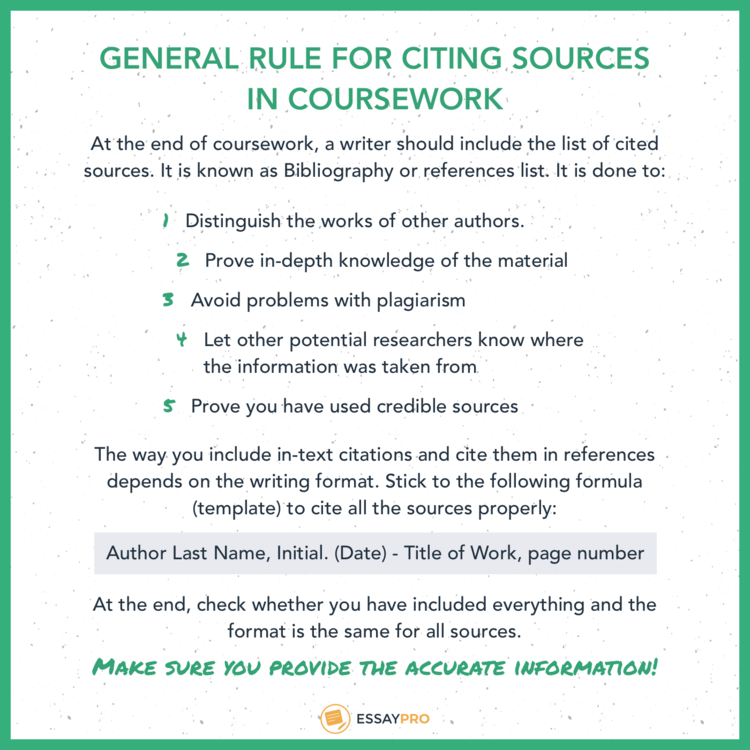
Dissertations, thesis, and all kinds of academic papers will need to be cited using citation styles, such as APA, MLA, or Chicago. Citing academic papers properly are done to counteract plagiarism.
These citing formats are used to recognize related literary pieces and to mention references used. You should study various citing styles and research paper well before producing essays or any other pieces of academic writing.
In this article, we will be tackling how to format research papers as well as how to properly reference academic papers.
TABLE OF CONTENTS
APA Research Paper Format
How to Cite a Research Paper in APA
MLA Research Paper Format
How to Cite a Research Paper in MLA Format
Research Paper in Chicago Style
How to Cite a Research Paper in Chicago Style
ASA Research Paper Format
How To Cite a Research Paper in ASA Format
Get a Prompt Help
APA Research Paper Format
APA (American Psychological Association) research paper format is often used in papers related to psychology and social sciences. In this citation, there is a general format in referencing through endnotes/footnotes, in-text, and reference pages. Academic papers in APA citation has general writing guidelines.
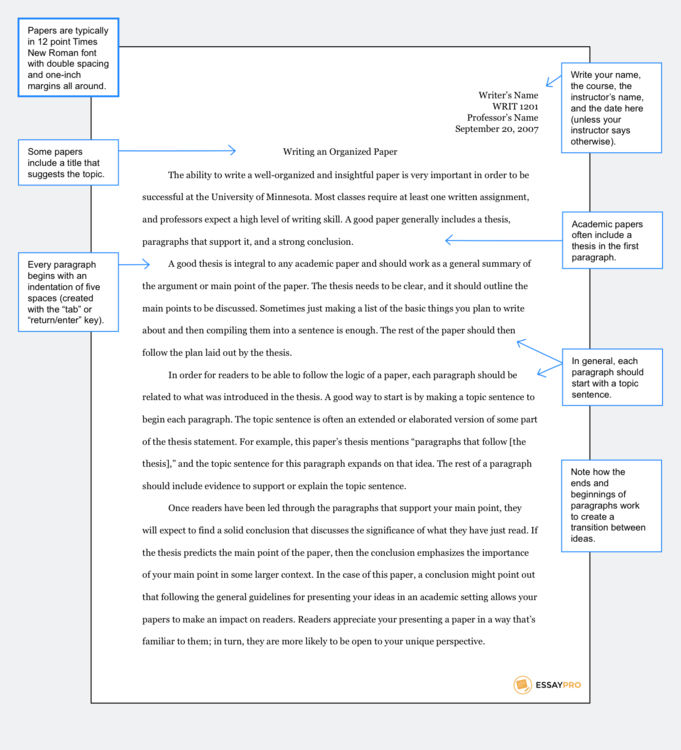
Papers should be typed, double-spaced on standard-sized paper (8.5″ x 11″) with 1″ margins on all sides. You should use a clear font that is highly readable. APA recommends using 12 pt. Times New Roman font. Include a page header at the top of every page. To create a page header, insert page numbers flush right. Then type the title of your paper in the header flush left using all capital letters.
The page header is a shortened version of your paper’s title and cannot exceed 50 characters including spacing and punctuation.
Talking about how to write a research paper in APA format, your APA paper should have four major sections:
Title page
Abstract
Main Body
References
How to Cite a Research Paper in APA
There are specific rules to follow when citing a research paper in APA. The following are the specific formats to follow:
Book: Author, A.A.. (Year of Publication). The Title of work. Publisher City, State: Publisher.
Example: Finney, J. (1970). Time and again. New York, NY: Simon and Schuster.
Magazine: Author, A.A.. (Year, a month of Publication). Article title. Magazine Title, Volume(Issue), pp.-pp.
Example: Tumulty, K. (2006, April). Should they stay or should they go? Time, 167(15), 3-40.
Newspaper: Author, A.A.. (Year, Month Date of Publication). Article title. Magazine Title, pp. xx-xx. Rosenberg, G. (1997, March 31). An electronic discovery proves an effective legal weapon.The New York Times, p. D5.
Website: Author, A.A.. (Year, Month Date of Publication). Article title. Retrieved from URL
Example: Simmons, B. (2015, January 9). The tale of two Flaccos. Retrieved from {link}
MLA Research Paper Format
MLA (Modern Language Association) format format is commonly used in liberal arts and humanities. Let’s talk a bit about how to write a research paper in MLA format.This format has principles rather than a set of specific rules to be followed. Papers in MLA format provides a process of documentation.
MLA recommends using Times New Roman font in size 12. The entire paper should be double spaced with 1-inch margins on all sides. Tab once to indent paragraphs (½ inch). Your last name and a page number should be inserted on the upper right-hand corner of the first page.
How to Cite a Research Paper in MLA Format
The following are formats to follow in citing research paper in MLA format:
Book: Last Name, First Name. Book Title. Publisher City: Publisher Name, Year Published. Medium.
Example: Smith, John. The Sample Book. Pittsburgh: BibMe, 2008. Print.
Magazine: Last Name, First Name. “Article Title.” Magazine Name Publication Date: Page Numbers. Medium.
Example: Smith, John. “Obama inaugurated as President.” Time 21 Jan. 2009: 21-23. Print.
Newspaper: Last Name, First Name. “Article Title.” Newspaper Name Publication Date: Page Numbers. Medium.
The Chicago style of citing is commonly used in humanities. It requires writers to cite sources in end notes or footnotes. This citation provides the author with an avenue to express accountability and credibility to related literature or references used in written material. It helps an academic writer provide quotations in a research paper, as well as being commonly used for book bibliographies.
How to Cite a Research Paper in Chicago Style
The following are Chicago style formats to follow:
Book: Last Name, First Name. Title of Book. Publisher City: Publisher Name, Year Published.
Example: Brown, Dan. The DaVinci Code. New York: Scholastic, 2004.
Magazine: Last Name, First Name. Article title. Magazine Title, Month Date, Year of publication.
Example: Chan, Dan. The art of pandas. Panda Magazine, Nov 10, 1985.
Newspaper: Last Name, First Name. “Article Title.” Newspaper Name, Publication Date.
Example: Smith, John. “Steelers win Super Bowl XLIII.” Pittsburgh Post-Gazette, February 2, 2009.
Website: Last Name, First Name. “Page Title.” Website Title. Web Address (retrieved Date Accessed).
Example: Smith, John. “Obama inaugurated as President.” {link} (accessed February 1, 2009).
ASA Research Paper Format
The leading American method of referencing and quotation created by Sociological Association. Sociological students and scholars use the ASA citation format primarily for writing university research papers in sociology or for submitting articles to ASA journals.
For the detailed information about ASA elements of style, visit the American Sociological Association official website or read our Guide to ASA Citation and Writing Style.
How To Cite a Research Paper in ASA Format
Book: Author’s Last and First Name. Year of Publication. Title. Country of Publisher: Publisher.
Example: James, Henry. 2003. The Turn of the Screw. New York: Barns & Noble Books.
E-Books: Author’s Last and First Name. Year of Publication. Title. Country of Publisher: Publisher. Retrieved Month Day, Year {link}.
Example: James, Henry. 2003. The Turn of the Screw. New York: Penguin Books Kindle Version. Retrieved January 18, 2017. {link}
Journal Article: Author’s Last and First Name. Year of Publication. “Title.” Journal Name issue #: inclusive page numbers.
Example: Feekins, Bo. 2008. “Chasing Tree Frogs.” National Geographic #182. 6-10
Magazine Article: Author’s Last and First Name. Year of Pub. “Title.” Magazine Name, Month Year, pp. Inclusive page numbers.
Example: Geary, Rachel. 2012. “The Issue with Mastery Learning.” New York Times, April 2002. Pp. 15-23.
Website: Author’s Last and First Name. Date of Publishing. Title. Publisher. Retrieved Month Day, Year {link}.
Example: Lee, Bruce. 03.09.2004. Birth of a Nation. Retrieved 18.01.2017. {link}
If you are a high school or college student, there will definitely be a time when you find yourself in a position where you need to cite a research paper, dissertation, or create an annotated bibliography. There are various styles of formatting, but the most commonly used ones are the MLA, APA, and Chicago styles. Using these formatting styles helps to ensure that the writers do not engage in plagiarism and it also simplifies the process of locating sources used within the essay. Our App will teach you how to correctly cite a research paper using MLA Format.
TABLE OF CONTENTS
What Is MLA Formatting Style
Formatting The Front Page
The In-text Citation
Example of a Research Paper in MLA Format
What is MLA Formatting?
MLA is the formatting style of the Modern Language Association. It is used in areas such as English studies, comparative literature, foreign language, and literature or cultural studies. It is an academic style guide extensively used in the United States, Canada, and other countries. It mostly provides guidelines for writing and documentation of research in humanities and English literature.
Formatting The Front Page
There are four key components that come with setting up within proper MLA rules:
Page Margins should be EXACTLY 1 inch on both sides of the text.
Set the line spacing from single to double-spaced. This makes reading the text less crammed on the eye and allows the professor to make necessary comments in a neat and organized manner.
Create a header that has your last name as well as the automatic page number. This is done to keep track of the page order and it also looks pleasant on the eye!
Lastly, enter the required course information on the top-left corner of the front page. It should look like this:
Full Name
Name of Teacher/Professor
Name of Course
Due Date for Assignment
The In-text Citation
When citing a research paper, include references within two sections:
The quotes used within the essay
The Works Cited page at the end
The citation information in the body of the paper itself is called the “in-text citation”. The most obvious time to use it in text is when you use a quote from a source directly or refer to it by title or author.
Generally, you need to list the writer’s last name and page number enclosed within parentheses straight after the quote. If the author’s name is included as a feature of your sentence, then you only have to include the page number in the bracket.
Example: “Two roads diverged in a wood, and I – I took the one less traveled by, and that has made all the difference” (Frost 1). Kenneth Burke has described human beings as “symbol-using animals” (3).
As you can see, Burke’s name was included in the sentence, so there is no need for repetition in the citation.
The Detailed Information
References: When providing references in research paper you must inform the readers about the sources you used to cite this information. The reference page is known as the “Works Cited”. This page is where the author gives credit to the source. Things that are placed within a citation include: alphabetical order of authors last name, title of article and date issued.
Follow this format exactly: Author(s)-> “Title of Article.” ->Title of Journal Volume.->Issue (Year): pages Electronic Sources. For electronic sources utilize the inventor’s name and page number or area number for in-substance references. This is only if the information does not have page or section numbers by any methods. By then, you would basically include the author’s name in the section after you have referred to the recorded information.
Selecting An Appropriate Method of the In-text Citation.
In-text citations are most times parenthetical, which means that information are always added to the end of the sentence in parentheses. But if you include that necessary information in the language of the sentence itself, you should not include the parenthetical citation.
For example, if the author’s name is found within the in-text citation, then there is no need to add it at the end; simply add the page number and your referencing is finished!
Arrangement of the In-text Citation
Having two sources from the same author may confuse the reader. When they check the source, they will find two different articles. To avoid this confusion, you must include a short title of the research citation, so the readers know which of the citations to look for.
When a source has two or three authors, you should include all authors’ last names. Whereas, when you have four or more authors then you have to write them all out following the last name of the first Author.
A large portion of university and high school education is based on writing academic essays. They are the most effective at demonstrating students knowledge on a subject and showcasing ones ability to gather and present data. Fortunately, We are here to explain how to write a quality academic essay as well as the different types to choose from.
What is an academic essay? It is essentially a structured form of writing that serves a purpose of presenting new information or applying already existing knowledge to deliver a point. To fully understand how and when to use an academic essay, we need to look at the main types of essays.
TABLE OF CONTENTS
Types Of Academic Essays
Good Academic Essay Topics
Proper Format
Outline Of An Academic Essay
Writing Process
Types Of Academic Essays
All four main types of essays serve a unique purpose; however, some might share a similar structure. With that being said, the four academic essay types are narrative, descriptive, expository, and persuasive.
By approaching it from an educational perspective, we can see that the expository and persuasive types are most commonly seen in the university curriculum, as they are more scientific and objective. Narrative and descriptive are more subjective and engage your creativity. Now, let’s break down each type!
Narrative Essay: This is a type of writing that requires the author to create a compelling story on practically anything imaginable. In other words, it is a super condensed version of a novel. As one is required to show their creative abilities, constant use of strong adjectives will enhance the audience’s’ perception of the matter and help paint a graphic picture. Alongside telling a compelling story, a well-written narration should present a point that is “written between the lines.” Ideally, after reading the entire narrative essay, a clear message or theme should be extractable from the text. By doing this, you are motivating the reader to read it entirely, as it comes with a secret message that will only be uncovered at the end!
Descriptive Essay: Just like with narrative essay writing, this style requires the author to be subjective and creative. In short, the author chooses a specific noun or idea and describes it to the reader. However, just like a narrative essay, you are meant to draw an image in the audience’s eyes. Carefully selected and powerful words are essential to the writer’s success, as the essay must evoke a certain feeling in a reader and connect them to the object of discussion. When the audience comprehends the subject matter well and the contents of the paper define the term in question, one can be sure that they have written a stellar descriptive essay.
Expository Essay: This is a type of academic writing used to create a spotlight on a matter using grounded information and facts. Sufficient evidence should follow all information provided. An expository essay is no place for opinions or personal views on things. A quality paper should use analysis that consists of factual information on the subject. The author’s primary job is to inform and educate the reader with coherent writing and understandable logic. As an example, “How to Write an Academic Essay” could be considered a branch of expository essay writing.
Persuasive Essay: Last but not least, writing a persuasive essay requires one to embrace the role of a salesman. You have an opinion, project, or an idea which you have to sell to a reader. The logic behind how you supply the reader with the information should be impeccable, leaving them with no doubt that what you are expressing is the only truth they need to know. Cater your points carefully to avoid being pushy, and hide your sales tactic behind well thought out sentences. When it comes to defending an argument, the author can use logical tactics, emotional tactics or a mix of both; this depends on what they are attempting to argue.
Good Academic Essay Topics
Logically, topics will vary based on the style of writing one is creating. Sometimes, topics will find themselves in several types, but the main content objective will always vary. That being said, here are some good academic essay topics for high school and college students.
Narrative Essay Topics
Describe a time you overcame adversity. Explain the situation and how you handled it.
Talk about a passion that is rooted deeply into your personality and would make you feel incomplete should it disappear.
Create a story that teaches the importance of honesty and integrity.
Create a story that illustrates the value of hard work and discipline.
Descriptive Essay topics
In your own words, define love.
What constitutes a hero or heroic action?
Describe a genius. What are examples of genius acts?
Describe a businessperson. What traits do they possess?
Expository Essay Topics
What effect has social media had on interpersonal relationships and communication?
What are some strategies society can use to reduce the growth and dangers of global warming?
What methods can society implement to prevent and punish cyberbullying?
What are the main causes of racism in today’s society?
Persuasive/Argumentative Essay Topics
Provide an argument as to whether or not the death penalty should be abolished.
Should we give animals more rights, instead of treating them as mere property?
Should the United States have a stricter gun control policy?
Was the bombing of Hiroshima and Nagasaki mass murder or a justifiable means to end WWII?
Proper Format
In general, all academic essays follow a very similar formatting style. Usually, this type of writing will consist of 5 paragraphs: an introduction, three body paragraphs, and a conclusion. Moreover, each section will have a unique internal structure. The introduction’s main goal is to introduce the topic and reveal the main message a.k.a thesis statement. The body paragraphs’ primary task is to defend the thesis with 3 sub arguments, with 1 per paragraph. Lastly, the conclusion is there to wrap up the entire argument and leave a lasting impression in the form of an overall concluding statement. Down below is a graphic organizer that illustrates the breakdown.
Outline Of An Academic Essay
Before commencing on any academic writing, four essential elements need to be created and answered beforehand. They are the thesis statement, subpoints, connection and the summary.
Thesis Statement: The focal point of your writing. The main message an author is trying to deliver.
Body Points (Subpoints): These are the key points or statements that you will use to support your case.
Connection: When writing an academic essay, it is important to tie it directly or indirectly to the real world. Provide a reason as to why it is important to you or its relevance to society. This will fill your writing with new meaning and showcase your unique way of thinking.
Summary: A strong concluding statement that is going to explain your given points briefly.
When you have created a proper outline, listed your main points, and collected evidence to support your idea – it is time to start writing your paper. A lot of people choose to come up with a title before the writing process as it helps set a mood for the work. Others prefer writing first and then creating a title based on the written information. The second option is more suitable for writing narrative or descriptive essays as the title’s meaning could be abstract. However, when it comes to expository and persuasive papers, it is important to set a specific essay title and follow it along.
The Introduction
There is an already established academic essay format that has been used for many years and was shown to be the most efficient in delivering information to the audience. To begin any essay, one must start with an introduction.
Remember: the audience’s attention span is at its highest in the very beginning, so your introduction is going to set the tone for the entire paper. Luckily for you, our top academic writer has several techniques that will help you build a compelling introduction!
The first sentence of any introduction should get the reader interested from the get-go and motivate them to read on. Here are some reliable strategies to creating a captivating hook:
Start With a Quote: A creative and meaningful quote could leave a powerful impact on a reader and also serve as a good opener. However, it is crucial to make sure that the quote directly relates to your topic and doesn’t wander away in generality.
Rhetorical Question: Starting with a rhetorical question allows you to connect more with the reader. A good rhetorical question is going to stay in your audience’s mind throughout the entirety of your paper. However, a rhetorical question should be answered within your article’s body or at least guide the reader towards a relevant observation.
Factual Statement: When writing an expository or persuasive essay, starting with a fact or a statistic will give your writing more credibility. It is also going to demonstrate that you have researched the topic by providing the reader with real information and not simply an opinion.
After creating an exciting hook, it is time to funnel your readers into the main topic of conversation. As the topic of conversation will not be evidently clear at this point, it is time to narrow their focus by providing contextual background information. Doing so will help the audience understand where the writing is taking them. Lastly, it is time to write our golden sentence aka thesis.
The thesis statement is an essential part of any formally written custom academic essay; it is the main point, argument or theme of your work. In other words, the entire message you are attempting to deliver should be summarized in this sentence.
Tip: Do not overload it with unnecessary information; it should be a concise sentence that lays out the focus and introduces the subpoints from the body.
The Main Body
Your body paragraphs will be the source of information for your audience. It is always the biggest part of the essay and requires the most attention. When writing your body paragraphs, the points should be stated according to the order of your outline, and should support your thesis statement. If you deviate from that, it’s going to confuse the audience, especially those who are very attentive to your essay’s flow.
These are the main requirements for writing a strong body:
Accuracy: Be cautious with information and do not contradict yourself. Include the relevant subpoint (based on the body paragraph) that you have presented in your thesis.
Evidence: Every topic or idea you present should be defended with sufficient evidence to accredit your words. Provide details such as facts, statistics, and references.
Word Choice: Mind your vocabulary, especially when it comes to persuasive or descriptive essays. The words should accurately represent your information. Use vivid adjectives and strong adverbs.
Keep It Consistent: A body paragraph should be between 5-7 sentences. Logically, they should all follow a similar structure, with the main difference revolving around the presentation of the subpoint.
The goal of the main body is to answer any questions that have appeared in the reader’s mind after the introduction. Every new point should get the audience closer to understanding the complete concept. Ideally, your goal is to bring them to the same level of knowledge on the subject as you have in your capacity. After doing so successfully, it is time to transition to the conclusion.
The Conclusion
In any essay you write, whether it’s an academic success essay or an academic goal essay, you have to start strong and finish even stronger. As you move towards the end of the paper, your reader won’t even remember what the first paragraph you wrote was about. Therefore, your duty is to give them a reminder. Overall, a good essay conclusion is going to include:
Summary: A condensed paraphrasing of the stated information for the thesis and subpoints. (Only if you are writing an expository, descriptive, or persuasive essay)
Personal or Social Connection: In other words, why this information is relevant to society. Stating such a connection showcases the general importance of the subject and modern day relevance.
Overall Concluding Statement: This will normally be the last sentence that will tie a pretty knot around your work. If you have initially started with a rhetorical question, a nice touch would be to give the audience an answer to it here. If you have written a quote, rephrase it in your own words. It is important to leave the audience with a strong statement that is going to stay in their mind.
Writing Process
Drafting The drafting process is what takes you from a compilation of information to a structured delivery of an idea. No quality essay has ever been written in a single draft. The process begins with a rough draft, a stage where you use all the information you have acquired, to fill a relative outline. From there, you narrow down this information to the most relevant parts. Every new draft must also carry away with it things such as content problems, structural flaws, or simple typos. The final draft tends to be drastically smaller than the original.
Word Choice Word choice is one of the factors that define the quality of the paper. It is also often overseeded or neglected. It is no secret that some words are better at communicating ideas than others. It is also no secret that vocabulary plays a big role in the writing process. Focusing on word choice is most significant in descriptive essays when your goal is to paint a picture in the reader’s mind. If you are writing an essay on a specific area of study, it is quite crucial to use words that are related to that field and to avoid simple neutral words that offer no contribution to the text.
Finalizing the Submission At this stage of writing, your content should be well polished. After taking your paper through a peer review and/or red pen edits:
Fix all grammatical mistakes and punctuational errors
An Article Review is a critical, constructive evaluation of literature in a particular field through summary, classification, analysis, and comparison. If it is a scientific review article, it uses database searches to portray the research.
An article review gives scholars or students the opportunity to analyze and evaluate the work of other experts in a given field. Outside of the education system, experts often review the work of their peers for clarity, originality, and contribution to the discipline of study. When answering the question of what is an article review, you must understand the depth of analysis and evaluation that your instructor is seeking.
TABLE OF CONTENTS
What Is An Article Review
Types Of review
Formatting
Pre-Writing Process
Outline
Post-Writing Process
Example
What Is An Article Review
An article review is a type of professional paper writing. It demands a high level of in-depth analysis and a well-structured presentation of arguments. Your primary goal is to review the topic, summarize everything and present a clear understanding of the topic you’ve been working on.
Writing involves:
Summarization, classification, analysis, critiques, and comparison.
The analysis, evaluation, and comparison require use theories, ideas, and research, relevant to the subject area of the article.
It is also worth nothing if a review does not introduce new information, but instead presents a response to another writer’s work.
Check out other samples to gain a better understanding of how to review the article.
Some Types Of Review
Journal
Much like all other reviews, a journal article review evaluates strengths and weaknesses of an article. A qualified paper writer must provide the reader with an analysis and interpretation that demonstrates the article’s value.
Research
A research article review differs from a journal article review by the way that it evaluates the research method used and holds that information in retrospect to analysis and critique.
Science
Scientific article review involves anything in the realm of science. Often, scientific articles include more information on the background that you can use to analyze the article more comprehensively.
Formatting An Article Review
The format of your paper should always adhere to the citation style required by your professor. If you’re not sure, seek clarification on the preferred format and ask him to clarify several other pointers to complete the formatting of an article review adequately.
How many articles should you review?
In what format you should cite your articles (MLA, APA, ASA, Chicago, etc.)?
What length should your review be?
Should you include a summary, critique, or personal opinion in your article?
Do you need to call attention to a theme or central idea within the articles?
Does your instructor require background information?
When you know the answers to these questions, you may start writing your literature review. Below are examples of MLA and APA formats, as those are the two most common citation styles.
Using the APA Format
Articles appear most commonly in academic journals, newspapers, and on websites. If you write an article review in the APA format, you will need to write bibliographical entries for the sources you use. Here’s how to do it:
Web Article: Author [last name], A.A [first and middle initial]. (Year, Month Date of Publication). Article title. Retrieved from {link}
Newspaper Article: Author [last name], A.A [first and middle initial]. (Year, Month Date of Publication). Article title. Magazine Title, pp. xx-xx.
Using MLA Format
Web Article: Last, First Middle Initial. “Article Title.”Website Title. Website Publisher, Date Month Year Published. Web. Date Month Year Accessed.
Newspaper Article: Last, First M. “Article Title.” Newspaper Title [City] Date, Month, Year Published: Page(s). Print.
Journal Article: Last, First M. “Article Title.” Journal Title Series Volume.Issue (Year Published): Page(s). Database Name. Web. Date Month Year Accessed.
The Pre-Writing Process
Organization in an assignment like this is of utmost importance. Before embarking on your writing process, you could outline your assignment or use an article review template to organize your thoughts more coherently.
Start with an introduction that mentions the article and a thesis for the review
Follows with a summary of the main points of the article
Highlights the positive aspects and facts presented in the article
Critique of the article through identification of gaps, contradictions, disparities in the text, and unanswered questions
Outline And Template
As you progress with reading your article, organize your thoughts into coherent sections in an outline. As you read, jot down important facts, contributions, or contradictions. Identify the shortcomings and strengths of your article. Begin to map your outline accordingly.
If your professor does not want a summary section or a personal critique section, then you must alleviate those parts from your writing. Much like other assignments, an article review must contain an introduction, a body, and a conclusion. Thus you might consider dividing your outline according to these sections as well as subheadings within the body. If you find yourself troubled with the prewriting and the brainstorming process for this assignment, seek out a sample article review outline.
Your article must contain these constituent parts:
Pre-title page: here, you will want to list the type of the article that you are reviewing, the title of the article, all the authors who contributed to the article, author’s affiliations (position, department, institute, city, state, country, email ID)
Running head: *Only in the APA format. It is the title of your paper shortened to less than 40 characters.
Summary page: Optional, depending on the demands of your instructor. The summary should be maximum 800 words long. Use non-technical and straightforward language. Do not repeat text verbatim or give references in this section. Give 1) relevant background 2) explain why the work was done 3) summarize results and explain the method.
Title page: full title, 250-word abstract followed by “Keywords:” and 4-6 keywords.
Introduction
Body: Include headings and subheadings
Works Cited/References
Optional Suggested reading page
Tables and Figure legends (if instructed by the professor.)
The Post-Writing Process
Summarize the Article
Make a summary of the article by revisiting what the author has written about. Note relevant facts and findings of the article. Include the author’s conclusions in this section.
Critique the Article
Present the strengths and weaknesses that you have found in the article. Besides, highlight the knowledge that the author has contributed to the field. Also, write about the gaps and contradictions in the article. Take a standpoint of either supporting or not with the author’s assertions but back your arguments with facts and relevant theories that are pertinent to the area of knowledge. Rubrics and templates can also be used to evaluate and grade the person reviewing the article.
Crafting a Conclusion
In this section, revisit the critical points of your piece, your findings of the article, and your critique. Also write about the accuracy, validity, and relevance of the results of the article review. Give way forward for future research in the field of study. Before submitting your article, keep these pointers in mind:
As you read your articles, highlight the key points. This will help you pinpoint the article’s main argument and the evidence that they use to support that argument.
While you write your review, use evidence from your sources to make a point. This is best done using direct quotations.
Select quotes and supporting evidence adequately and use direct quotations sparingly. Take a lot of time to analyze your articles.
Every time you reference an article or use a direct quotation use a parenthetical citation to avoid accidentally plagiarizing your article.
Re-read your piece a day after you finished writing it. This will help you spot grammar mistakes and see any flaws in the organization.
Use spell-check or get a second opinion on your paper.
Example Of An Article Review
The best way to learn how to write this kind of paper is to look for an article review example online that matches your grade level. Here is a college-level article review sample.
A case study is one of the many research methods or strategies used by students that are studying a certain person, group, or situation. Case studies can usually be found in such areas of knowledge such as sociology, anthropology, psychology, education and much more.
TABLE OF CONTENTS
Setting Up The Research
How To Write A Case Study Draft
Finalizing The Draft
How To Cite A Case Study
Different Types Of Studies
Cover Page Example
A case study investigates problems and offers solutions. They can range from academic research studies to corporate promotional tools trying to sell an idea. While research papers turn the reader’s attention to a certain problem, case studies go beyond that. Case study guidelines require students to pay attention to detail, examining issues using different research methods. As we address problems differently in life, every case study requires a unique approach.
Setting Up The Research
Research always comes first. Gain as much knowledge as you can on your essay topic. Reading many different sources and analyzing other points of view will help you come up with more creative solutions.
Follow these guidelines on how to start a case study:
Surf the net to find some general information you might find useful.
Make a list of reliable sources and examine them.
Seek out important facts and highlight problems. Always note down your ideas and brainstorming.
Focus on several key issues. Why do they exist, and how do they impact your research subject.
Think of several unique solutions. Draw from class discussions, readings, and personal experience.
When writing a case study, focus on the best solution and explore it in depth.
Professors will ask you to apply many methods for data collections and analysis, looking at many authors and theories.
Applying triangulation will not only increase the quality of your work but have a significant impact on your grade.
How To Write A Case Study Draft
After having all your research in place, writing a case study will be easy. You may first want to check the rubric and criteria of your assignment for the correct case study structure. Think of a report broken down into these sections. Use your research and analysis to fill them out.
Introduction – Familiarize the audience. A case study introduction must provide adequate background information on the topic. The background may include analyses of previous studies on your topic.
Aims – Think of it as a thesis statement. The aims must describe the purpose of your work, presenting the issues that you want to tackle.
Method – It is significant to tell your audience how you went about collecting information. Describe your unique research process, whether it was interviews, observations, academic journals, etc.
Results – The next point includes providing the results of your research. Tell the audience what you found out.
Discussion – Why is this important, and what could be learned from it? Discuss real implications of the problem and its significance in the world.
Recommendations – Since this is not a research paper – the conclusion must provide concrete solutions – not theoretical ones.
Fill in these parts of a case study, and the rest should be easy.
Let’s find out how an outline supposed to be written if you are going to write about a problem-oriented study:
Finalizing The Draft & Checklist
All work in progress is subject to change. When you write a draft, go over it section by section. Then read it as a whole. Does it follow a logical chain of arguments? Have you made your purpose clear to the reader?
Here’s some more ‘ask yourself’ questions when thinking about how to end a case study:
Check that you follow the correct case study format, also regarding text formatting.
Check that your work is consistent with its referencing and citation style.
Have you applied the triangulation method to your research?
Micro-editing – check for grammar and spelling issues.
Macro-editing – does “the big picture” come across to the reader?
Is there enough raw data such as real-life examples or personal experience?
Have you made your data collection process well transparent?
Does your analysis provide a clear conclusion allowing for further research and practice?
It is always productive to double-check your work the next day with a clear mind. Read through it to see if every section flows into the next, and if the general point comes across. You may always use the appendix to insert non-critical information.
How to cite a case study and create a Title Page
A case study is like a research paper when it comes to citations. You can cite it like you cite a book, depending what style you need.
In MLA: Hill, Linda, Tarun Khanna, and Emily A. Stecker. HCL Technologies. Boston: Harvard Business Publishing, 2008. Print.
In APA: Hill, L., Khanna, T., & Stecker, E. A. (2008). HCL Technologies. Boston: Harvard Business Publishing.
In Chicago: Hill, Linda, Tarun Khanna, and Emily A. Stecker. HCL Technologies.
The title page should include:
A title that attracts some attention and describes your study
The title should have the words “case study” in it
The title should range between 5-9 words in length
Your name and contact information
Your finished paper should be only 500 to 1,500 words in length. With this kind of an assignment, write effectively and avoid fluff.
Different Types Of Studies
The purpose of case studies is to provide detailed reports on an event, an institution, a place, a person – or pretty much anything. There are a few common types of case study, but it all depends on the topic.
Historical types of case studies are great to learn from. Historical events have a multitude of source info, offering different perspectives. These types of case studies conclude in lessons learned from history. There are always modern parallels where these lessons can be applied.
Problem-oriented topics are simply a means of solving problems. If you’re writing for college, these are often assigned as theoretical situations. Imagine you’re working for a startup and you’ve just noticed a significant flaw in your product’s design. Before taking it to the senior manager, you want to study the issue in detail and provide solutions. On a greater scale, problem-oriented case studies are a vital part of relevant socioeconomic discussions.
Cumulative case studies collect information and offer comparisons.
In business, case studies are often used to tell people about the value of a product.
Critical case studies explore causes and effects of a certain case.
Illustrative case studies can describe certain events, investigating outcomes and lessons learned.
Investigative case studies – think of yourself as an academic detective.
Cover Page
A title page depends on the prescribed citation format. Here is a template for the APA format title page:
Coursework projects do not resemble essays, research papers, or dissertations. They are the combination of all three. Students spend less time writing coursework than on making a term paper, but this type of work requires more time and efforts than an ordinary essay – it is made of several essays. Thanks to our guide, each student can discover how to write coursework.
TABLE OF CONTENTS
What is Coursework?
Types of Coursework
How to Write a Coursework?
Choosing a Topic
Research & Data Collection
Writing an Outline
How to Write an Introduction?
Mistakes to Avoid
What is Coursework and Why Does It Matter?
Coursework definition:General Certificate of Secondary Education (GCSE) coursework is a typical academic assignment, given in the course of study to evaluate the student’s knowledge, skills, and identify the final grade. Many students face this type of writing in the US colleges. One of the examples is a coursework UTD (The University of Texas at Dallas) – the requirements of this institution are strict, and many students fail to submit their papers and pass the corresponding courses.
Such type of assignment helps to have the ‘detective’ hat on: a student observes, examines, and evaluates the chosen topic using credible, up-to-date, and relevant sources. Working under controlled conditions is important. Participating in every school class will help to prepare good coursework by the end of the term. Take a look at the examples of what students of various profiles may face:
English Composition – English coursework is an extended essay in most cases. A student has a right to pick the topic. The tutors provide their students with the list of recommended titles to choose from, sources to observe & analyze, and a format (e.g., a comparison between different relevant articles)
Sciences – coursework for science is a complicated assignment. Such type of work appears in the form of a scientific paper to test what a writer investigates and reports independently.
Geography – geography coursework is about collecting, reporting, and explaining information to reply to a certain geographical question or offer solutions to the problem. One idea is to explore the usage of a shopping mall or analyze the recent tornado. No matter whether you have to prepare a coursework Columbia or such paper for other educational institutions, keep in mind these differences!
Types of Coursework Explained
English Language coursework is the most common type of this assignment. At advanced GCE level, the student will be expected to write a couple of essays, totaling 3,000 words. Every assignment is 20 marks maximum.
An analytical essay: Evaluate, compare, & contrast 3 different sources of data interconnected by a common theme; written /spoken / multimedia content. Discuss different uses for targeting various audiences.
Original essay with a supportive commentary: A student will have to come up with a single piece of media writing in the observed modes (written, spoken, or multimodal). Add a supporting piece with details about the aspects of English language. English Language & Literature coursework is a bit different. The basic requirements are the same, and the parts are:
An analytical study: Sharing an analysis of the chosen piece and its relation to the related content. It will show how well the writer understands the original piece. Tutors grade such works based on the:
Use of the proper terminology and the coherence of the written words;
Understanding & evaluation of the way a structure, form, and language create the written & spoken word;
Opportunity to observe relationships between various pieces of writing.
Creative writing & commentary: Produce a creative piece that imitates the style of the assessed text. Share comments to backup your understanding. The goal is to show the knowledge, prove the competence, and use appropriate language skills in communicating with the target audience. You will also need a relevant coursework resume (review) in both cases. Keep on reading to learn how to write coursework of A level.
How to Write a Coursework: Guide for Students
Several factors may lead to the coursework being disqualified. It is a serious matter! The risk factors include:
Plagiarism – it is the worst thing that could happen to any type of academic assignment. Lots of relevant information is available on the world wide web today, and the tutors are strict about the issue of plagiarism. Write everything in your own words! If you decide to insert the quotes from the sources, apply the suggested citation format and develop a list of references. Sign the declaration claiming it is your original project.
Word count – do not ignore the specific requirements concerning the length of the coursework. Specify if the footnotes, appendices, & references are included in the word count.
Topics – go through the list of available themes. If there is an examination planned on the specific topic, try to pick another idea for the coursework.
Tutor’s assistance – do not ignore the help of your instructor, ask them to provide guidance on what to write. Ask the questions to learn more details, but keep in mind they can go through the 1st draft once and just offer some general recommendations.
Choosing a Topic for Your Project
Dedicate enough time to this extra important question. Select the field of your interest if it is possible to relate it to the course. That is the golden rule of choosing a coursework topic – keep in mind the rest of the hints:
Analyze the offered list of topics or develop yours
Pick a topic from the area of your expertise related to the studied subject
Select the topic you are interested in
Choose the topic you’ve started to observe in the past
Check how much relevant, up-to-date information is available on the Internet about each of the topics
Pick what you can measure, change, & control (they call it a ‘fair test’)
Use the ideas of previous researchers and students
Do not choose a topic with a vast scope – you risk struggling to research it correctly
10 Good Coursework Topics
Non-traditional Forms of Poetry with TC Tolbert
Documentary Foundations: Usage of Oral Histories with Beth Alvarado
Traditional Forms of Poetry
Hermit Crabs: Type of Fiction
Writing the Autobiographical Poem
Creative Non-Fiction on the Examples of New Journalists
Authors without Borders
Writing the Sticky Stuff
Socially Engaged Literary Arts
Common Vocabulary
Research & Data Collection
Research is an integral part of coursework. Have you written research papers before? If yes, you will find it easier to select proper primary & secondary sources and gather the necessary information (evidence to support the main point – thesis). Depending on the required paper format, cite & reference the following sources:
Books & e-Books
Magazines
Newspapers
TV
Radio
Internet
Base the project on a specific hypothesis. The research must start with minimum one hypothesis. The research stage for some topics may consist of visiting websites to collect information. Leave another time for collecting the data as it is the heart of the research. Three methods of data collection are known:
Direct personal investigation: The one an author does individually (using literature and findings from previous studies);
Interview/Questionnaire: The researcher should gather the data from the respondents asking questions regarding required data;
Discussion with community leaders: Community leaders are approached to fetch information for the necessary data.
In case a student works on a scientific experiment, they should pay attention to planning the analysis with the help of rigorous scientific methods (keeping in mind the Health & Safety precautions you take). Review background information and theories. Take notes to express what you expect to occur to compare & contrast it to what happened in real life. In the write-up stage, one has to evaluate and present the findings.
Writing a Coursework Outline
The writing process follows the research. Do not start it without preparing an action plan and scheduling the work – a paper pin for English coursework is based on an extended essay. An outline will look different for the science coursework projects. The goal of creating a plan is to prevent a writer from being disorganized and waffling.
Let us explain coursework outline on the specific example – a project on the global pursuit of lower costs and the role of human rights.
Start with the brief introduction explaining why it might be a topic of interest for many people. Mention those vast corporations like Wal-Mart abuse human rights by choosing and using child labor in the factories.
Provide an overview of the problem. Define human rights and costs. Pick the definitions from the official dictionaries and cite them properly when inserting in the text. Try to explain the terms in your own words.
Develop a body of the coursework, start with the case for & against ethical business practices. Using evidence and examples, list the arguments supporting ethical business practices and another side of the coin. Include a business case for ethical practices after the opening body paragraph.
Move to discussing ethical responsibilities; explain why business organizations should care about the ethical aspects of their activities. After three sections of the body, one can conclude the paper. It can be a good idea to share a fact or statistics stressing the importance of research problem in the essay’s conclusion. End up with the reference list that may look this way:
Klein N (2000) No Logo (Flamingo, London)
Marcousé I, Gillespie A, Martin B, Surridge M and Wall N (2003) Business Studies 2e (Hodder Arnold, Oxon)
Royal Dutch Shell (2006) 4th Quarter Financial Report at (site example)
Additional Elements
Supporting materials and pictures are a must! The sciences & geography projects require tables, charts, graphs, and other types of images to illustrate the complicated topic. Not only should you add the pictures – it is essential to interpret and reference each of them. A separate part of the coursework where the student list and explains every visual element is Appendix, and it is an optional part. The presence of appendix increases the chances to earn an A+.
How to Write an Introduction for Coursework?
Most of the students underestimate the role of introduction & conclusion when it comes to writing an essay. An eye-catchy introduction is a key to success. The primary purposes of a coursework introduction are:
To grab the reader’s attention
To introduce the topic
To explain the research importance
To come up with a compelling thesis statement
The opening paragraph shows the depth of the writer’s acquaintance with the topic. Look at the expert tips below. They will help to learn how to write a coursework introduction to make the tutor want to read your entire paper.
What Is an Introduction?
The introduction of **GCSE coursework** is the opening paragraph that aims to interpret the central questions and purposes of the entire paper. It should have several elements to be effective. Those are:
A hook sentence
Background information
Problem significance
Solid thesis statement
Advice from our Experienced Writer
How to write an introduction to coursework? The quality of this part predetermines paper’s success. Look at some common mistakes writers do while working on the coursework introduction – try to prevent them!
Ignoring the prompt. Many students tend to neglect the tutor’s instructions. It is critical to read the prompt several times, highlight the main points, research question, rules, and grading rubric details.
Missing a plan. The prompt does not always say to develop a coursework outline. Without a plan for every separate section, it is impossible to write a flawless piece step-by-step. No matter whether you have to write a term paper, research paper, dissertation, or C3 coursework, get ready with the detailed plan.
Once you understand how to write an introduction, it will be easier to develop the rest of the paper.
A dissertation predetermines the end of one’s academic journey. Once a person obtains a Doctor of Science degree, it is time to search for the dream job. Master’s and PhD degrees increase the chances of finding a prestigious job in the preferred field. That is why you will benefit from reading this guide.
TABLE OF CONTENTS
Dissertation Definition
What Is A Proposal
Proposal Outline And Length
Proposal Sample
20 Good Dissertation Topics
Outline
How To Cite
Post-Writing Tips & Tricks
What is a Dissertation?
The incomplete dissertation definition sounds this way: a large piece of work to be completed at the end of a doctorate. A full dissertation meaning is a little different. It is an academic argument; a piece of scholarly writing based on the research or data that a scholar has gathered during their studies. That is how experts define dissertation. The goal is to bring together all skills a student has learned.
The list includes research skills & methodological skills. It is helpful to define a dissertation as a culmination of the assignments and essays that a student has had to write throughout their higher education. This involves collecting data, synthesizing it, and putting it into academic form. It is an ability to explore student’s field of study.
The main problems doctoral candidates face while working on their dissertations include:
Inability to define dissertation and its goals properly;
Desire to postpone the work to the last minute;
Lack of research skills;
Insufficiency of writing skills.
The challenge looks overwhelming. That is why recommend reading this guide to find out more about the dissertation meaning and the ways to write this document. Every dissertation starts with a proposal.
What is a Proposal?
Writing a proposal is the primary step in the drafting process of any dissertation. A dissertation proposal sets the stage for the research the author has done. It is like a table of contents/outline for your research. The proposal will help you write the actual work and should be around 10-15 pages long depending on the length of the complete work assigned by your instructor. Be prepared that your data collection and analysis may not go exactly how you planned it. Before embarking on a novel-length dissertation, take the time to make your proposal to avoid getting lost in the middle of the process.
Proposal Outline and Length
Because the proposal is the initial step, drafting and outlining it is crucial. Here is a proposal template from the experts:
2-3 pages An Introduction + a Summary of significance (A quick recap of your topic. Highlight the focus of your paper. Stress the research question)
3-6 pages Methodology (How you plan to obtain data and how you will conduct your analysis. This section should reveal the resources, tools, and equipment applied and the amount of time dedicated to the project)
Objectives (a hypothesis/what you plan to prove)
6-10 pages Literature review (Which works did you use to construct your research? Discuss literature that relates to the topic.)
Research constraints (a disclaimer/what went wrong. It is critical as some might try to prove/disprove your work)
1-page Research timetable that serves to outline the core sections of your paper.
Proposal Sample
The following step consists of gathering information for each subheading. Keep in mind that the structure of your dissertation proposal always depends on the specific requirements of your course. Some courses stress that aims and objectives are a separate section in the dissertation proposal while they completely omit the methodology or the literature review section. Make sure to clarify this with your professor. The primary stage in writing a dissertation is to select the topic, question, and title:
What is the problem your project is going to tackle?
Why is it critical to find a solution to the chosen problem?
How do you plan to collect evidence and get the answers?
Dissertation vs Thesis
The main difference is that a thesis is written at the end of a master’s program while a dissertation is written during a doctoral study. A thesis could simply be a compilation of research. A dissertation is an opportunity to contribute something new to your field. In a thesis, you research a topic and expand upon the subject for which you just got a master’s degree for. A thesis is at least 100 pages in length. A doctoral dissertation is a lot longer because they include background research and other information which makes it at least twice as long as a thesis. Dissertation Writing: Pick a Topic in the Beginning Before writing a dissertation, select the topic. Pick one of the offered prompts or find one that you like.
20 Outstanding Topics to Kick-start Your Writing
Dissertations in Education
The categories of drinking styles in college students
The indicators of flossing behavior on university population
The role of homework assignments in the lives of international students
The way working as a taxi driver impacts a student’s behavior
The influence tutors’ shocking behaviors in fostering creativity in young people
MBA Dissertation Topics
Workplace ethics in multinational organization like Walmart
A business plan focused on the production of musical instruments
A business plan suggesting evaluation of a strategy
Empirical analysis of the company’s performance & leadership
Dealing with the Millennial Generation
Law Ideas for Dissertations
How the ‘fight with terror’ has affected criminal laws around the globe
A critical evaluation of the law of omissions liability
A review of criminal negligence connected with the Corporate Manslaughter and Homicide Act 2007
Evaluating cases filed in the criminal justice field
The role of gender and race in the criminal justice system
Technology Dissertation Topics
The way full-text databases impact the search engine results
An evaluation of apps created for the improved energy efficiency
Recently discovered approaches to risk management based on a specific software
Recent approaches to exploring the behavior of adware, malware, and different viruses
Redundancy & fault recovery on the 4G wireless network
Dissertation Outline & Structure
Before drafting your dissertation, draft an outline:
Title Page
Objectives (decide on up to 3 goals)
Table of Contents
List of Tables (if any)
List of Abbreviations (if any) in alphabetical order
Introduction (including your research question or hypothesis)
Literature Review (how you set your research topic up and how it fits into the existing field of study). Do not hurry! Start writing this part after asking the tutor about the recommended sources to be used and the preferred paper format)
Research (the main part in which a student should elaborate the ideas of the researched problem)
Methodology (explain why you chose these particular methods to answering the research question)
Findings (predictions of where you would end up along with the description and presentation of your data, evidence, or case study)
Discussion (the cumulation of your argument: literature, methodology, and findings to create synergy)
Timeframe (a schedule explaining the way a writer will handle the stage of dissertation writing)
Conclusions and recommendations (Reflect on the research and include recommendations and final evaluation of your research. Do not include new ideas as they should go in the discussion!)
Bibliography/List of references (a list in alphabetical order of all the external sources that you used to do your research)
Appendices (such things as questionnaires, interview transcripts, pilot reports, detailed tables, etc.) A writer doesn’t have to include all dissertation chapters mentioned in this outline example – it depends on the prompt, length, goals, etc.
A Dissertation Research
Before embarking on your dissertation writing process, it would be a smart to seek out a database and find other works in your field. Check out the structure of the sample. If you are not able to find a dissertation that would be helpful to you while writing your own, then you can order one online. That way, you’ll have a ready-made custom dissertation to base your work on or a very well-done example that you can use for reference anytime you want. Dissertation writing is impossible without the corresponding research. These tips will help you with this process:
Create a timeline for the research stage. Plan the time needed to find the relevant resources, collect the evidence, work on the proposal, develop a draft, and carry out the final paper. Stick to the outline and don’t be late!
Discover the place to search for sources. Thanks to the modern technologies, students do not need to spend hours in the traditional libraries any longer! Tools like Google Scholar might be useful for locating credible sources. Those students who prefer traditional methods may ask local librarians to assist them with their investigation.
Organize the resources. Such tools as Evernote or Penzu will help to organize the selected sources to prevent you from getting confused and stuck.
How To Cite a Dissertation?
What About the Lengh?
On average, a dissertation is a minimum of 21 pages and a maximum of 2000 pages long; the average length ranges from 100 to 200 pages.
Abstracts
An abstract is a summary of the entire dissertation. It should give an overview of the research that you’ve done. The purpose of an academic paper abstract is to give the reader an idea of what the dissertation is about and why the problem is important to discuss. Consider all the elements of your proposal and attempt to include them. Include your hypothesis and research question.
Post-Writing Process
Once you are done with the dissertation chapters and extras, it is important to consider one more critical stage – proofreading & editing. Take some time away from the dissertation writing process after it is over. A ‘sober mind’ works best when analyzing the quality of the final draft and making final edits.
Start editing. The difference between proofreading & editing is that proofreading focuses on the ‘shape’ of the document while editing focuses on the ‘essence’. Editing requires you to fix any formatting, grammar, structural issues. Proofreading is not about rewriting or changing anything but re-reading the text several times to estimate its efficiency. When proofreading and editing, mind the logical connection between every argument; decide if there are any gaps in the provided content and add more details gathered at the research phase. Decrease the volume of the dissertation chapters that have useless information: the clarity & quality matter more than quantity in this case. Fix grammar, spelling, and punctuation errors.
Proofread the text. Try to notice any stylistic or logical mistakes and consult a dictionary or thesaurus along with the free and paid apps to ensure the quality of your final draft. Seeing flaws may be complicated for the writer. Get dissertation writing help or at least some peer feedback to guarantee a better score on the paper.
More Dissertation Writing Tips: Defending the Work!
Defense: The defense is a significant milestone in the closure on your graduate career. There are three main steps to do before, during, and after your defense:
Before: make sure you schedule everything in advance. Be ready to address any questions about your work. Follow all graduate school rules and deadlines.
During: Prepare your presentation, answer every question, and try to be patient during the defense in order to identify any weakness in your data collection process or research.
After: Celebrate! Provide copies of your dissertation to your friends and colleagues.
As any student knows, academic essays and research papers are part of the educational curriculum. You create a thesis, defend it using sources, and formulate systematic ideas that surround it. However, unbeknownst to students, they will commonly write other bodies of work known as Literature Reviews.
TABLE OF CONTENTS
Literature Review Definition
The Purpose
Literature Review Format & APA
Literature Review Outline
Writing Process Tips
Examples
Literature Review Definition
As this is a less common type of academic writing, students often ask: “What is a literature review?” According to the definition, this is a body of work that explores various publications within a specific subject area and sometimes within a set timeframe.
This type of writing requires one to read and analyze various sources that relate to a main idea and to present each unique comprehension of the publications. Lastly, a literature review should combine a summary and a synthesis of the documents it is using. A summary is a brief overview of the important information in the publication; a synthesis is a re-organization of the information that gives the writing a new and unique meaning.
The Purpose
The main purpose of a literature review is to summarize and synthesize the ideas created by previous authors, without implementing personal opinions or other additional information.
However, the goal of a lit review is not just to list out summaries of sources; rather, it is to notice a central trend or principle that is seen within all of the publications. Just like a research paper has a thesis that guides it on rails, a literature review has the main organizing principle (MOP).
The goal of this type of academic writing is to identify the MOP and show how it exists in all supporting documents.
Here are some example topics to give one an idea:
Exploring racism in To Kill A Mockingbird, The Adventures of Huckleberry Finn and Uncle Tom’s Cabin
Isolationism in The Catcher in the Rye, Frankenstein and 1984
Understanding Moral Dilemmas in Crime and Punishment, The Scarlet Letter, and The Lifeboat
Corruption of Power in Macbeth, All the King’s Men and Animal Farm
Emotional and Physical survival in Lord of the Flies, Hatchet, and Congo
Literature Review Format & APA
Essay format you use should adhere to the citation style preferred by your instructor. You must seek clarification from your instructor on several other things to establish the desired literature review format.
How many sources should you review and what kind sources should they be (published materials, journal articles, websites)?
What format should you use to cite the sources?
How long should the review be?
Should your review consist of a summary, synthesis, or a personal critique?
Should your review include subheadings or background information on the sources?
If you want to format your paper in APA style, then follow these rules:
Include a header at the top of every page (using capital letters). The page header must be a shortened version of your essay title and cannot be more than 50 characters including spacing and punctuation.
The title page should include the name of the paper, author’s name and the institutional affiliation. Your title must be typed with upper and lowercase letters centered in the upper part of the page. Try to fit in 12 words avoiding abbreviations and useless words.
Literature Review Outline
As with many other types of academic writing, the outline of a literature review will have a typical intro-body-conclusion style with generally 5 paragraphs overall. Each section of the outline has its own objectives; a literature review outline is slightly different from outlines of other types of essays.
Introduction
The author’s goal in the introduction is to “funnel” the reader towards the MOP (main organizing principle). This means that the information must start from a broad perspective and gradually narrow until reaching the focal point.
Commonly, the author will start by presenting the general concept (Corruption, for example). After the initial presentation, they will narrow the focus towards the MOP by mentioning the criteria used to select the sources of literature (Macbeth, All the King’s Men and Animal Farm.) Finally, the introduction will end with a presentation of the MOP that should directly link to all three sources of literature.
Body Paragraphs
Generally, each body paragraph will focus on a specific source of literature, laid out in the essay introduction. As each source has its own perspective on the MOP, it is crucial for the writer to structure the review in the most logically consistent way possible. This means that the writing should either be structured chronologically, thematically or methodologically.
Chronological Breaking down the sources based on their date of publishment is a solid way to keep the correct historical timeline. If applied properly, it can present the development of a certain concept over time and provide examples in the form of literature. However, sometimes there are better alternatives we can use to structure the body.
Thematically Instead of taking the “timeline approach”, another option can be looking at the link between MOP and source. Sometimes, the main idea will just glare from a piece of literature. Other times, the author may have to seek out examples to prove their point. An experienced writer will usually present their sources by order of strength. For example, in To Kill A Mockingbird, the entire novel was centralized around racism; in The Adventures of Huckleberry Finn, it was one of many themes.
Methodologically As made obvious by the terminology, this type of structuring focuses on the methods used to present the central concept. For example, George Orwell in 1984 uses the law and order approach and shows the dangers of dystopia to a social species. In Frankenstein, Mary Shelley exposes the characters physical traits as repulsive and horrifying, forcing him to suffer in an isolated environment. By showcasing the various methods used to portray the MOP, the writer can compare them based on things like Severity, Ethicality, and Overall Impact.
Conclusion
After presenting your findings in the body paragraphs, there are 3 final objectives to complete in the essay conclusion. First, of the author must summarize the findings they have made or in other words, briefly answer the question: “What have you learned?”
After discussing said information, the next step is to present the significance of the information to our current world today. In other words, how can the reader take the information and apply it to today’s society. From that point, we finish off with a breadcrumb trail. As the author, you want to leave the readers’ trail of thought within the actual essay topic. This provides them with means of further investigation, meaning that the reader may consider where the discussion will go next.
Writing Process Tips
Good Sources When working on a literature review, the most important thing any writer should keep in mind is to find the best possible sources for their MOP. This means that while doing initial research, 5-10 different options should be selected and filtered through. The stronger a piece of literature showcases the central point, the better the quality of the entire review.
TIP: Find the best sources to help support your argument but make sure you validate their credibility first.
Synthesize The Literature Make sure to structure the review in the most effective way possible, whether it be chronologically, thematically or methodologically. Understand what it is exactly you are trying to say, and structure the source comparison accordingly.
Avoid Generalizations Remember that each piece of literature will approach the MOP from a different angle. As the author, make sure to clearly present the contrasts in approach and don’t include general statements that offer no value.
Literature Review Examples
You can find two well-written literature reviews writing below. They will help you understand what the final product should ideally look like.
The first literature review compares monolingual and bilingual language acquisition skills and uses various sources to prove its point. The second literature review compares the impact of fear and pain on a protagonists overall development in various settings. Both reviews will help you sharpen your skills and provide good guidelines for writing high-quality papers!