MLA stands for Modern Language Association and is most commonly used to reference liberal arts and humanities. An MLA style paper typically includes a header, in-text citations, and a Works Cited page at the end of the paper.
TABLE OF CONTENTS
What Is MLA Style
General Format Guidelines
Heading
Title Page
In-Text Citation
Works Cited
General Format Guidelines
An MLA style paper has the following rules:
Your font size should be 12
Recommended (preferred) font is Times New Roman
Your entire paper should be double spaced
1” margins on all sides
Indent your paragraphs a half an inch (Tab key)
Use italics throughout the essay for titles of longer works.
Insert your last name and a page number on the upper right-hand corner. (Sometimes the page number is omitted on the first page.)
Heading
First and foremost, your paper does not need an MLA style paper title page unless specifically requested by your advisor. Your header should include the following in the respective order:
Name
Instructor’s name
Course
Date
Like the rest of the essay, it should be double-spaced. After this, on the next line, center the title of your paper in the Title Case. Use quotations or italics in your title only if you are referring to other works. As mentioned prior, include your name and page number in the upper right (unless specified otherwise by your instructor). Sometimes instructors require section headings to improve readability.
Section Headings
To improve your essay readability, add headings in your paper with this format:
Level 1 Heading: bold
Level 2 Heading: italics
Level 3 Heading: bold with tab
Level 4 Heading: italics with tab
Level 5 Heading: underlined
Title Page
The MLA format does not require a specific title page. However, if you don’t receive any specific instructions bar “have an MLA format cover page,” then a good template is this:
The whole page should be double spaced
Skip two lines and include the name of your institution.
One-third of the page down include your title and a subtitle if you have one.
Skip several lines down and type your full name, your course name, instructor name and the date.
In-Text Citation
When paraphrasing or quoting an external source, you must include an MLA format in-text citation. In-text citations are called “parenthetical” citations.
General Guidelines
You do not need MLA style citation for well-known quotations or common knowledge.
Any information that you put as an in-text citation should appear in your Works Cited page.
Your parenthetical citations should go directly after the quote.
A parenthetical citation is two things: Author’s last name and specific page number separated by a comma.
If the author’s last name or page number is mentioned in the body of the sentence, then it can be omitted from the parenthetical citation.
Here are examples for each type of in-text citation:
Author’s name and page number:
As a citation: The coffee bean is believed to be the most influential cash crop (Novak 12).
With the author’s name in the text: Novak states that coffee bean was the most influential cash crop (12).
With multiple authors: The coffee bean is believed to be the most influential cash crop (Novak, Smith, and Johnson 12).
With more than three authors: The coffee bean is believed to be the most influential cash crop (Novak et al. 12).
Article title and page number: Citations with no authors or contributors are cited with the titles of the piece. Italicize novels and longer works and put articles in quotes. If the title is too long, abbreviate the title with the same letter.
Cited article: Caffeine is incredibly damaging to the nervous system (“Coffee Bean Revolution” 12)
Cited novel: “At the bottom of her heart, however, she was waiting for something to happen” (Flaubert 81)
Author and no page number
No page number: The coffee bean is believed to be the most influential cash crop (Novak).
Chapter of a book or subheading of an article: “Coffee was the first step to globalization” (Novak “Globalization”)
Works Cited
An MLA style annotated bibliography is titled “Works Cited” in the top center of references list. Keep in mind that your MLA format works cited page should have hanging indents on each citation. The citations are also in alphabetical order and should match your parenthetical citations. Here are formats and examples from our qualified writer of common MLA format bibliography entry types:
Web Article (with author): Last, First Middle Initial. “Article Title.”Website Title. Website Publisher, Date Month Year Published. Web. Date Month Year Accessed.
Example: Quint, Peter. “Turning Screws.” New York Times. New York times. 17.02.2017. Web. 18.03.2017
Web Article (without author): “Website Article.” Website Title. Website Publisher, Date Month Year Published. Web. Date Month Year Accessed.
Example: “Turning Screws.” New York Times. New York times. 17.02.2017. Web. 18.03.2017
Books: Last, First M. Book Title. City of Publication: Publisher, Year Published. Print.
Example: James, Henry. The Turn of the Screw. New York: Penguin Publish, 2007. Print
Newspaper: Last, First M. “Article Title.” Newspaper Title [City] Date Month Year Published: Page(s). Print.
Getting into a respectable college is the goal of many high school students. However, the admission process isn’t easy, meaning it will require a lot of effort and commitment. Aside from taking care of your grades and extracurricular credits, the admission board will request that you write an essay.
The admission essay is essentially a personal statement which showcases your goals, achievements, and challenges that you’ve overcome. Your goal is to convince the admissions committee that this college is the right place for you. The topics and guidelines are usually unique to each institution. However, the motivation behind it remains the same.
TABLE OF CONTENTS
Selecting a Topic
Proper Essay Format
Essay Content Tips
Final Submission
Example
Selecting a Topic
Selecting a topic of your paper must be a very conscious and careful decision. The admission board goes through hundreds of different admission essays. Here are some things to keep in mind when selecting a topic for your admission essay:
Be original and sincere Choose a topic that speaks about your best qualities with the experience that represents it.
Stand out from the crowd Choose a topic that is going to help you reveal your character
Grab attention early Have a hook that will make the reader want to continue reading
Here are some common Admission Essay Question Examples:
Some students have a background, identity, interest, or talent that is so meaningful they believe their admission would be incomplete without it. If this sounds like you, then please share your story.
The lessons we take from failure can be fundamental to later success. Recount an incident or time when you experienced failure. How did it affect you, and what did you learn from the experience?
Reflect on a time when you challenged a belief or idea. What prompted you to act? Would you make the same decision again?
Describe a problem you’ve solved or a problem you’d like to solve. It can be an intellectual challenge, a research query, an ethical dilemma-anything that is of personal importance, etc. Explain its significance to you and what steps you took or could take to identify a solution.
Discuss an accomplishment or event, formal or informal, that marked your transition from childhood to adulthood within your culture, community, or family.
As mentioned before, the topics will definitely vary with some top institutions. Yet, this list explains a general direction of the things you are going to be asked of and what to prepare for.
Proper Essay Format
Most universities will allow you to write in any format or style you choose. However, the general format of “Intro-Body-Conclusion” is the most common path for success. Ultimately your goal is to use whatever structure best fits your style of presentation.
Introduction
Your first paragraph should usually be dedicated to introducing yourself or the matter you are going to discuss. To grab the admission boards attention, your opener should be truly a killer. Usage of tools such as a rhetorical question, factual statement, and so on is welcomed in admission essays as well.
However, it is always important to keep in your head that the essay is about you. Establish a connection between you and the reader and give them a base to understand the information you are going to provide in the body.
Body
This is where you uncover your topic. You need to relate the subject of discussion to your personal experience and your identity. Show why the subject at hand is important to you and what you have to say about it. Do not forget to include the following things from your life:
Your challenges
Your successes
Lessons learned
Your beliefs
Your goals
Fill the body of the text with these aspects of your life. Make sure it has a direct relation to the subject to avoid writing an autobiography. Make sure that information that you are providing can be supported by your transcripts or high school progress.
Conclusion
The conclusion can be thought of as an open statement to the admission board. In this section, your aim is to demonstrate why should you be eligible to study at the University of your choice. You can do it in an inconspicuous manner, or you can be straightforward. That will base on the flexibility of institution’s instructions.
Essay Content Tips
Using a Voice
Using a voice in writing is one of the best techniques to show your personality and character. Don’t be afraid of using humor, or speaking to readers directly, because it will only engage them more.
Words can also demonstrate energy and mood. Length of sentences, exclamation marks, and direct statements will contribute to that. It’s all about creating a likable and valuable persona that the admission board would want to have in their university.
Length
Some universities prefer to establish a guideline for admission essay length. If that’s the case, then you need to adapt to it and make sure that within that amount of words, the readers will be constantly engaged and don’t fall out halfway.
Even if there is no word limit, keep it under 500. You will notice that most universities request a number much lower such as 250. The reason for that is that the admission board wants to see how well you can present yourself within limitations.
Being Original
Considering the fact that admission officers read tons of essays every day, the majority of them get put into the “passable” section; the essay wasn’t terrible, it was just incredibly average and took no stand on anything. Colleges are huge brainstorming clouds, and Universities want various opinions and arguments on all sorts of topics.
Writing about things like politics, religion, and other controversial topics can be effective on giving you the boost to get out of the passable section and into the “oh wow” section. However, it’s very important to remember that these topics are very sensitive and consider the fact that other opinions exist.
Final Submission
You only get one shot at each admission, that’s why we cannot stress enough the importance of finalizing your submission. The first step is to go through a proofreading process. Skim through it yourself and then hand it over to at least one other person. You need to identify if the paper is compelling enough and if it will interest the board.
Go back to the instructions and verify that your essay meets them word to word. Creating an incredible essay won’t do you any good if it doesn’t satisfy the requirements of the institution. Same works with grammar and punctuation. Don’t let any typos and silly lack-of-focus mistakes cost you your reputation.
At the end of the day, this essay will be the deciding factor when it comes to admission. It showcases your academic and personal qualities and verifies your in-school progress. Put time and efforts in it – do not neglect the steps above, and you will be right on a way to the dream University. The easiest solution is to visit EssayPro academic service to get on-time help with your papers!
One of the most difficult parts of writing a college essay is selecting the idea to discuss. Schools look for student’s individuality. It’s something that goes beyond test scores. In a college application essay, it is critical to capture personal charisma in original writing styles and is not scary as it may seem. Let’s take a look at how to write a college application essay based on what admission officers look for in the article full of advanced tips and examples from experts.
TABLE OF CONTENTS
College Application Essay Definition
Application Essay Hints
Defining the Audience
Selecting the Topic
Drafting an Outline
How to Write an Application Essay
What is Free writing?
The Art of Proofreading
The Best Essay Examples
What is a College Application Essay?
A college application essay is sometimes referred to as a personal statement. It is a type of narrative essay written by a student applying to a college, university, or graduate school of their choice. What is the goal of such paper? A college admission essay (another name) should show applicant’s dedication in pursuing their professional academic goals. It must specify why the university’s program is ideal for the applicant, and what sets this person apart from others. Sell yourself! A full application package consists of the following:
Personal statement
Resume/CV
Cover letter
High school diploma with GPA
Certificates and awards
If a student has a powerful college application essay and no work experience, it might be enough – no need to develop a resume. A college essay must be a thoroughly crafted and heavily supported presentation of your viewpoint on a specific argument. The piece must be distinct, opinionated, and deniable. Do not try to “win” the debate – earn the audience’s consideration as both sides express a desire to understand the subject matter better. The rest of the article explains how to write a personal statement and shares some cool examples.
Knowing the Real You – Application Essay Tips
Preparation is the key to success. Before writing, brainstorm to find what makes you stand out from other applicants. Keep in mind several well-known college application essay prompts to point you in the right direction. These prompts will get to delve into the inner you. Use them to explore personal ambitions and motivations, and remember that the main goal is to show your individuality and strengths. Here are some common college essay examples of prompts:
Experiencing Growth – Think of an experience that molded you into the person you are today.
Overcoming a Challenge – Explore a personal challenge, setback, or failure. The way you overcame it may tell a lot about your individual approach to finding solutions in different life situations.
Take Time to Reflect – Have you questioned or challenged a belief or idea? Did it affect or change you?
Show Your Academic Side – Academia is not just a place to study, but to discuss ethical and moral dilemmas; it is like an introduction to the problems of our world. Show your take on a global issue. It can give the admission officers a feeling that you’re already part of the discussion.
An Accomplishment – Think of a personal accomplishment that you’re proud of – but don’t brag.
A Captivating Topic – Describe something that captivates you. It may be a hobby, an object, a building, or anything you might find interesting (one of the great personal statement examples belong to Andy Warhol who thought that a Campbell soup can was captivating and it made his career).
Start with discussing the idea offered by the teacher and add personal thoughts. Click on the picture down below to explore Common College Application Essay Prompts.
Defining the Audience
There is a huge difference between writing a law school personal statement and developing a medical school admission essay. Why? The goals, required skills to highlight, keywords, and approaches are different. An essential component of communicating effectively through your college essay is developing your “writer’s sense.” Many novice writers make the mistake of writing as if they were talking to a friend. Although this technique is useful in public speaking, it won’t work in a college essay. Speaking is a very physical form of communication, whereas in writing we are confined to a two-dimensional page. Punctuation and word choice take the place of physical expressions and become tools that will aid you in communicating your tone. Consider asking yourself the following questions to set the tone of your essay:
Who’s your audience?
What’s the occasion or context?
What’s your message?
What’s your purpose?
What documents/ genres are used?
One more important thing is to remain ethical in any situation – avoid sensitive topics:
Gender
Racism
Violence
Politics
Religion
Narrow Down Your Topic
One more question is how to write a personal statement if the topic sounds general. Narrowing down your writing topic is like looking at a pile of rocks and picking out the jewel. It’s not a cliche to say that you’ll work best when you love what you’re doing. Look for things that puzzle you, strike you as incomplete, something you find funny or amusing, details that perhaps most people didn’t notice, ideas you’d want to explore. Make it clear and compelling. Try finding a question that you and your audience will want to engage: this approach will give you a clear direction and keep you focused. You will also learn how to filter your sources to find the information you need.
Application Essay Outline
By this point, the 5-paragraph-essay format should be a no-brainer. Having finished high school, you’ve written research papers and experimented with narrative essays, mastering the 5-paragraph-format. A personal statement format follows the same rules. Make sure you include a personal mission statement in your essay explaining the reasons to apply for a particular educational institution! The infographic below will tell more about an application essay outline.
How to Write a Personal Statement: Putting Pen To Paper
Now that you’ve got everything organized writing the essay should be easy. Hop on a computer, and type up a rough draft. Base it on your brainstorming (read more below) and outline. It’s always good to write more, and then remove all unnecessary writing, leaving only the best parts. Before you know it, you’ve got yourself a banging application essay!
Follow these writing tips in case you get lost:
Get several personal statement examples of high quality to have an overall picture of the content and format;
Keep focused from beginning to end; if you lose yourself, you will lose the reader. Your main idea should glow in every sentence;
Avoid cliches. You’re not fooling anyone with generic or cliched language: describe it your way, and you have a higher chance of standing out from the rest;
Know your reader. Admission officers go through heaps of application essays each day. If the essay doesn’t stand out right away, it’s going in the bin. That’s what usually happens to plagiarized essays, irrelevant content, boring pieces, or ones written by mom and dad;
Don’t worry about being overly formal! In high school, you may have been taught to write in a formal tone. It prompts to search for fancy synonyms to impress the teacher. Although we don’t discard this concept entirely, college writing embodies a different, more individualistic approach. Being overly formal can make your essay sound artificial and supercilious. For example, experienced essay writers won’t mind using “I” in their essays where they feel like they have to. As you gain experience, you will learn to take full advantage of your literary freedom to experiment with your style and write fearlessly.
Simplicity is the key. You do not impress anyone with fancy synonyms, weird words, and lengthy sentences – keep it simple!
Freewriting as Brainstorming Tool
We have mentioned brainstorming but did not say a word about freewriting. It is untrue that experienced writers have everything figured out before they start writing an essay. Keep in mind that practice makes perfect Routinely putting your ideas down on paper must become a habit that will help you develop your writing skills. There are no perfect first drafts, and continuous revision is one of the keys to success. Freewriting is an instrumental brainstorming technique. As you navigate through your source material, new ideas will start popping up, and it’s important to write them all down. Free writing is like free jazz – there are no “wrong” notes. Don’t worry about grammar and punctuation: go put some ink on the page!
The Lost Art of Proofreading
To be a good proofreader, one has to read like a writer once the work is done. Focus on the quality of your research. It’s crucial to find the right academic sources and study them thoroughly because your ability to write depends on the ability to read and infer, separate fact from opinion, and recognize biases and assumptions.
Why is proofreading a lost art? Because no one does it properly. If you want to stand out from the crowd, you’ve got to polish your essay like polishing a sword for battle. It doesn’t mean skimming through it once you’re done writing. If you want admission officers to take you seriously, here’s what you should do:
Put the essay down for a day or two. Come back and read it with a fresh mind to find out whether the content:
Reads smoothly;
Possesses a cohesive introduction, body, and conclusion;
Has a strong opener that captures reader’s attention;
Offers a writing style and voice consistent throughout the entire essay.
Give the essay to another person to read. Ask them the same questions.
10 Excellent College Essay Examples
Can we name more good titles for the college admission essay?
The Best Day of My Life (share a particular episode related to the specific field of study)
Personality Pic (tell more about one of your quirks – perhaps you “had” a fly-fishing summer job)
Survival Instinct ( what you would do if there was only one open admission in the target college)
An Inspiring Historical Figure (do not pick fiction characters)
The Animal in Me (say about the animal you relate to yourself)
Prompt in Prompt (in the college paper, introduce the most intriguing, complicated, and breathtaking prompt you have ever faced)
Lust for Literature (it is the right moment to speak about people around who look intelligent because of reading a lot)
Reading Human Mind (describe something fantastic like it was real)
Motivating Citation (dedicate a whole personal statement to the specific quotation)
The Ridiculous Way You Grew up (And How It Affects You Now)
The examples of prompts are great, but it would be hard to accomplish the content and handle personal statement format without having several free examples of the entire college applications. That is why we recommend looking at the best college application essay examples from our database of papers:
That’s it. No need to overthink it. The essay must tell your story – in your own words. If it does – you’ve got yourself a proper admission essay. If not, go back and reread it.
So it’s finally that time when you are applying to colleges and planning your future. However, at this point, you are usually asked to write a college application essay. It’s normal to worry about every little detail like the font size, margins, structure etc. Then stressing over how to start the article and which kind of paragraph style to use. This is where it can all start to be too much.
This handy guide put together by EssayPro will explain all the key areas to cover when formatting a college application essay. We will take you through all the small formatting queries like which font to use and heading style. Then onto bigger concerns including whether to use a college application essay template.
TABLE OF CONTENTS
College Application Essay Margins, Fonts, etc.
Online text box submission
Submitting a separate document
How to Structure Your Application Essay
Tips
College Application Essay Margins, Fonts, etc.
A college application essay is a narrative essay where one must demonstrate their academic skills as well as their individuality. Although the narrative essay structure usually depends on the writer’s story, there are certain rules when it comes to formatting the text itself.
This will usually depend on whether you will be copy and pasting into a text box or including a formatted document alongside your application. Either way, you should check with the chosen college. Currently, the typical way favored by the colleges is to enter your essay by copy and pasting into the given space.
It’s worth noting that most colleges allow you to send in a physical paper application by post, which can in theory, give you more control over the formatting. I would suggest not sending in your application by post (unless you do not have a choice) for some of the following reasons:
Paper applications are more unreliable. While an online application could also present problems you would definitely be notified sooner and not have to wait for your lost mail to be posted back to you. Furthermore, an online application gives you more confidence that your documents will be received.
Most colleges prefer to receive an online application. Even though this will not generally weaken the possibilities of admission. You should always adhere to institutional preferences when completing the college application.
Doesn’t matter which way you submit your college application essay, but what is important is that you craft it within a word processor application. You will have many more tools available to you, for example, spell check and word count but also the appearance will be more pleasing.
Now let’s move on to some bigger concerns with the college application format. Including whether you copy and paste into a text box or submit a paper document with the addition of some helpful tips.
Online text box submission
Always remember to double or even triple check what you have copied and pasted into the space given.
Primarily check that nothing was lost or cut off and the complete essay has successfully copied.
Word counts can get screwed up by strange formatting and can also count as a different figure in a text box. So make sure you are aware and correct accordingly.
When copy and pasting it is possible to lose formatting like bold and italics. Also, this could be because of the fact that bold and italics is simply not available in a text box, so you might be better off not using them.
It is possible the paragraph spacing will be get messed up when copy and pasting your college application essay into the space given. Make sure they clearly marked with a tab or a skipped line if that fails.
The type of font you will be able to use will probably be limited to a few options but make sure you pick a standard one like Times New Roman or Arial and normal size like 12pt.
Submitting a separate document
When sending a separate document alongside your application then you might have different concerns about the overall format like margins and spacing come to mind.
Use 1-inch margins all round. This is standard and easy to read.
Try to use double or 1.5 spaced lines as this will be easier to read, even though single spaced essays are acceptable.
Clearly delineated paragraphs with a tab at the beginning is best.
Avoid fonts like curlz MT and wingdings and use one that is easy to use like Times or Calibi. Also, use size 20pt.
You may want to include your application ID number and college heading with page number, but don’t include your name unless otherwise requested to.
Be careful with what file format is asked for. Some applications will only be supported by a certain version of Word, for example only .doc not .docx so check carefully before uploading and save the file in the correct filetype. A good tip is to save everything in Pdf format as they are not editable and generally look the same.
How to Structure Your Application Essay
So maybe you are less concerned with the smaller issues like the font style and size and interested in the larger worries. For example, like how to structure your college application essay. You could be asking yourself is there some kind of secret formula to get the right balance of expressing yourself easily and totally winning over an impressed admissions committee.
Unfortunately, there isn’t. But on the plus side, a college admission essay is a good chance to experiment with your creative side and not use the typical five-paragraph essay. Do not get put off from using this style but it’s not a guaranteed winner for success.
It’s worth comparing the essay to a sandwich, so for example, the introduction and conclusion are the slices of bread and the filling is whatever you put between them. So it’s worth noting a bad sandwich will have no bread, but an excellent sandwich could have multiple fillings.
Firstly craft a clear a well-presented introduction that informs the reader where you want to go with the essay and introduce the subject in an interesting way. (Think about using a “hook”)
Then the conclusion should wrap up everything up nicely and leave the audience with a sense of completion as this is what they take away with them after reading the essay.
The “filling” or bulk of the essay can be approached however you like. You could, for example, structure your essay like a narrative and point out an important event from your life story to relate to. An extended analogy could be used and in each paragraph is part of the analogy. It is worth keeping to the wise path of each paragraph carries an identifiable idea, so it is a worthwhile try to escape the five-paragraph essay.
Pros and Cons
Here are some extra tips to spice up your college application essay:
You have spent a lot of time and effort crafting your essay so don’t forget to include the relevant contact information like your ID number and name.
Don’t be tempted to use an existing college application template as this can make your essay sound bland, which is the worst thing! Do check out plenty of sample essays to get some ideas.
Do get someone else to review your work. It can be a colleague or professional but be prepared for criticism as it can be difficult but necessary to improve.
Don’t lose focus and be specific to how the question relates to your personal qualities, and then target that approach. Don’t use vague language and drift off topic.
Try to be as creative as possible, this is the perfect time to pick an angle that best reflects your creative side.
Be honest as this best shows who you are, and try not to write what you think the admissions officer wants to read.
Personal statements are an admission requirement for all graduate schools. When writing a personal statement for medical school – one must consider the subtle nuances that admission officers dig for. Over half of your admission score will rely solely on your personal statement. Medical schools enroll sharp, compassionate, and open-minded students. Be prepared to demonstrate exemplary dedication and spirit in your writing. This blog looks at how to write a compelling med school personal statement which will show the committee what you’re made of!
TABLE OF CONTENTS
What Is The Purpose
What Convincing Medical Statement Should Do
Personal Statement Topic
How To Write It
What Is The Purpose
Before writing a med school personal statement, one must understand what admission officers are looking for. The MCAT and GPA scores have demonstrated that you’re capable of following instructions and achieving good grades. The personal statement must lift the veil, revealing the person behind the scores to the admission committee.
Ideally, the statement should:
Tell them who you are
Show how you stand out from other applicants
Detail your motivations behind pursuing a medicine career
Keep in mind that the admission committee will review the statement as a sample of your writing. They may potentially bring up some of the themes or points you’ve made in the interview.
What Convincing Medical Statement Should Do
Avoid Cliches. Many personal statements say the same thing. “I want to change the world” or “I want to help others” – and while these may be worthy reasons, they are too general and come off as unoriginal. Think of WHY you want to help others, or HOW exactly do you want to change the world. Show, don’t tell.
Explain your motivation for taking up medical studies. Many do it because they feel like it’s a righteous path. Others have personal and emotional reasons for pursuing a career in medicine. Perhaps you wish to make a lasting impact on the field of medicine, or continue your a family line of doctors – your motivations are your own.
Show them why you’re perfect for a career in medicine. Admission officers read heaps of personal statements every day. You don’t want to bore them with yet another generalized “I want to change the world” personal statements. Focus on what’s important – why your unique experiences make you perfect for a medical degree.
Personal Statement Topic
Your personal statement will merely be a part of your primary application. The application will already include all the technical information required by the uni. Hence, you can write a personal statement on any topic of your choosing.
It’s always good to surprise the reader with something fresh and unique. However, here are some common personal statement themes to consider:
A personal experience that taught you something valuable
Your goals and ambitions in the field of medicine
A unique approach you used to overcome an obstacle
A relationship with a person who inspired you
A world problem that you have a unique solution to
How To Write a Personal Statement for Medical School
Now that we’ve gotten all the organizational matters out of the way, it’s time to start writing. Follow these personal statement tips to get the admission committee absorbed into your work and see you as a potential candidate:
1. Write, double-check, repeat
The personal statement will make or break your admission. Therefore, it’s important to give yourself enough time (a couple of weeks – or even months) for editing and revision. Even the greatest writers revise their work to perfection. When finished, set your draft aside for at least 24 hours before proofreading and making changes.
2. Focus on a theme
Writing your entire life story in the personal statement might be an exaggeration. Take an interesting theme, or part of your journey, and put it in the spotlight.
3. Take a different angle
All people experience various forms of success and failure. The difference is how they handled it. How did you handle it? What does it say about your character? Show them your perspective, your voice, and your approach to making decisions. Is there a story you can tell that no one else can?
4. Keep your writing engaging
Simple literary devices such as introductory hooks can make your personal statement engaging and fun to read. Create momentum from the first line, and keep the ball rolling. They won’t even know what hit them!
5. Showing beats telling
Imagine if stories went like “Jim was a bad guy until he realized that being a nice guy is better. The moral: Be nice.” Telling the committee that you’re an organized, empathetic, and open-minded person doesn’t really tell them anything. The best way is always to show – and that’s what all good stories do.
6. Use the 5-paragraph-essay format to your advantage
Almost every essay is a variation of this format on a smaller or bigger scale:
An opening paragraph with an attention grabber and thesis
Three body paragraphs that bring out the heavy artillery. This section will show your understanding of medical studies and your approach to problem-solving
A conclusion to sum everything up, tie into the introduction, and challenge the reader with a fresh thought or moral of the story
7. Keep it simple
Imagine if doctors explained problems in hardcore medical terms. You don’t want to walk out of their office feeling more confused than when you came in. Good doctors use clear and direct language, and you should too!
8. Transitions matter
If your essay is an unconnected jumble of facts and experiences, it will be boring to read. Every paragraph must flow logically into the next. The best transitions are always invisible. Avoid transitions such as “And now let’s talk about…”
9. Don’t ramble
Often students think that personal statements are a great opportunity to write the next Ulysses. True, Joyce’s flow of consciousness can be fascinating to some, but definitely not to your med school admission officers. Avoid rambling, and stay on topic.
10. Check for punctuation and grammar
This must go without saying. In this day and age, there are plenty third-party grammar-checkers you could use to proofread for minor errors.
Most students get the statement of purpose wrong, writing narratives about their dreams and aspirations, putting the admissions board straight to sleep. A statement of purpose is not an admission essay. It is a formal paper with a specific structure aimed to convince the jury that you are confident in your skills and that this university is the right place for you. EssayPro is a writing service that can help with your admissions!
Here’s a brief example of how to start a statement of purpose:
“I wish to take the Master of Arts program at the University of X because I am confident that my skills will come to full fruition with your program. This university is a place where I can develop my technical knowledge and challenge myself with invaluable hands-on experience in the business field.”
Note the simple & direct language used in this introduction. Almost every statement of purpose example you’ll find will sound similar to this one. However, to stand out from the crowd, you have to be original, while remaining confident and collected. Without further ado, let’s dive deeper into how to write a statement of purpose and make it work!
TABLE OF CONTENTS
What Is a Statement of Purpose?
Lenght requirements
Selecting a topic
Statement of purpose format and organization
How to write a statement of purpose
Tips to help you succeed
What is a Statement of Purpose?
A statement of purpose is a short formal essay and part of the university application process. Before writing a statement of purpose for an application, the student must know exactly why they wish to study their preferred subject. On the other hand, an application essay is a more extended composition, usually a narrative, written in a more free-form style.
A statement of purpose is basically your resume for the admissions committee. Open up about your true passions, list your accomplishments, prove that you’ve had valuable experience in the field – but make it brief.
How Long Should a Statement of Purpose Be?
In about 500-1000 words – the student must demonstrate their motivation and perseverance throughout their studies. Reviewers can usually dissect generic motives of lazy students from miles away. In most cases, they get cliche statements with phrases like ‘I want to be a doctor because I want to save lives.’Remember that their job is to read between the lines and evaluate each student as a potential candidate for the massively competitive spot. A typical statement of purpose length is 500-1000 – which is enough to tell reviewers what they need to know.
Asking Yourself the Right Questions
If you’re motivated and excited about the college path you’ve chosen, you should have no problem answering these questions:
What major have you decided to study at graduate school?
Why have you chosen this major?
What kind of academic or extracurricular experience do you have in this field?
What’s your plan after grad. school and how does it involve this major?
The admissions committee is looking for someone whose intentions are clear. They want enough valuable background information about you in as little text as possible. Answer the questions being asked like you’re in it for the long run. Being over-creative and flashy may give reviewers the wrong impression. Take a confident & direct approach.
Statement of Purpose – The Topic is Your Philosophy
While admission essays are rooted in topics, a statement of purpose relies more on your underlying philosophy. There must be a bedrock from which you make all your academic decisions. To write a convincing statement of purpose, you must know your philosophy for continuing the educational journey. Look at any successful statement of purpose example, and you’ll see that the student has a motivation and a philosophy.
Applicants usually apply to several schools at once. In most scenarios, they draft a sample grad school statement of purpose and tailor it individually for every college they apply to.Do your research – check out the requirements for each college; learn about the underlying philosophy of your chosen academic institutions. Picture yourself in that college.
Reviewers will consider your application when they get the impression that you organically fit with their college. They analyze hundreds of applicants each day, so their job is pretty formulaic. It won’t be hard to impress them with unique writing. Your underlying philosophy is the topic, thesis, and key to achieving success, as it will show that you have a strong motivation and understanding of the college’s ideals.
Statement of Purpose Format and Organization
Start with writing a draft. Inspiration will come when you start jotting down ideas. Start brainstorming and writing drafts as far from the application deadline as possible. Don’t stress – it’s supposed to be raw. Learn from your own mistakes and polish them up to reveal your strengths. Once you’re on your third draft, you’ll see that you’ve come a long way.
As you can see, the statement of purpose format is simple and easy to fill out. Since it is like a resume, you can expand upon it, altering it each time. If your application has failed, merely reread your statement of purpose and improve the weak areas.
How to Write a Statement of Purpose
In writing the statement, you must convince the reviewers of your achievements in your field. To make your point come through organically, split your paper into four parts. Here’s a short guide on how to write a statement of purpose.
Intro: Your motivations and Interests
Your interests will tell the committee a lot about your character. Show the spark that ignited your passion for continuing studies. Although it sounds quite flamboyant, do not confuse this section for an autobiography.
Summary: Talk about your undergrad and grad career
Talk about the research you’ve done. Indicate the projects in which you have participated. Talk about the result of your studies. Indicate people’s names, articles, publications, sources, etc. This is for professors who will read your statement.
If you’re applying for grad school, talk about your thesis and other scholarly work you’ve done, even if it was done outside academia.
Mention your work experience. If you already have work experience in the field, you will be a valuable addition to the university. The committee recognizes people with experience.
Recent activities
Talk about the projects you partook in after having graduated uni. Talk about your responsibilities, your team, what you’ve learned and accomplished. Note in your text that your experience has sparked motivation in pursuing your graduate career.
Academic Interests
Here is where to look to the future. In concise detail, indicate what you wish to study in grad school. Show the reviewers that you comprehend the discipline and are aware of the work you’ll have to do.
Focus on your area of interest. Propose a question or an issue, link it to modern studies to show your engagement in the field.
Do your research on particular professors and departments that intrigue you. If there are professors, who are currently working on the same thing as you-you can end up working with them!
Valuable Tips to Help You Succeed
Talk positively and use active voice.
Professors can offer lots of advice on how to format a statement of purpose. They can provide insight into college philosophies and help you proofread & edit your work.
Show examples of everything. Don’t just say you’re motivated – make them see it!
Often outside factors inspire our most significant decisions. If you’ve witnessed difficulties, talk about them and show your perseverance in overcoming them.
Continuity is when every element of your work dances together in the same rhythm. If a sentence is irrelevant to your paper – remove it!
These papers are usually 500 to 1000 words – and not just words – but correctly selected words. Clarity and organization is key to communicating your point.
Revision literally means “to see again” – revise your paper and perfect it each time.
Show the paper to your friends, family, professors, etc. Peer review may help you notice some flaws that you didn’t initially see.
Discover the best ways to learn how to write a nursing essay successfully, from our expert writers. In this guide, we will go through the correct structure; introduction, body, conclusion. As well as some leading tips from our Essay professional writers. So you can write the top admission essay and the grades you deserve. Then, it will be possible to move onto the next stage of becoming a nurse. And eventually, take care of patients for a living!
TABLE OF CONTENTS
What Is A Nursing Essay
Exploring Nursing Essay Topics
Performing Research
How to Structure a Nursing Essay
Introduction
Body
Conclusion
Refining Your Drafts
Avoid Plagiarism
Bibliography
What Is A Nursing Essay?
A nursing essay is both an academic and professional study of a patient who is encountered during a student’s placement in a practicum. It is crucial when composing a nursing school admission essay. Follow the next steps to find out more information about what is a nursing essay in detail, and achieve a maximum quality essay.
They are essential vital points in a student’s learning experience as they serve as a significant pathway to knowing how to react to real-life situations.
Exploring Nursing Essay Topics
Before you begin your nursing application essay, it is a good idea to choose a topic based on your knowledge of the provided subject. This will allow you to create a coherent structure that will support the information you are offering. As a writer, you need to understand precisely what is it you are being asked to build your answer correctly. Research various questions that you could potentially answer.
Many topics can be challenging and will often involve some scientific research in the practicum lab. You can find all kinds of nursing essay topics lists that include issues such as:
Should euthanasia be legalized?
How to treat dementia at its birth stage?
What are the potential dangers of home nursing?
Should the nurses be able to refuse to work with offensive patients?
Should depression and anxiety patients are medically treated?
What are the primary treatments for diabetic patients?
The long-term effects of chemotherapy
The impact of HIV on birth and breastfeeding
The dangers of E-cigarettes as a form of quitting cigarettes
The mental health of terminally ill patients
Midwifery and newborn baby care
Introduction to human nutrition
Microbiology in humans: The safe and dangerous
Health Assessment and Nursing Therapeutics
Prevention of Illness and Promotion of Health
Applied Statistical Analysis
The treatment of dementia at an early stage
The potential dangers of home nursing
Choose the topic which you can easily relate to, and have the closest insight on. It is a good idea to think carefully about which of the nursing essay topics to choose from.
Keep in mind:
You are targeting a highly educated audience who is aware of the data you are presenting;
Take an individual approach to showcase how your knowledge can be put into practice;
The methodology and the way of translating information should be considered to make your paper different from the rest.
Performing a Research
“Nurses dispense comfort, compassion, and caring without even a prescription.” – Leo Buscaglia
Collecting and presenting data is the main philosophy of the nursing essay approach. The more information you can acquire before writing your paper, the more you are going to demonstrate your level of expertise on the issue as you have shown a much clearer understanding of the subject in the eyes of your professor, which means more credit and a better grade.
The best ways to gather more research when writing your nursing essay successfully is to:
Online Articles: Provides useful insights and in-depth examples of isolated cases.
Textbooks: Gives you a more general understanding of your theme.
Examples: Provides a clearer understanding of how to write a nursing essay efficiently.
Make sure you record all of your nursing essay examples are in an MLA format to save yourself time in the future.
Process of Research
To start processing your research, make notes on your research. Gather all of your notes and put them into a table with 6 columns. It’s possible to do this on Google Docs or Sheets, or by hand. This provides a detailed plan for the nursing essay.
Include these 6 titles on the top of every column in your table.
Research Method: This indicates if the research comes from a textbook, article or example.
Content: The details of the investigation.
Type of Data: Specify the form of research. If it’s a quotation, data or general information.
Advantages: Mention the Pros of the study. Is the information or data valuable or reliable?
Disadvantages: The Cons of what has been mentioned in the other sections. Is it a theory or knowledge that is debatable?
Mention in Nursing Essay: Yes/No. (You can decide this later.)
How to Structure a Nursing Essay
When all the data is collected, and you are confident that you have a clear grasp of the topic you are going to write about, it’s time to structure the paper with the next guide.
Distribution: When all data and information is collected on your table, it’s a good idea to distribute it evenly to generate a smooth flow.
Outline: Create a rough essay outline. Briefly describe the points mentioned the points you are going to uncover. So that is sources, websites, articles, and textbooks.
Selecting Content: Choose the most reliable and accurate information and data to go in your essay outline for top results.
Structure: Your paper should be comprised of an introduction, body, and conclusion.
Advice: Keeping these points in mind will also keep you inspired during your writing sessions and will help you avoid “writer’s block.” And will guide you to writing a successful paper.
To properly cater your material to the audience, your nursing school application essay has to be composed of the following elements:
Introduction
A nursing essay introduction contains a general statement about the main point of the overall paper.
Nursing Essay Introduction Example: “The hospital-based switch training university-based change has made a major impact on the way nurse operate in the workforce. Substantial changes have helped shape and improve the role of a nurse, working conditions, and a nurse’s income. While patient assessment methods have been improved, the empathy of nurses has lacked in some instances.”
In your introduction, you must define your question and give a strategic plan of how you are going to answer it.
This part of your paper will be a guideline for both you and your reader for the rest of your work.
The flow of this paragraph should be impeccable, as it must give your audience a complete understanding of what they are going to explore.
Use resources like a thesaurus and a glossary to find words that will best relate to your subject and bring its meaning to its maximum potential.
Body
As Isaac Newton once said, “Truth is ever to be found in simplicity, and not in the multiplicity and confusion of things.”
Your body should use the introduction as an outline, explaining the issue step by step and transitioning smoothly from one point to another. Each body paragraph in your nursing essay body should contain a topic sentence, supporting sentencesand a concluding sentence. There should be a balanced development between paragraphs, with every single answer leading to a new question. When writing an essay about nursing, don’t wander away from the subject and be strictly on point. This is the philosophy of a nursing essay and should always be kept in mind when writing.
Nursing Essay Body Example: “As a consequence, nurses needed to have higher levels of critical thinking and problem-solving skills. Major global organizations, The World Health Organization, recognized this matter in the year, 1985. The processes of both teaching and learning must be adapted to the newly graduated nurses can obtain the knowledgeable skills most recently relevant to the modern health care needs in their communities as a whole.”
Examples are what is going to turn your pile of data, into an individual treatment.
Finally, make sure that in your body you accommodate the reader with sufficient information on the issue as well answer every single question you have asked. Finalize your statements at the very end of the paragraphs and prepare to summarize them in your conclusion.
Conclusion
Your nursing essay conclusion is a retelling or a summary of the main issues raised in the nursing essay:
Data;
Answers;
Evidence;
Indicate how your approach was essential to the resolution of a problem;
Final comment to conclude the paper.
Nursing Essay Conclusion Example: “The start of the university educated for nurses has allowed nurses to keep updated with continuous medical advances. Their roles have changed throughout recent years. Their working conditions have improved, as well as their wages. The ability to assess patients has improved. However, the ability to provide understanding care has slowly abolished as a result of strong their bases that university education is based on.”
Refining Your Drafts
The process of developing your nursing profession essay follows a pyramid scheme. Start with a rough draft by building your paper with every single piece of data you have access too. Then, as you progress forward, narrow it down to the most crucial to your topic information.
Use Correct Formatting: The accepted format for submission of the nursing essay is Times New Roman. Size 12 and 1.5 or double spacing. The margins should be 2cm or under.
Make sure to correctly format your paper so that it meets the application submission requirements.
Proofread: Make sure to check your writing for any grammar or punctuation mistakes. You can do this with proofreading websites such as Grammarly.
Check for Density: Avoid using the same word multiple times. A Thesaurus can be used to amend this problem.
Don’t Allow Writing Errors Knock You Down a Grade: Double-check the application submission requirements to make sure they are all met.
Always share your drafts with people who have more experience in writing as well as nursing than you do to receive quality feedback. Often, the writer can be biased towards his work and oversee some honest mistakes, or you can do by yourself, using such methods:
Digital edits: allow your computer to fix your mistakes and offer you grammatical solutions.
Printed red pen edits: highlight troubled areas of your work to see what needs the most attention.
Audible edits: read the text out loud to identify sentence structure flaws.
Your paper should become more evident as you progress through your drafts.
Avoid Plagiarism
Plagiarism Can Result In…
Your paper’s failure.
This can easily be avoided…
If you state all of the sources you have sued when composing the work.
Do
Cite Your Source.
All outside sources should be cited.
Don’t
Attempt to take credit for someone else’s work.
Get into trouble.
How to Cite?
Include the date of the work and the author’s name in brackets.
Add quotation marks around the cited information.
Citation Example:
“Just do it” (1988, Nike)
Bibliography
Every citation you make within your text should be followed by a more elaborate replica of it in the reference section. There are resources all over the internet whereby merely plugging in main variables; the platform is going to generate an MLA formatted citation for you and save you loads of time. Here is how to reference information from different types of sources:
A book: Carpenito-Moyet, L.J. (2002). Nursing Diagnosis: Applications to Clinical Practice. Some bit of a book adjusted by somebody other than the Author of the section: Wald, L. (1995). What’s it about Florence? In S.H. Fondiller, & B.J. Nerone (eds). Nursing: The Career of a Lifetime. Michigan: National League for Nursing Press, pp. 7-28.
Diary Article: Dicenso, A., Cullum, N., & Ciliska, D. (1998). Executing confirmation based Nursing: Some confounded judgments. Assertion-Based Nursing, 1, 38-39.
Online Journal Article: Donley, R., & Flaherty, M.J. (2008). Impelling Professional Development: Three Phases of Articulation in Nursing Education and Practice.
We hope that our blog post about nursing essays was useful.
You may write psychology essay to understand individuals and groups by establishing general principles and researching specific cases. Another reason to write psychology essay is to understand specific terms or concepts. What are its goals? Experiments and papers in this field have four main objectives:
To describe what has occurred, to explain why it has occurred
To predict if it’s going to occur again
To prevent or change possible outcomes or behaviors.
TABLE OF CONTENTS
Writing Steps
Purpose
Psychology Essay Topics
Common Questions & Prompts
Where To Gather Information
APA Format In The AP Psychology Essay
AP Psychology Essay Requirements
Questions
Outline
Polishing Up & Submitting
Whether you’re writing an essay on psychology for school or university, the steps are essentially the same. The process is made of severwla important stages.
Understand The Purpose
Decide On A Psychology Paper Topic
Gather Information
Craft An Outline
Introduction
Body
Conclusion
Understand The Format
Create A Rough Draft + Edit
Write Your Final Copy
Purpose
A Psychology essay might be written to explain or describe a certain concept Here are some examples:
What causes anxiety and phobias?
Hallucinations
Autonomic Nervous System
Behavior Analysis
Another reason students may write a psychology essay is to give a diagnosis. It might be necessary to give a detailed explanation. Tell why they think that person has especially this disease or disorder.
Psychology Essay Topics
If the psychology paper topic was not assigned by your teacher or professor, you can write about one of these themes.
Write about a Topic within a Particular Branch of Psychology!
The secret to selecting a good topic for your psychology paper is simple. Choose a psychology paper topic that is narrow enough so you can focus all your attention on the subject, but not so narrow that you can barely find any sources or reliable information to write about. Need an example? You might start thinking that you want to write a paper about a cognitive disorder, but as this psychology topic is broad, you may narrow it down to something like the Cognitive impairment in Parkinson’s disease. This particular psycholoy topic fits the happy medium.
Write about a Disorder
Mental disorders are patterns of behavioral or psychological symptoms that have a strong impact on multiple areas of life. You can write about one of the ideas from experts below.
Bipolar disorders ( a brain disorder that causes rapid mood and energy swings)
Mania (characterized by feeling over excited)
Depressive episodes (characterized by feeling of deep sadness, guilt, fatigue, and irritability)
Anxiety disorders (these type of disorders involve continuous and excessive worry that interferes with daily activities)
Agoraphobia (fear of public places)
Social Anxiety Disorder (people with such disorder have powerful anxiety and discomfort about being embarrassed, rejected or humiliated)
Trauma and Stressor-Related Disorders (commonly caused by a stressful or traumatic event)
Adjustment disorders (causes as a response to a sudden change such as divorce, job loss, end of a relationship with someone close, or other disappointment or loss)
Post-Traumatic stress disorder (can develop after a person has experienced a stressful life event)
Dissociative Disorders
Dissociative amnesia (temporary loss of memory. Memory loss may last for just a period or even for many years)
Dissociative identity disorder (just imagine somebody except you in your body)
Derealization disorder (may be characterized by experiencing a feeling of being outside of your own body (depersonalization) and being disconnected from reality (derealization)
Eating Disorders
Anorexia (characterized by restricted food consumption that leads to serious weight loss and very low body weight)
Pica (craving and consuming non-food substances: soap, glass, dirt, etc.)
Sleep-Wake Disorders
Narcolepsy (irrepressible need to sleep)
Parasomnias (abnormal behaviors that take place during sleep)
Insomnia (unable to get enough sleep)
Disruptive, Impulse-Control
Kleptomania (inability to control the will to steal)
Pyromania (when a human being feel fascination with fire and with things that burning)
Choose a Psychology Paper Topic Related to Human Cognition
It is a study of mental function, including learning, memory, attention, perception, reasoning, language, conceptual development, and decision-making. What are the specific psychology paper topics?
Dreams
Perception
Moral judgement
Think about Psychology Topics for Papers Related to Human Development
In this field of study, you might decide on a psychology topic connected to early childhood: language learning, social learning, etc. Some other psychology paper topics you might find interesting:
Child abuse
Bullying
Gender roles
Write about a Book or Academic Journal
You can write a psychology critique paper on a book or an academic journal. How about an example? You might write a critical analysis of a Karen Horney, The Neurotic Personality of Our Time book.
Analyze One of Famous Experiment or Study
Famous studies. Some revolutionary experiments have given a lot of insight into the field. When you write a paper on one of these experiments, you can pick an aspect of the experiment or describe it and explain how it works and how it contributed to the field. See several possible topics for psychology papers.
Milgram Obedience Experiment
Robbers Cave Experiment
Stanford Prison Study
Pavlov’s Conditioning Experiment
The Asch Conformity Experiment
Common Questions & Prompts And How To Answer Them
Nature-nurture
The nature vs. nurture question is one of the most fundamental questions of the social science. Are we the way we are because of our biology and heredity (nature) or because of our environment (nurture)? Many psychologists agree that it is a mixture of both that makes us who we are, and a studnet should try to defend this poistion in such psychology paper.
Is psychology a science?
There is no simple answer to this question either, as many debates that psychology should not be seen as a science because of the often-disproved theories and abstract concepts. The counter-argument is that the field is based on hard sciences. Those are chemistry and biology. All it comes down to is that the subject can explain Depression and Anxiety with brain scans and blood tests, but it can not explain why teenagers slam doors when they’re angry.
Why I chose psychology?
This question can be asked when you pick Psychology as your major for university study or when you choose to take that class in high school. In your response, show your enthusiasm toward the subject by listing what you genuinely hope to learn and take away from the class.
Child psychology
This topic has to do with developmental psychology. It is a specialized branch used to understand the development of the mind from infancy to adolescence. For this kind of essays, you might want to research Erik Erikson, Vygotsky, and Piaget. You can explore an extremely wide range of psychology topics such as language acquisition, attachment theories, or critical periods of development.
Personality
This essay prompt deals with what makes people different as individuals.Common exploration topics are type theories, psychoanalytic theories, and humanistic theories.
Psychology in everyday life
Psychology in everyday life uses practices from a field of study called applied psychology. This field is an umbrella term for these types of psychology: counseling, education, clinical, and medical. There is a lot to choose from here, so if this topic was assigned to you, pick an area that you are most interested in.
Forensic psychology
Forensic psychology is an intersection between psychology and the justice system. it means people who work in this field deal with law and trials; possible broad subjects could include testimony validity, antisocial behavior, and sexual harassment.
Where to Gather Information for Psychology Essay
Read Reliable Literature
Read literature that focuses on the criteria or assignment from your professor to fulfill the reader’s expectations about the quality and the trustworthiness of your paper. There are a lot of literature available online, or in public or university libraries.
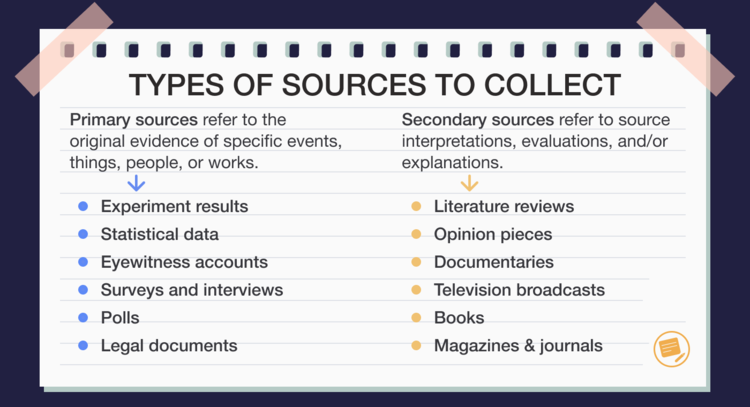
Primary Sources
Articles published in academic journals deserve special attention they are the primary sources to collect information from for your psychology essay. These articles report on original research which may be at the cutting edge of knowledge production in their field of study. Such materials are usually the best to collect information from.
Other sources
Depending on a topic you are writing about, there might be a wide range of sources which might be relevant: interviews with experts, films, documentaries, museum exhibitions, newspapers, etc. These are examples of sources which might be relevant.
APA Format in the AP Psychology Essay
When writing an essay about psychology, it is vital to use the correct style and also reference everything accordingly. Although there are many different styles to choose from, we recommend using American Psychological Association or APA format. For more detailed info check out this blog on American Psychological Association or APA citation style. It is the right referencing format to use for your essay.
Here are some basic guidelines when writing in APA format:
A clearly readable font. (Times New Roman 12 pt)
Double line spacing
1-inch margins all the way round
Include an APA style header at the top of every page with shortened title (<50 characters)
Insert the page number on the right
The 1st word in every paragraph should be indented
In the papers over 5 pages, the APA format should be broken down into the following sections:
Title page
Abstract
Main body
References
APA in text citation should follow certain rules as incorrectly referenced material can lose marks and lead to plagiarism. Here are some key points to keep in mind with APA in text citation:
Use Capitals for the name of author and any itials.
Capitalize the title of the source.
Include the page number when quoting, unless paraphrasing then this is not necessary.
If the authors name is not given then use the initial words of the title.
There are APA citation generators online which offer basic help often prompting for payment and prone to making mistakes. Using an APA citation generator is not advised. It will never beat the hard work and dedication of the personal touch.
If still in any doubt why not get some help from the experts with proofreading services they can check your work is cited in APA format or order a custom-made Psychology essay.
AP Psychology Essay Requirements
AP psychology essay questions (the “free response” questions) constitute 33% of your AP Psych exam grade. These prompts are designed for people who took the AP Psych course. Do not expect them to be easy. Below are some examples prompts and some tips on how to write an essay during your exam.
Questions
AP Psychology exam questions usually include the same kind of structure, and you will be given a topic with several subcategories. In the exam, each subcategory must be addressed to score maximum points. Here is an example of a question:
Example: Annie babysat a 5-year-old child one day. She and the child had some pecan pie. Annie was unaware that the child was allergic to most types of nuts and the child’s parents didn’t warn her prior. Annie drove the child to the hospital, but on the way she panics and gets lost. Annie takes a couple of wrong turns. Gladly, the child survives, but months following the accident Annie can’t get behind the wheel, and she no longer likes pecan pie.
Part A. Explain how each of the following helped Annie drive to the hospital:
Motor neurons,
Retinal disparity,
Heuristic,
Procedural memory.
Part B. Explain how each of the following has lead Annie to have a negative experience:
Anxiety and panic,
Conditioned response,
Aversion Therapy.
When you begin to address this prompt, you will want to look at each aspect of the question. Define the vocabulary words (in this case, Heuristic, Motor neurons, Anxiety, etc.) and then explain how they relate to the example. Need an example? On the exam itself, you would want to write something like this: “Annie experiences anxiety around driving because she had a stressful experience while driving the child to the hospital” instead of something like “Anxiety is a worry, nervousness, or unease about something” without an explanation or a connection to the prompt. To get full credit, address every single bullet point. Again, don’t forget to write in an essay format. Do not answer in bullet points.
Create An Outline
Introduction
Topic
Thesis
Body
Theme 1
Theme 2
Theme 3
Conclusion
Polishing It Up & Submitting
Congratulations, you are almost there. The last step you need to take is to write a rough draft, edit it, and then turn it into a well-written psychology paper. To ease your life and save you time here are some tips you may use while checking.
Give Yourself a 2 Hours Rest.
It’s hard to be actively involved in writing for a long time, and even harder to spot mistakes after hours of unstoppable writing. That is why it is recommended to leave your paper for an hour or two.
Read It Aloud for 2 Times
This is a very good practice that will allow you to catch all your mistakes such as, mispronounced words, grammatical errors, punctuation mistakes, etc.
Find a Second Pair of Eyes
Ask your siblings or your friends to help you with this. You can ask them to read your essay and give you a feedback whether it’s positive or not. You can take someone who is not aware of the topic. Ask that person to read your paper and grade it.
“Analysis is the art of creation through destruction.” ― P.S. Baber, Cassie Draws the Universe
Great, you finished watching a movie or reading a book for college or university! Before you’re free to go on exploring the wonders of college life, the professor decides to give you some more work to do. Get ready to face the challenge! The pro gives out the instructions and tells you to analyze the book/movie and provide an informative argument for any related topic of your choice. Does it seem tedious?
TABLE OF CONTENTS
Definition
Ideas
Different Types of Analysis
Poetry Analysis Essay
Rhetorical Analysis Essay
Literary Analysis Essay
Process Analysis Essay
Character Analysis Essay
Causal Analysis Essay
Steps to Take Before Writing
Brainstorming
Creating A Thesis
Outline
Analytical Essay Examples
What is An Analytical Essay?
The primary question to answer is, “What is an analytical essay?” “What should an analytical essay do?” Those are all great questions.
If we take a look at the official analytical essay definition, the term “analysis”means a critical and well thought-out observation of a specific idea. An essay is a piece of academic writing to test your knowledge. By combining these two interpretations, we can define an analytical paper in the best possible way.
An analytical essay is a piece of writing that provides an informative observation about the specific topic or idea. It has to link back to the book/movie, but contain your judgments as well.
Analytical Essay Topics And Ideas
There is an infinite number of different essay topics that can be analyzed. Think about any sort of fact or idea.
A student should not necessarily pick the issue that has already been examined from all aspects – the main reason why tutors do not always assign the specific topics to cover is the ability of students to develop their creativity.
So, if you wonder how to choose the proper analytical essay topics, the infographic below will give you a clue.
That is how you select the topic if it is not specified. Here are some of the great analytical essay topics so that you have a general idea of how the final title of your paper should look like:
Reasons why some teens are more susceptible to peer pressure than other kids
In a what way does public debt affect private investment companies
Pros and cons of using performance-enhancing drugs
The primary signs of the job burnout
The relevance of Karl Marx and his teachings to contemporary society
The impact of the national high school curriculum on the teaching standards
The practical ways to develop positive relations with company shareholders
Qualities of the young adults that may push them to suicide
Factors that increase the threat of cyberbullying for teenagers
Should sex education be eliminated from the school program?
Different Types of Analysis
There are six basic types of analytical essays based on the different types of analysis itself. Every separate kind varies by its definition and purposes. You need to know how to write an analysis essay of every type as different life situations will require various approaches to analyzing things. Let’s get into the various types of analysis! Only after reading about each, you will get the best answer to the question, “What is an analytical essay?”
Poetry Analysis Essay
Poetry analysis requires the writer to research the poem’s content, structure, and historical significance. A writer should do it in an explanatory style.
The main purpose is to make the reader understand the poem’s overall significance and messages.
Examples of this can be:
Robert Frost’s The Road Not Taken
Edgar Allan Poe’s A Dream Within a Dream
Emily Dickinson’s There is Another Sky
Rhetorical Analysis Essay
Rhetorical analysis is an essay where you prove or reprove a fact that already holds weight. Imagine you are proving a fact to somebody who either can’t comprehend it or is skeptical of its authenticity. This type of analysis is based on facts & logic. Rhetorical papers tend to be written in the fields of science and mathematics!
Examples of the rhetorical analysis ideas could be:
Geometric Proofs
Fundamental of Physics (Newton’s Law, Theory of Relativity,…)
General Principle of Economics (Money makes Money)
Literary Analysis Essay
Be ready to face it at your literature class. After reading a specific short story or any piece of literature, provide an informative analysis of a certain situation, or critically analyze a quote and its impact on the plot.
A literary analysis usually goes deeper into things such as emotion and decision making of certain characters!
Examples could be:
Effects of “Utopia-rescue” societies on people! Book: 1984 By George Orwell
Loves an effect on human decision making. Romeo and Juliet by Shakespeare
Conforming to societies norms: To Kill a Mockingbird by Harper Lee!
Process Analysis Essay
If we think about the definition, a process is a change from one state to another through several stages/levels. A common way to explain this change is through a process analysis essay format. This would require you to explain its purpose, as well as explaining the transformation through a series of paragraphs.
Examples of this can be:
Describing the Water Cycle
Offering a general assessment of the piece, pointing out the strengths and differences
Defining each of the special terms used by the author to make the piece sound more professional
Analyzing the list of materials used and quoted by the author: their relevance, credibility, etc.
Character Analysis Essay
Character analysis requires you to explain and analyze the transformation of a character from the initial point until the end. Things that should be analyzed are: personality, character traits, mental reformation, role in society, etc. Explain the character’s development.
Examples of this paper can be:
Transformation of Huck and Jim in The Adventures of Huckleberry Finn
Will Hunting’s mental evolution in Good Will Hunting
Viktor Navorksi in The Terminal
Causal Analysis Essay
The causal essay requires you to answer a “why” question. Causal academic paper is also known as the speculating about causes essay, and it requires you to describe the process that occurs, following up with why you believe it occurred the way it did.
Examples can be:
Why do we respond physically to fear?
Why do teenagers rebel against their parents and authority?
Why are random shootings & similar crimes becoming more common in the US and some other neighboring American countries?
These are just some of the most common types of analytical essays. The variation is practically endless, but they all must follow the same type of outline.
Steps To Take Before Writing
Preparation is key in writing that well-rounded and high-quality paper. An analytical paper may require up to 2 hours of the pre-writing process. So before you start typing up your masterpiece, 6 steps should be taken:
Reading how to write an analysis paper (this guide is a good example);
Brainstorming and deciding on a topic (look for the details above);
Crafting a captivating title (it should not repeat the topic);
Creating a strong thesis statement;
Finding supporting evidence from credible sources;
Creating an outline.
Create A Strong Analytical Essay Thesis
The goal of the analytical essay is to prove a certain point that the writer is trying to make. From the information that has been gathered, the writer needs to link things together and create a certain decision.
The central argument is called a thesis statement. It’s a claim created to prove an assumption created by the writer, using facts, statistics, examples, and research findings. For certain topics, it’s important to introduce the outside forces that contributed to the creation of a thesis statement.
An example will help.
“If you are talking about historical events, it’s essential to introduce the external factors (books or manuscripts) that led to your analytical essay thesis. If we are talking about scientific research, considering the scientific method is a necessity.”
The thesis should be controversial, debatable, and it requires tons of thorough research to come up with a respectable statement. This part of your work should be a high impact statement that strongly affects the topic of choice.
Finally, decide on the preferred shape of a thesis statement. Here are some of the categories to choose from:
Simply stating an opinion
Defining categories, causes, or reasons
Offering a couple of aspects of a subject and emphasizing one of them
To prove the central argument, one has to arm to the teeth with credible evidence. Keep on reading to discover how to collect info.
Find Supporting Evidence
Why do you need evidence? You won’t be able to sway anybody with your thesis statement unless it’s backed by something. This is why all good thesis statements need in-depth research, analysis, & some forecasts. It’s important to gather information that supports your argument from the primary sources.
Depending on the type of essay, it won’t necessarily be straightforward information.
If we are talking about a historical topic or some sort of scientific fact, your supporting evidence will evidently be facts taken from previous findings; if you are writing a literary analysis essay, most likely your evidence will be quotes from the story.
Create an Analytical Essay Outline
To learn how to write an analytical essay, one should organize the structure of this paper as it makes the entire writing process easier; the experts recommend having up to 5 paragraphs on your paper outline.
Regardless, the Intro-Body(s)-Conclusion formula is a staple in any analytical essay outline.
Writing an Analytical Essay Introduction
An analytical essay introduction starts out with some sort of background information. Using a hook statement can be effective.
A hook sentence is made of 1-2 sentences aimed to grab the reader’s attentionfrom the opening lines of the analytical essay. The choice of hook depends on the mood of the work:
it could be a funny joke/anecdote;
proven fact;
shaking statistics;
rhetorical question to provoke a debate;
literary term like metaphor or similar;
quote of famous person.
There is no specific style for the introduction, but background information is the most common method of approach; provide information that is relevant to your thesis. This information should start out broad and narrow down in relevance towards the thesis.
We prepared a summary of the introduction below:
Hook Statement/ Brief Introductory Point
Background Info (Narrowed)
Transition sentence
Thesis Statement
Write Your Body Paragraphs
The main goal of the body paragraphs is to prove the thesis statement. Each individual paragraph should focus on a certain aspect of the thesis.
For example:
if the thesis of an analytical essay is centered around the evolution of Will Hunting;
the body paragraphs should each hold their own point;
one body paragraph focuses on his diminishing self-guilt;
second could talk about the ever increasing support system and its impact on his mentality.
The body paragraphs should maintain proper structure:
Topic Sentence: Introduce the main point of the body paragraph in one straightforward and effective sentence.
Analysis: Analyze your supporting evidence. Explain how the evidence supports your thesis statement. This part should take 1-2 sentences and is arguably the most important part of the entire analytical essay writing.
Evidence: The analysis is created from the supporting evidence that you find (facts, statistics, etc.), so they should always go hand in hand. Make sure that these 2 parts link together in a straightforward manner.
Concluding Sentence: Restate to the reader your analysis and its significance to the point in hand.
After reading a single body paragraph, the viewer should have clearly understood the argument or point you were trying to prove. Depending on the topic, each essay length will vary based on the depth of the thesis.
How to Write a Conclusion for an Analytical Essay?
The conclusion of an analytical essay plays a vital role in the sense that it ties up the entire essay. Keep in mind the integral components of any concluding paragraph.
Start out by restating your thesis statement. The significance of this is to exemplify to your viewer that you have proven the thesis statement and summarize the steps you took.
To end the entire essay, it’s necessary to create an overall concluding statement. This can be either what you have learned from writing the essay or what the audience should take away from your work.
The structure should be:
Rephrase the thesis statement
Summarize key points
Overall concluding statement
That is how to write a conclusion for an analytical essay. Grab some writing tips below to succeed with this type of writing at any academic level!
General Tips & Advice
Proofread& Edit
After writing the entire analytical essay, take a short break and then reread it from front to back. Regardless of the chances that you will find parts of the paper which are filled with mistakes or parts that need clarity, make sure the essay has clarity before handing in completed work.
Get a Second Pair of Eyes
Because the analysis essay made sense to you, doesn’t mean that everyone else will receive it with the same level of understanding. Online essay writer or peer edits help to give the essay a wider range of clarity.
Make Sure the Thesis Fits Your Argument Points
Your paper will be highly judged based on how well you proved your thesis. That’s why it’s important to edit your thesis based on the type of arguments you provided. If your explanations don’t perfectly suit the thesis statement you crafted, then adjust it accordingly.
Analytical Essay Examples
Referring to an analytical essay examples can save you time. A sample can provide a useful insight to how an analytical essay should be. Especially for new-bees to this form of assignment.
Literary courses at any level will sometimes require students to write character analysis essays. We will be delving into their conflicts and how the characters resolve them. We will be looking through the eyes of the characters and analyze their roles in the story.
TABLE OF CONTENTS
Definition
Purpose
Types Of Characters
How To Write
Outline
Example
What is a Character Analysis Essay?
In a broader sense, this is a type of essay which requires an understanding of the character in question. These kinds of essays are used to analyze characters in a literary piece. One of the aims would be to make a profile and analyze the characters thoroughly.
What Is The Purpose
More than to fulfill a requirement, this type of essay mainly helps us understand the character and the world he/she lives in. One of the essential purposes of this essay is to look at the anatomy of a character in the story and dissect who he/she is. We must be able to study how the character was shaped and then learn from their life.
Different Types Of Characters
Protagonists (heroes): The main character around whom most of the plot revolves.
Antagonists: This is a person that is against the protagonist. This is usually the villain but could also be a natural power, set of circumstances, majestic being, etc.
Major: These are the main characters. They run the story. Regularly there are only one or two major characters.
Dynamic (changing)
Static (unchanging)
Minor: These are the figures who help tell the major character’s tale by letting them interact and reveal their personalities, situations, stories. They are commonly static (unchanging).
Foils: These are the people whose job is to contrast with the major character.
How to Write it?
To go into a more profound sense and truly understand these characters, one must immerse oneself in the story or literary piece. Take note of the setting, climax, and other important literary parts. You must be able to feel and see through the characters. Observe how the writer shaped these characters into life.Notice how little or how vast the identities of the characters were described. Look at the characters’ morals and behavior and how it affects situations and other characters in the story. Observe characters whom you find interesting.
How to start?
First, you have to choose a character you’d like to write about. Sometimes, a character will be readily assigned to you. It’s wise to consider characters who play a dynamic role in the story. It will captivate the reader since there is tons of information about these characters.
Read The Story
Even if you’ve already heard or read this story before, you will probably need to reread it. It will help you notice something new that you’ve missed before. Keep in mind or highlight every place that your character appears.
Consider the following things:
What specific descriptions does the author provide for each character?
What kinds of relationship does your character have with others?
How do the actions of the character move the plot forward?
Take Notes
While you are reading, take notes or highlight/underline all critical elements of the story. That will add depth when describing your character. When you’re finished reading with your character in mind, review your notes, and formulate the main idea about a character.
Make an initial draft while taking note of the character analysis essay outline provided by your instructor. If you’re not provided with a sample, you may follow the recommended format.
Make An Outline
This step can be considered as one of the most critical steps in writing. A well-constructed outline will keep your thoughts and ideas organized.
Introduction:
Make an introduction of your paper brief and meaningful. It should hold together your whole essay and should spark interest in people. Write a short description of the character in question.
Body:
Subdivide your body paragraphs into different ideas or areas to be considered regarding the character. Look at your professor’s rubric and make sure that you’ll be able to tackle the things required. You should also be provided with questions to be answered to formulate your analysis better. The body should answer the following questions:
What are the character’s physical appearance, personality, and background?
What were the conflicts that the character experienced and how did he/she overcome them?
What can we learn from this character?
Conclusion:
Your conclusion should also hold together your ideas and shape a final analysis statement. Mention things about the character’s conflicts which we can experience in real life. Also, you can write about how a character that should’ve reacted to a certain situation.
Character Analysis Essay Example
There are many character analysis essay examples available online. Study how authors of these essays wrote about different characters. Go on and search for character analysis about Hamlet, Lady Macbeth, and the Crucible. Look at how characters resolve conflicts. Consider things to learn about the characters and take note if any of the characters reflect something in you. A character analysis essay is more than looking into the character but also looking into the character’s personality, actions, and decisions that speak to you.